On This Journey
- Before You Even Think About Trailheads: Permits, Passes, and Logistics
- The Grinnell Glacier Trail Itself: A Mile-by-Mile Breakdown
- When Should You Hike the Grinnell Glacier Trail?
- What to Pack: The Non-Negotiables
- Safety: It's Not Just About Bears
- Frequently Asked Questions (The Real Ones)
- Making It Happen: Your Action Plan
Let's be honest. You've probably seen the pictures. That impossibly turquoise lake, the sheer rock walls, and that stubborn chunk of ancient ice clinging to the mountainside – the Grinnell Glacier. It's the poster child for Glacier National Park for a reason. And the Grinnell Glacier Trail is how you get there. But between the dreamy photos and the reality of actually hiking it, there's a whole lot of planning, sweat, and potential for confusion.
I've done this hike more than once, in different conditions, and made plenty of mistakes so you don't have to. This isn't just a trail description; it's the manual I wish I'd had. We're going to strip away the Instagram glamour and talk about what the Grinnell Glacier Trail Glacier hike is really like. How hard is it? When should you go? What do you actually need in your pack? And is it even worth it anymore, with the glacier shrinking every year?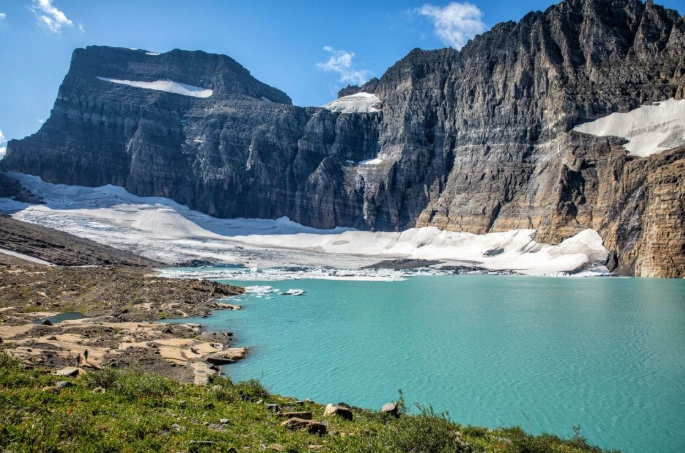
That last question hits hard. Standing where the ice used to be is a sobering experience. But the journey to see the Grinnell Glacier is still one of the most spectacular in the American Rockies. Let's get into it.
Before You Even Think About Trailheads: Permits, Passes, and Logistics
This is where most guides just say "get a park pass" and move on. But for the Grinnell Glacier Trail, logistics can make or break your trip, especially since 2021.
The Vehicle Reservation Nightmare (And How to Beat It)
Glacier National Park uses a vehicle reservation system for the Going-to-the-Sun Road corridor, which includes the most popular access points for the Grinnell Glacier hike. This isn't a suggestion; it's a requirement for entry during peak hours (6 am to 3 pm) from late May through September. No reservation? You'll be turned away at the gate.
Reservations are released months in advance and sell out in minutes. It's stressful. My advice? Have a Plan B. If you can't snag a reservation for the "Going-to-the-Sun Road Corridor," all is not lost. You can enter the park before 6 am or after 3 pm without one. An early start is ideal for hiking anyway to avoid afternoon thunderstorms. Alternatively, reservations are also available for the "North Fork" and "Many Glacier" areas, though the Many Glacier ones are also highly competitive.
The official source for all this, and where you must book, is the Recreation.gov website. Don't rely on third-party info, as the rules change slightly each season.
Which Trailhead Do You Actually Use?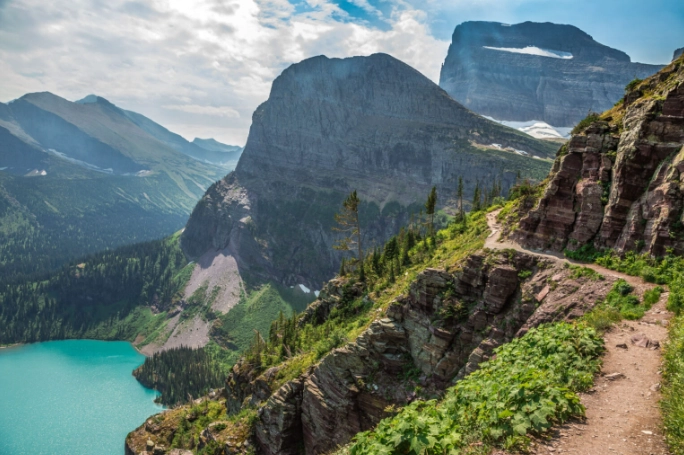
There's some confusion here. The classic, full-length hike starts at the Many Glacier Hotel. You follow the Swiftcurrent Lake and Lake Josephine shores before the real climb begins. However, in peak season, you can often take shuttle boats across Swiftcurrent Lake and Lake Josephine. This cuts off about 3.4 miles (round trip) of relatively flat walking. Sounds great, right?
It is, but it adds another layer of planning. The boats are operated by Glacier Park Boat Company, and you need to reserve tickets for a specific time. If you miss your boat, you're walking. I've taken the boat once and walked the whole way once. The boat ride is scenic and saves energy, but the walk along the lakes is beautiful and peaceful in the early morning. It's a trade-off.
The trailhead itself is well-signed. From the Many Glacier Hotel, look for signs for Grinnell Glacier. If taking the boat, you'll get off at the far end of Lake Josephine and the trail starts right there.
The Grinnell Glacier Trail Itself: A Mile-by-Mile Breakdown
Okay, you've got your pass, you're at the trailhead. Now what? Let's walk through what you'll actually experience on the Grinnell Glacier Trail Glacier route.
The first section, whether on foot or by boat, is mellow. You're in thick forest, with glimpses of the huge mountains above. It feels easy. Don't be fooled.
Once you pass the head of Lake Josephine, the trail starts to climb in earnest. The forest begins to thin, and the views start to open up. You'll get your first real look at Grinnell Lake far below—that stunning milky-turquoise color caused by "glacier flour," rock ground to powder by the glacier.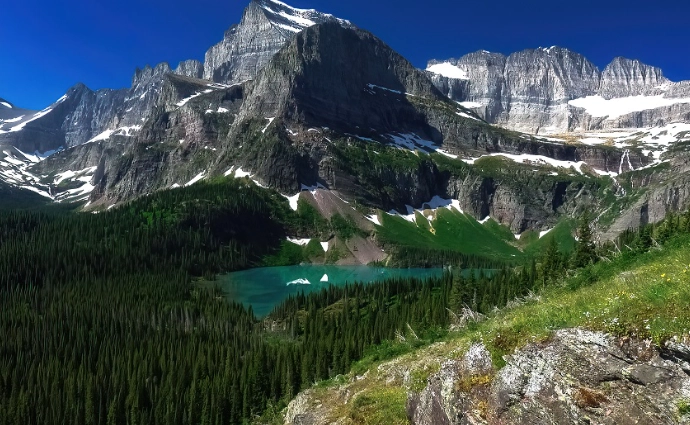
Then come the switchbacks. This is the heart of the climb. The trail is well-maintained but steadily gains elevation. The landscape shifts to open, rocky slopes dotted with wildflowers in July and August. This is also prime bear habitat—open meadows with berries. You must make noise here, talk loudly, clap, sing off-key. Carry bear spray where you can reach it instantly, not buried in your pack. I've never had a bad encounter, but I've seen fresh scat on the trail more than once.
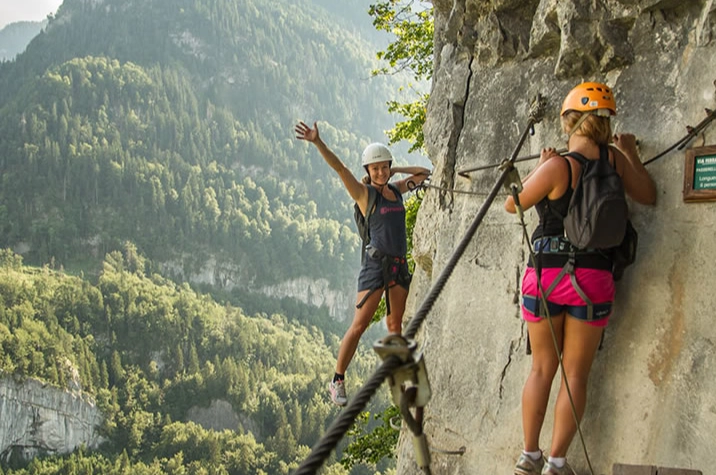
The trail contours around the side of the Garden Wall, with jaw-dropping, almost sheer drop-offs to your right. The handrails you see in photos are there for a reason. If you have a fear of heights, sections here might be intense. Just focus on the trail in front of you.
The Final Push and the Upper Grinnell Lake View
After the switchbacks, you'll reach a shelf. Suddenly, Upper Grinnell Lake appears, cradled in a sheer rock bowl, with the Grinnell Glacier clinging to the cliffs above it. It's a breathtaking moment. This is where many people stop. You can see the glacier clearly from here.
But the official Grinnell Glacier Trail continues another 0.8 miles or so, descending slightly and traversing a rocky, often snowy or icy slope to get you right to the lake's shore and a closer view of the glacier's terminus. This last section is often covered in snow well into July and can be slippery and hazardous. The park sometimes closes this final stretch if conditions are too dangerous. Check at a ranger station before you go.
Standing there, looking at the Grinnell Glacier, is complicated. It's beautiful, powerful, and ancient. But the signs of retreat are unmistakable. The informational signs show where the ice was just decades ago, and it's startling. It adds a layer of poignancy to the whole hike.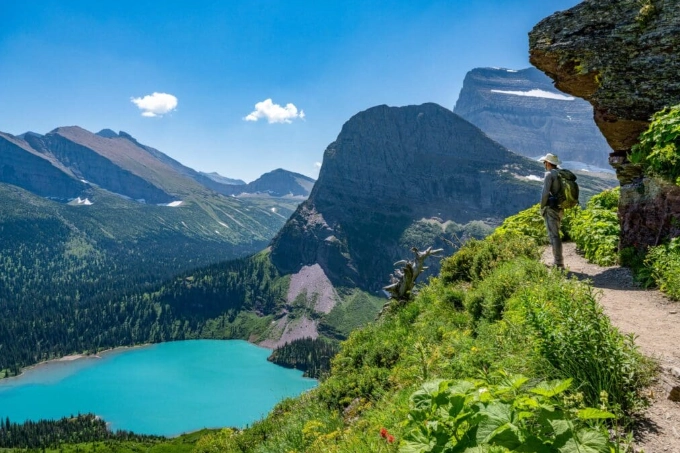
When Should You Hike the Grinnell Glacier Trail?
This is the million-dollar question. The hiking season here is brutally short.
- July: Early July, the trail is often still covered in snow, especially the final section. Wildflowers start exploding in the meadows. Mosquitoes can be biblical. The glacier is often at its most dramatic, with more snow cover.
- August: This is the sweet spot for most people. Snow is mostly gone, wildflowers are still good, days are long and stable. This is also the most crowded time.
- September: My personal favorite. Crowds thin out dramatically after Labor Day. The weather is cooler, bugs are gone, and the fall colors (golden larch trees) start appearing. The trade-off? Shorter days, and a higher chance of early snowstorms shutting the trail down. The glacier looks more like dirty, bare ice.
June is usually too early due to snow. October is a roll of the dice with winter.
What about time of day? Start early. I mean, be on the trail by 7 am early. This gives you the best chance for calm weather, avoids the worst heat on the exposed sections, maximizes your chances of seeing wildlife, and helps you beat the crowds. Afternoon thunderstorms are a real and serious danger in the Rockies. You do not want to be on those exposed ridges when lightning starts.
What to Pack: The Non-Negotiables
Forgetting water or rain gear on this hike isn't an inconvenience; it's a potential emergency. Here’s the essential gear list, born from hard lessons.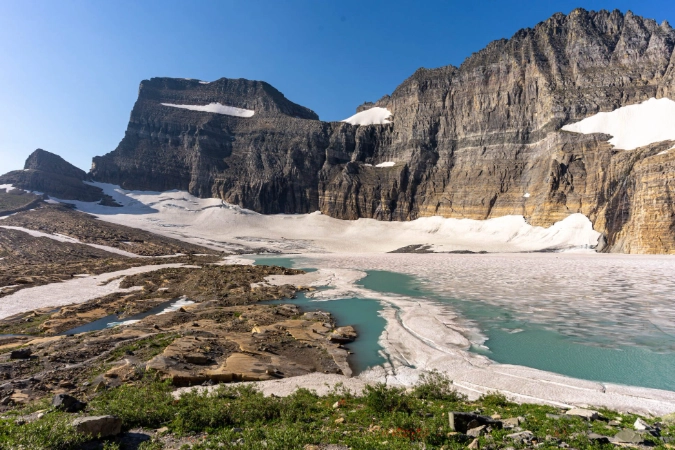
| Category | Essential Items | Why It's Critical |
|---|---|---|
| Hydration & Food | 3+ liters of water per person, water filter/purification tablets, high-energy snacks, lunch | No water sources on the upper trail. Dehydration at altitude is sneaky and dangerous. You'll burn thousands of calories. |
| Clothing & Rain Gear | Moisture-wicking base layers, insulating mid-layer (fleece/puffy), waterproof & windproof shell, hat, gloves | Weather changes in minutes. Sunny one minute, cold wind and rain the next. Cotton kills. |
| Footwear | Sturdy, broken-in hiking boots with ankle support | The trail is rocky and uneven. Ankle twists are common. Trail runners are okay for some, but boots are recommended. |
| Safety & Navigation | Bear spray (and know how to use it!), first-aid kit, headlamp, physical map/GPS, whistle | Self-rescue essentials. The bear spray is for bears; the headlamp is if you misjudge time. |
| Other Must-Haves | Sunscreen, sunglasses, lip balm, trekking poles | UV radiation is intense at altitude. Trekking poles save your knees on the descent. |
Safety: It's Not Just About Bears
Everyone talks about bears (and you should be bear-aware), but other hazards are more statistically likely to ruin your day.
Weather: This is the big one. Check the forecast, but trust the mountains more. If clouds are building, turn around. Getting caught in a lightning storm on an exposed ridge is a top-tier bad idea. Hypothermia can happen even in summer with wind and rain.
Altitude: The trailhead is around 4,900 feet, and you climb from there. If you're coming from sea level, take it easy. Headaches and shortness of breath are normal; nausea and dizziness are signs to descend.
Trail Conditions: Loose rock, steep drop-offs, and potential snow/ice patches. Watch your footing. Don't get distracted by the view while moving. Use the handrails where provided.
Your Own Fitness: Be honest with yourself. The Grinnell Glacier Trail Glacier hike is strenuous. Turning back is always a smarter choice than pushing yourself to injury or exhaustion miles from the trailhead.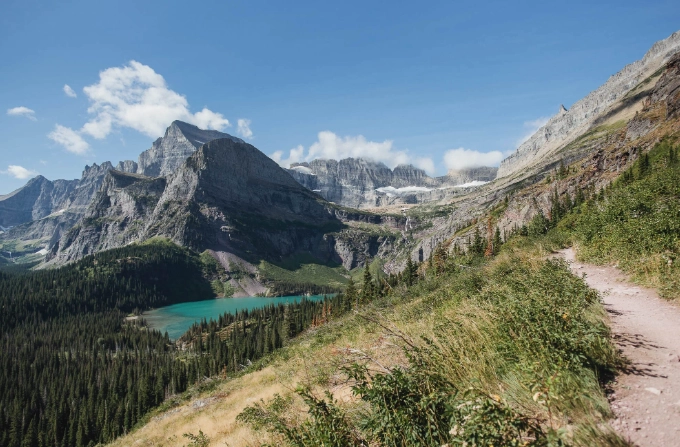
Frequently Asked Questions (The Real Ones)
Can I bring my dog on the Grinnell Glacier Trail?
No. Dogs are not allowed on most trails in Glacier National Park, including the Grinnell Glacier Trail. It's for the safety of your pet (bears, cliffs, heat) and the protection of wildlife. Leave Fido at a boarding facility outside the park.
Do I need a guide?
Not necessarily. The trail is well-defined. However, a guide from a licensed company like the Glacier Guides can provide incredible insight into the geology, ecology, and history, and they handle all the logistics. For novice hikers or those who want a learning experience, it's a great option.
How long does the hike really take?
Most fit hikers take 6-8 hours round trip, including plenty of breaks and time at the top. If you're slower, budget 8-10 hours. Don't forget to factor in driving time to the remote Many Glacier area.
Is there cell phone service?
Do not count on it. Spotty at the Many Glacier Hotel, nonexistent on the trail. Download offline maps and tell someone your plan.
Is the Grinnell Glacier disappearing? Should I even go?
Yes, it is retreating rapidly due to climate change. The U.S. Geological Survey has documented this for decades. But that's precisely why you should go. Seeing it makes the abstract concept of climate change painfully concrete. It's a powerful, moving experience that stays with you. The hike itself, through the glacial valley and past the stunning lakes, is worth it regardless of the glacier's size.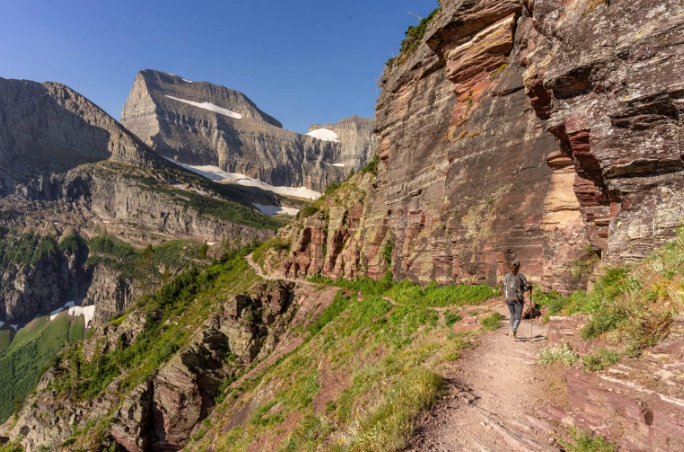
Making It Happen: Your Action Plan
- Months in Advance: Book your lodging (campgrounds or hotels in Many Glacier sell out a year ahead). Mark the dates when vehicle reservations are released on Recreation.gov.
- Weeks in Advance: Secure your vehicle reservation the second it opens. Book boat tickets if you want them. Start gathering your gear.
- Day Before: Check trail conditions with the park via the National Park Service website or at a ranger station. Pack your bag. Fill water bottles. Charge headlamps.
- Hike Day: Wake up early. Eat a good breakfast. Check weather one last time. Be at the trailhead by 7 am. Sign the trail register. Hike smart, be safe, and take it all in.
One final thought from my last trip up there in September. It was cold, windy, and the glacier looked smaller than I remembered. But as I sat eating my sandwich, a group of mountain goats picked their way across the cliff face with impossible grace. The sun broke through the clouds, turning the lake into a sheet of liquid gemstone. The effort, the planning, the early wake-up—it all faded away. That's the magic of the Grinnell Glacier Trail. It demands everything from you, and gives back even more.