You're staring at two shopping carts online. One has a pair of rugged Merrell Moabs. The other has the sleek, thick-soled Hoka Speedgoats. Both are highly rated. Both promise adventure. Your credit card is ready, but your brain is stuck. Which one is actually better?
Let's cut through the marketing. The truth is, "better" doesn't exist in a vacuum. It depends entirely on what you're asking your feet to do. I've logged miles in both brands, from soggy Appalachian Trail sections to dusty Western ridges. The choice isn't about good versus bad; it's about matching a shoe's DNA to your personal terrain.
Merrell is your reliable, tough-as-nails friend who shows up with the right tool for a hard job. Hoka is the energetic innovator who redefines what comfort on the move feels like. Picking the wrong one can turn a dream hike into a footsore trudge.
What's Inside This Guide
The Core Difference: Hiking Boot vs. Running Shoe Mentality
This is the root of everything. Merrell was born in the 1980s crafting performance hiking boots. Their soul is in protection, durability, and sure-footed stability. Even their trail runners feel like they evolved from a boot—secure, grounded, and built to take a beating from the trail.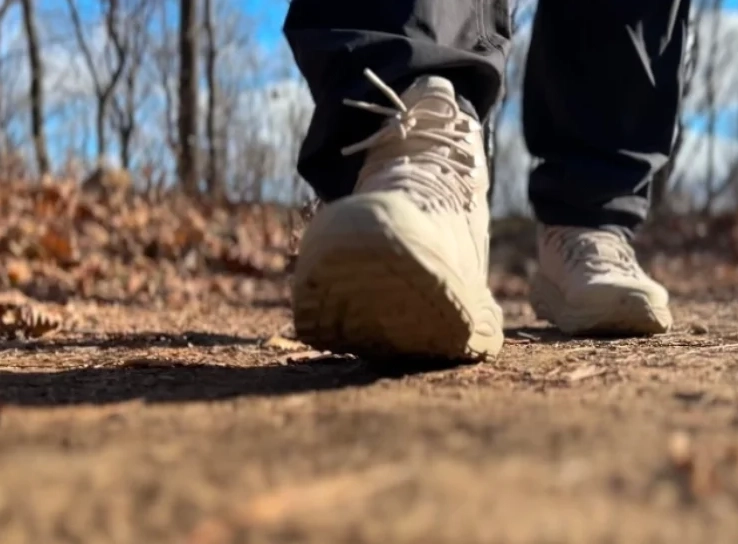
Hoka One One emerged in 2009 from the world of ultrarunning. Their entire reason for being is maximal cushioning and propulsion. The oversized midsole isn't a gimmick; it's designed to eat up impact and roll you forward efficiently over long, long distances. They think like a running company that makes shoes for off-road.
One prioritizes the trail. The other prioritizes your stride.
Merrell Unpacked: Where It Really Shines (And Where It Doesn't)
Walk into any outdoor shop, and you'll see a wall of Merrells. They're a default for a reason.
The Merrell Strengths You Can Count On
Outsole Grip and Durability: Their partnership with Vibram is legendary. The rubber compounds and lug patterns (like the 5mm depth on the Moab) are designed to last for seasons, not just months. On loose rock and mud, they inspire a specific kind of confidence.
Foot Security: The fit is generally more structured. You feel locked in, especially in the heel and midfoot. This is why they're a top recommendation for backpackers carrying weight—your foot isn't swimming around inside on side slopes.
Wide Foot Sanctuary: This is Merrell's secret weapon. They offer consistent, true-to-size wide and extra-wide options across most models. If other brands pinch your forefoot, Merrell is often your salvation. The toe box is typically rounded and roomy.
Value and Accessibility: You can often find last season's colorways of core models like the Moab 3 for well under $120. They're workhorses that don't demand a premium price.
The Merrell Compromises
Weight & Cushion: That durability and structure comes with grams. They're often heavier than comparable Hokas. The cushioning is firmer and more minimal. After 15 miles, you'll feel more of the ground (which some prefer) and potentially more leg fatigue (which many don't).
Innovation Pace: Merrell refines more than it reinvents. Updates to flagship models are often subtle—a new liner here, a tweaked rubber compound there. You won't get the dramatic, season-to-season tech shifts of Hoka.
Hoka Decoded: More Than Just a Thick Sole
Hoka's look is unmistakable. But there's nuance under that foam.
The Hoka Superpowers
Cloud-Like Impact Protection: This is the headline act. The compression-molded EVA or Profly+ midsoles are incredibly soft yet responsive. They transform jagged steps into muted thuds. For anyone with joint sensitivity, plantar fasciitis, or who just wants their legs to feel fresher at mile 20, this is a legitimate benefit.
The Meta-Rocker: This is the hidden genius. The sole isn't just thick; it's sculpted with a pronounced curve. It actively promotes a rolling gait from heel strike to toe-off. It feels weird standing still, but in motion, it can reduce calf strain and make maintaining pace feel easier.
Lightweight Speed: Despite the bulk, Hokas are surprisingly light. A Hoka Speedgoat 5 often weighs less than a Merrell Moab 3. This, combined with the rocker, makes them phenomenal for moving fast on trails—whether you're running or power-hiking.
Upper Comfort: The uppers are often made of engineered meshes that are soft, flexible, and require little to no break-in. They hug your foot without rigid overlays.
The Hoka Trade-Offs
Stability & Ground Feel: The high stack height is a double-edged sword. On uneven, technical terrain, it can feel like you're on stilts. You lose the precise, grounded feeling of a Merrell. Ankles need to work harder on sidehills.
Durability Questions: The soft foam midsoles can compress and lose their pop over time (typically 300-500 miles for runners). The outsole rubber, while grippy, can wear faster than a burly Vibram lug on abrasive rock.
Fit Can Be Tricky: They often run narrow in the midfoot. The "standard" fit is snug. While many models offer a "wide" version, it's not as consistently roomy as Merrell's offering. Trying them on is non-negotiable.
The Direct Comparison: Fit, Feel, and Function
| Feature | Merrell (e.g., Moab 3) | Hoka (e.g., Speedgoat 5) |
|---|---|---|
| Primary Feel | Stable, grounded, protective. Feels like part of the trail. | Plush, propelled, energetic. Cushions you from the trail. |
| Ideal Terrain | Technical, rocky, uneven trails. Heavy backpacking. Stream crossings. | Well-maintained trails, long-distance hikes, fast-packing, fire roads. |
| Fit Profile | Roomier toe box. Consistent in width. Secure heel lock. | Snugger midfoot hug. Often runs narrow. Secure but different. |
| Cushioning | Firm, responsive, low-to-the-ground. More ground feedback. | Soft, maximalist, high stack. Minimal ground feedback. |
| Weight (Men's US9) | ~950g (pair, Moab 3 Mid) | ~620g (pair, Speedgoat 5) |
| Best For... | The prepared hiker who values security and durability over miles of cloud-like comfort. | The distance-focused hiker/runner who prioritizes leg-saving cushion and lightweight speed. |
| Potential Drawback | Can feel stiff and heavy on easy terrain. Less "all-day" comfort for some. | Can feel unstable on tricky footing. Durability may be lower for aggressive use. |
I've seen hikers in brand-new Hokas struggle on a rocky descent, wishing for more ankle awareness. I've also seen Merrell wearers on a 15-mile day hike looking with envy at their friend in Hokas who still has a spring in their step.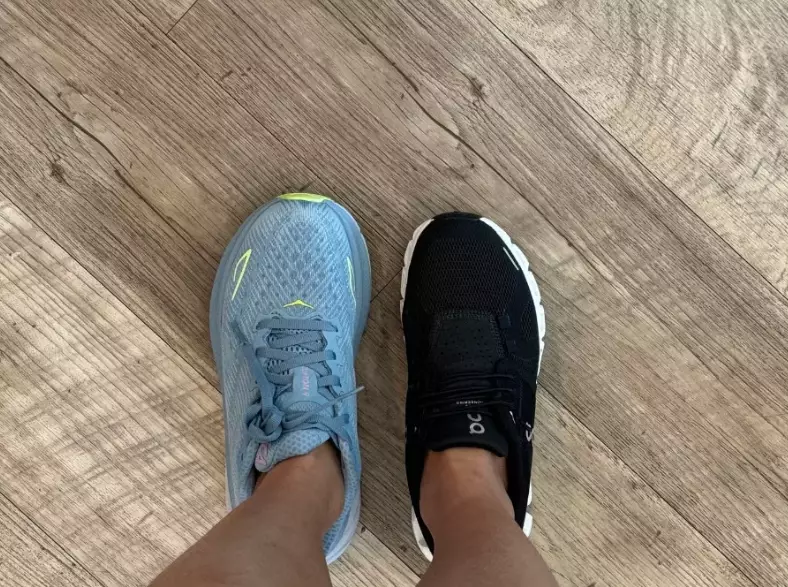
How to Choose Between Merrell and Hoka
Stop asking "which is better?" Start asking these questions:
1. What's underfoot?
Is your typical trail a root-and-rock scramble, or a smooth, packed dirt path?
Technical & Unstable = Lean Merrell.
Smooth & Long = Lean Hoka.
2. What's on your back?
Are you carrying a 30-pound backpack for a week, or a 10-pound daypack?
Heavy Load = Merrell's stability is safer.
Light Load = Hoka's comfort is more enjoyable.
3. What's your physiology?
Do you have wide feet or need ankle support? Or do you have knee/heel pain?
Wide Feet/Need Support = Merrell.
Joint Pain/Need Cushion = Hoka.
4. What's your pace?
Are you out to cover serious distance quickly, or to carefully navigate challenging terrain?
Distance & Speed = Hoka.
Deliberate & Steady = Merrell.
Consider the source. In-depth reviews from trusted outlets like Runner's World consistently praise Hoka for running innovation, while backpacking-focused gear sites rely on Merrell for their durability testing. Both are right.
Your Questions, Answered
At the end of the day, the best shoe is the one that gets you out the door and brings you back happy and healthy. Sometimes that means owning both—a pair of Merrells for the rugged weekend warrior trips and a pair of Hokas for the long, soul-feeding days on smoother paths. Your feet will know the difference.