Quick Navigation
- Why Bother with Aid Climbing? It's Not Just for El Cap
- The Nuts and Bolts: Essential Aid Climbing Gear
- The Core Technique: The Aid Climbing Sequence
- Planning Your First Real Aid Climbing Adventure
- Common Aid Climbing Questions (Stuff You're Actually Wondering)
- My Take: The Good, The Bad, The Reality
Let's be honest. The first time you see someone aid climbing, it looks... weird. Slow. Maybe even a bit like cheating if you come from a world of fluid free climbing moves. I thought the same thing. Standing at the base of a sheer granite wall in Yosemite, watching climbers inch their way up a blank face using a bizarre collection of metal widgets and nylon ladders, I was equal parts confused and fascinated.
What were they doing? Why would anyone choose this painstaking method over the purity of free climbing?
Then I tried it.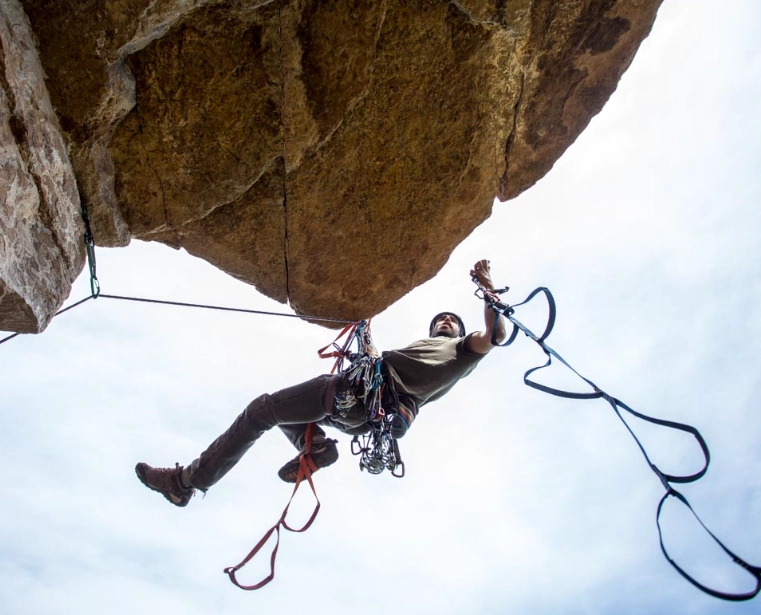
My first foray into aid climbing was a humbling mess of tangled etriers, dropped gear, and sheer exhaustion. But it was also a revelation. Aid climbing isn't just "climbing for people who can't free climb." It's a completely different discipline—a vertical puzzle that tests your problem-solving, gear management, and patience as much as your physical strength. It's the key that unlocks the biggest, blankest walls on the planet. If free climbing is like sprinting, aid climbing is like conducting a symphony on a vertical stage, where every piece of gear is an instrument.
So, what exactly is aid climbing? In the simplest terms, it's a style of climbing where you use gear placed in the rock—nuts, cams, pitons, bolts—not just for safety, but as direct points of aid to stand on or pull on to make upward progress. Your hands and feet aren't on the rock; they're on your gear. The American Mountain Guides Association (AMGA) defines it as "climbing in which artificial aids are used for direct progress and support," distinguishing it from free climbing where gear is only for protection.
This guide is for the curious. For the free climber who's stared up at an unclimbable (for them) roof and wondered "what's up there?" For the trad climber ready to expand their toolkit. We're going to strip away the mystery and break down exactly what you need to know, from the basic philosophy to the nitty-gritty of your first big wall.
Why Bother with Aid Climbing? It's Not Just for El Cap
If it's so slow and gear-intensive, why does anyone do it? The reasons are more varied than you might think.
The obvious one is to climb routes that are impossible to free climb at your current ability level, or at any level. The overhanging, featureless granite of Yosemite's Salathé Wall, the blank dihedrals in the desert—these are the classic realms of the aider. Aid climbing is your passport to terrain that would otherwise be off the map.
But it's more than that. For me, aid climbing became a mental game I grew to love. It's incredibly satisfying to look at a blank section, figure out the sequence of gear, and execute it cleanly. It's engineering on the fly. It also teaches you an insane level of self-reliance and systems management. When you're 20 pitches up a wall with everything you need on your back, there's no room for sloppy organization.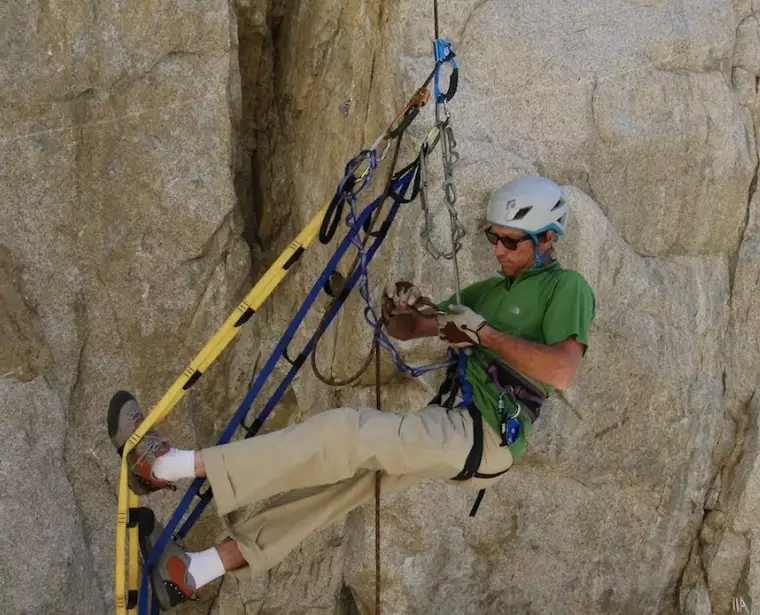
It also makes you a phenomenally better trad climber. Placing gear for aid forces you to understand the absolute limits of your cams and nuts. You learn to test marginal placements in a way you never would while free climbing. Your gear assessment skills go through the roof (pun intended).
The Nuts and Bolts: Essential Aid Climbing Gear
You can't talk about aid climbing without diving into the gear. It's a specialized toolkit that goes far beyond a standard trad rack. Forget buying this all at once—it's a process. Start with the basics and add as you progress.
Your Personal Aiding System (The "What You Wear")
Harness: A big, comfortable, padded harness. You'll be hanging in it for hours. Gear loops are gold—you need lots of them. I made the mistake of using my lightweight sport harness on an early aid attempt and regretted it by pitch two.
Helmet: Non-negotiable. More time on the wall means more exposure to rockfall and dropped gear.
Etriers (Aiders): These are the fabric ladders you step into. You typically use two or three. Modern ones have two or three steps. The top step is often a single, stiffer step called a "top step" or "single-step aider" for high-stepping. They feel awkward at first, like trying to climb a rope ladder that's trying to twist away from you.
daisy Chains: Your primary connection between your harness and your gear. They're adjustable nylon slings with multiple stitching loops. You'll have two: one for your primary attachment (the "adjustable daisy") and one as a backup/positioning tool (the "fixed daisy"). Do NOT use commercial daisy chains for life support in other climbing contexts—in aid climbing, they are part of a specific, managed system.
Ascenders (or Tiblocs): Mechanical devices that grip the rope, allowing you to ascend it. Essential for cleaning pitches and for self-rescue. A Petzl Ascension or similar is the standard.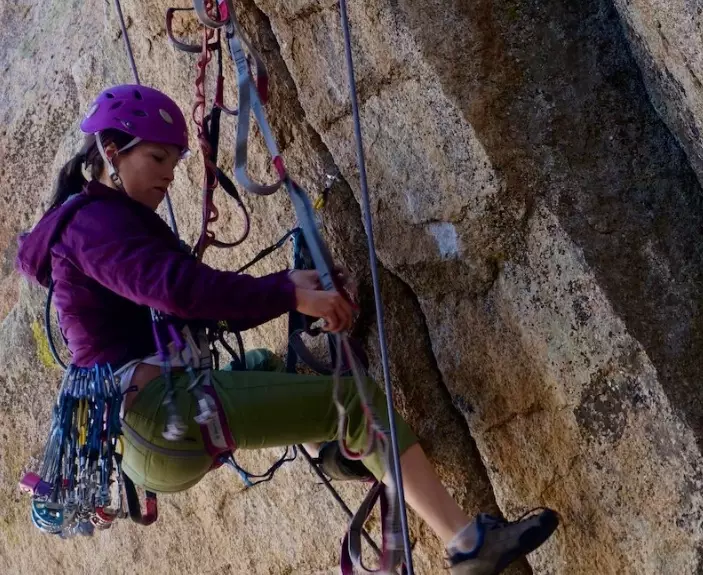
The Big Wall Add-Ons (For Multi-Day Aid)
Haul Bag (Pig): A massive, tough, waterproof bag to drag all your food, water, sleeping gear, and extra clothes up the wall. It's a beast to manage.
Haul Line & Pulley System: A separate rope (often 7-8mm) and a pulley to haul your bag. This is where you learn to hate gravity. A good haul system, like a UIAA-tested progress capture pulley, is worth its weight in gold.
Portaledge: Your hanging bed. A luxury and a necessity for anything more than one day. Setting one up in the wind is its own special kind of puzzle.
Poop Tube: Yes, really. Leave no trace means everything. It's a PVC pipe with end caps. A glamorous part of the experience it is not.
Grading the Difficulty: The A Rating System
Free climbs have Yosemite Decimal System grades. Aid climbs have their own A (or C) rating system. It doesn't measure physical difficulty, but the technical difficulty and quality of the placements.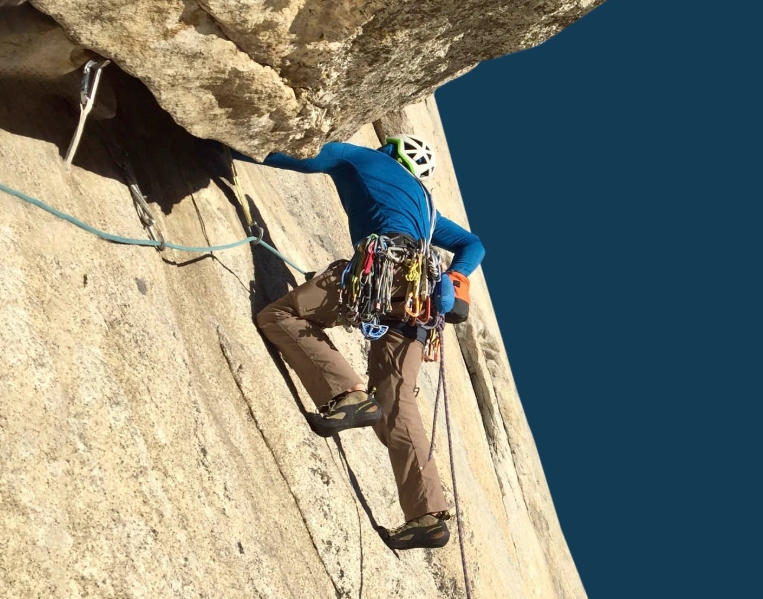
| Aid Grade | What It Means | Example & Feeling |
|---|---|---|
| A0 | "French Free" or "pull on gear." Occasional tug on a quickdraw or solid piece. Not true aid climbing. | Pulling past one impossible move on an otherwise free route. |
| A1 | Easy aid. Placements are solid, easy to find, and will hold a fall. The ladder is stable. | Beginner territory. You can focus on the system, not the fear. |
| A2 | Moderate aid. Placements are solid but may be more tricky to place or arrange. Some small/medium pieces. | Most classic big wall free routes with aid sections live here. |
| A2+ | Some placements might hold a short fall, but others are more tenuous. | The mental game starts. You start "testing" gear more carefully. |
| A3 | Hard aid. Many tenuous placements in a row that might hold body weight but not a fall. Requires careful testing. | This is serious business. Falls can be long and dangerous. Not for beginners. |
| A4 & A5 | Extreme aid. Most placements are marginal, holding only body weight (A4) or less (A5). Fall potential is severe. | The cutting edge. A fall on an A5 section could result in all gear pulling and a massive factor fall. |
Start with A1. Seriously. Don't let ego push you faster.
The Core Technique: The Aid Climbing Sequence
Okay, you've got your gear racked. How do you actually move? The basic sequence is a rhythmic, four-point dance. Let's break it down step-by-step.
Imagine you're at your highest piece of protection. You're attached to it via your adjustable daisy chain. You have two etriers hanging from that piece (or from carabiners on it).
- Reach and Place: From your highest stance in the etriers, you reach up as high as you can and place your next piece of protection—a cam in a crack, a bolt hook on a edge, a skyhook on a crystal.
- Test and Clip: You gently (or firmly, depending on the placement) test it. You give it a few tugs, maybe bounce a bit in your etriers to see if it holds your body weight. Once satisfied, you clip your lead rope into it. Then, you clip one of your free etriers to it.
- Move Your Attachments: This is the critical safety step. You shorten your adjustable daisy to attach yourself to this new, higher piece. Before you detach from the lower piece, you always make sure you are independently secured to the new piece. This is called "maintaining two points of attachment." You then move your second etrier up.
- Step and Repeat: You now stand up in the etriers hanging from the new high piece. You're now ready to reach up and place the next piece. The old piece below you becomes just protection on the rope.
That's one cycle. It sounds straightforward, but doing it efficiently, without tangling everything into a "bird's nest," takes practice. A lot of practice. My first time, I spent 10 minutes just trying to unclip a carabiner without dropping everything.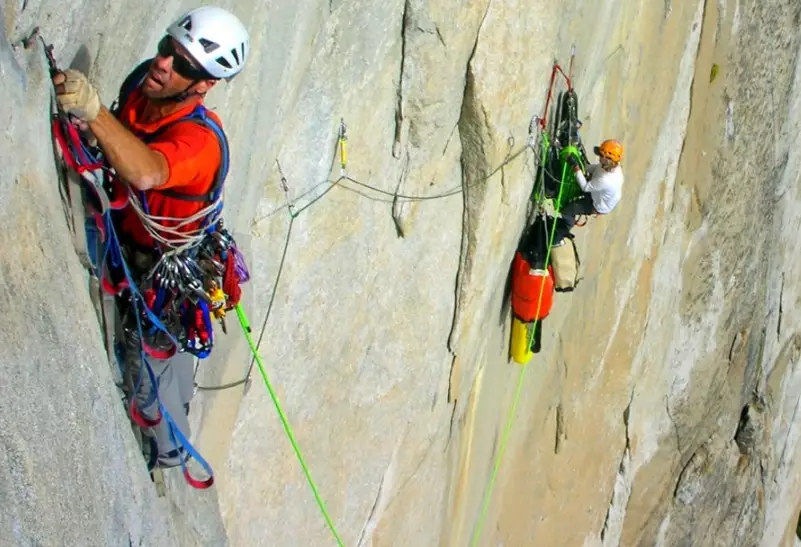
Planning Your First Real Aid Climbing Adventure
You've practiced on a top-rope at the local crag. You can manage your etriers without looking like a marionette with its strings cut. Now what?
Choosing your first real aid route is crucial. You want something well within your ability to build confidence, not a terrifying epic. Look for these features:
- Solid A1 or easy A2 terrain. Check guidebooks and online forums like Mountain Project. Avoid anything with "hooky" or "heads-up" in the description.
- Good, accessible retreat options. Can you rappel the route easily if something goes wrong?
- Moderate length. A single-pitch or two-pitch route is perfect. The classic first aid climb in Yosemite, for example, is often the "South Face" of Washington Column (a much shorter route than the big walls).
- Bolted belays. One less thing to worry about when you're learning systems.
Logistics are 80% of the game. Make a checklist. Pack your haul bag (even for a one-day, you can practice with a light one) the night before. Know your approach. Have a weather window. Tell someone your plan.
For a multi-day objective, like the Nose on El Capitan in Yosemite National Park, you're adding layers of complexity: bivy strategy, water management (a gallon per person per day, minimum), food that you can actually eat while exhausted, and waste management. I won't sugarcoat it—my first wall was a logistical nightmare. We brought too much water (back-breaking) and the wrong food (nothing that required cooking, thank god). We learned the hard way.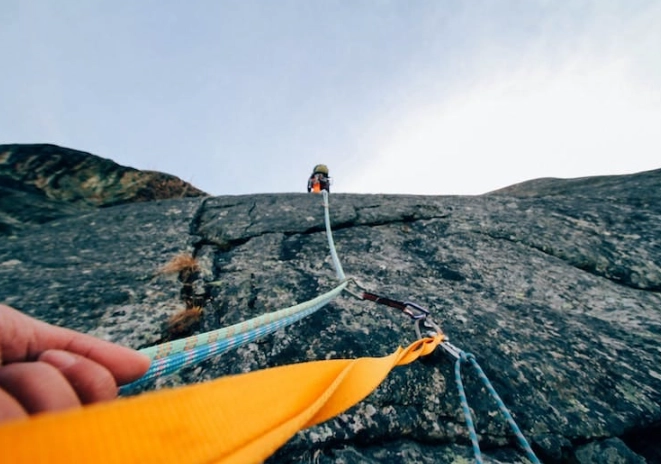
Common Aid Climbing Questions (Stuff You're Actually Wondering)
My Take: The Good, The Bad, The Reality
After several years of dabbling in this world, here's my blunt assessment.
Aid climbing has made me a more complete, more thoughtful climber. It's opened up adventures I could only dream of before. Sleeping on a portaledge under a blanket of stars on the side of El Cap is an experience that reshapes your perspective on life. The camaraderie you build with a partner during a multi-day suffer-fest is unique.
But man, it can be a slog. The romance fades quickly when you're hauling a 90-pound bag in the baking sun, or when a thunderstorm rolls in and you're desperately trying to batten down the hatches on your portaledge. It's expensive. It's gear-intensive. And let's be real—the actual process of aiding can be monotonous.
Is it for everyone? No. If you thrive on the fluid, physical dance of free climbing, the plodding nature of aid might frustrate you. But if you love puzzles, logistics, and a type of climbing that feels more like a strategic expedition, you might just find your new obsession.
The best way to know is to try it in a safe, controlled environment. Find that mentor. Take a course. Set up a top-rope on a crack and try to aid up it with just your trad gear and two slings as etriers. You'll either be bored out of your mind in an hour, or you'll catch the bug—the bug to solve the vertical puzzle, one piece of gear at a time.
And maybe, just maybe, you'll start looking at those blank walls not as impossibilities, but as the next great problem waiting to be solved.