Your Prismatic Journey: Quick Navigation
I still remember my first glimpse of it. You've seen the photos, right? Those impossible, almost fake-looking rings of electric blue, vibrant orange, and rusty red. But nothing—and I mean nothing—prepares you for seeing the Grand Prismatic Spring in Yellowstone with your own eyes. It's like someone took a slice of a alien planet and dropped it in the middle of Wyoming.
It's the poster child of Yellowstone for a reason. It's massive, it's colorful, and it feels utterly otherworldly. But here's the thing most blogs don't tell you: your experience can be either mind-blowing or kinda... meh. It all depends on how you see it. I made the mistake of just walking the boardwalk on my first trip and left feeling a bit shortchanged. The view from ground level just doesn't do it justice.
So, let's cut through the hype and get into what you really need to know. What is this thing? Why does it look like that? And most importantly, how do you actually see it in a way that'll make your jaw drop?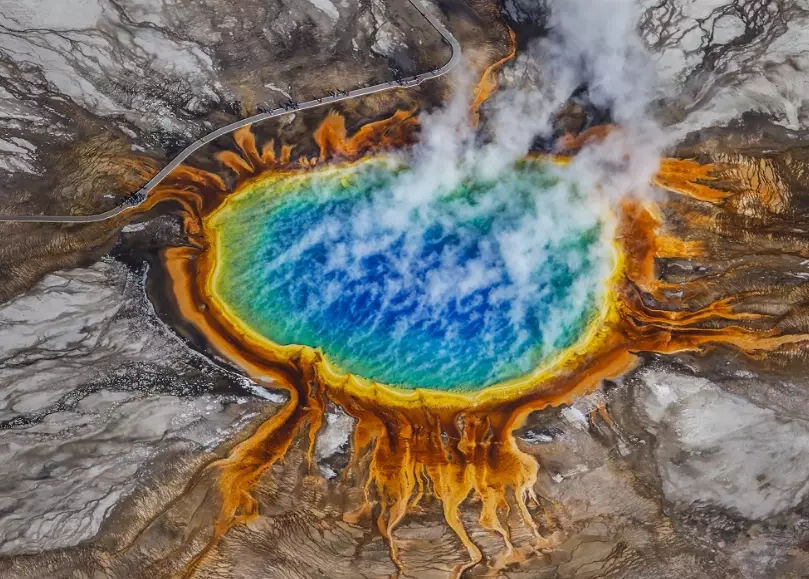
What Exactly Is the Grand Prismatic Spring?
Let's start with the basics. The Grand Prismatic Spring isn't just a pretty pool. It's a thermophilic ecosystem and a geological wonder all rolled into one.
Think of it as the king of Yellowstone's hydrothermal features. It's the largest hot spring in the United States and the third largest in the world. We're talking about a pool roughly 370 feet in diameter and over 120 feet deep. To put that in perspective, you could fit a decent-sized baseball infield inside it. The amount of steaming, near-boiling water it discharges every minute is staggering.
Quick Facts at a Glance: Located in the Midway Geyser Basin, the Grand Prismatic Spring is about 160°F (70°C) at its searing center. The vibrant colors aren't from minerals or dyes, but from millions of heat-loving microbes called thermophiles. The National Park Service has fantastic, detailed resources on how these features work, which you can explore on their official hydrothermal systems page.
The name "Prismatic" is a perfect fit. When the sun hits it right, the steam rising off the surface acts like a giant prism, splitting the light. But honestly, the rainbow effect from the steam is just the icing on the cake. The real show is on the ground.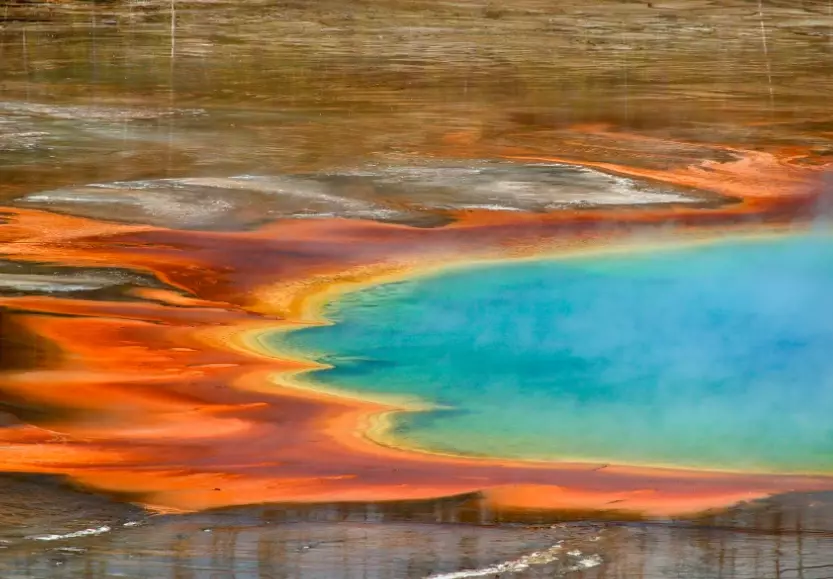
Where Is It and How Do You Get There?
This is where trip planning starts. The Grand Prismatic Spring Yellowstone sits in the Midway Geyser Basin, which is roughly halfway between the Old Faithful area and the Fountain Paint Pot area on the park's Lower Loop road.
If you're coming from the west entrance (West Yellowstone, Montana), you've got about a 30-mile drive. From the south entrance (near Jackson Hole), it's closer to 40 miles. The roads are good, but in summer, traffic can be a beast. Bison jams are a real thing, and they're not a metaphor.
Parking. Ah, the parking. This is the single biggest headache for visiting the Grand Prismatic Spring. The lot for the Midway Geyser Basin is notoriously small and fills up by 9:30 AM in peak season (July-August). I've circled that lot like a vulture more times than I care to admit.
My Top Tip: Go early. I mean, sunrise early. Not only will you get a parking spot, but the morning light hitting the steam is magical, and you'll have the boardwalks mostly to yourself. The second-best option is late afternoon, after 4 PM. The midday sun can actually wash out the colors a bit, and the crowds are at their peak.
Once you park, you'll walk a short path from the lot to the start of the boardwalk loop. The loop itself is only about 0.8 miles round trip and is mostly flat and paved, which is great for accessibility.
The Two Ways to See It: Ground Level vs. The Overlook
This is the most critical piece of advice in this whole guide. You have two primary viewing options, and they offer completely different experiences.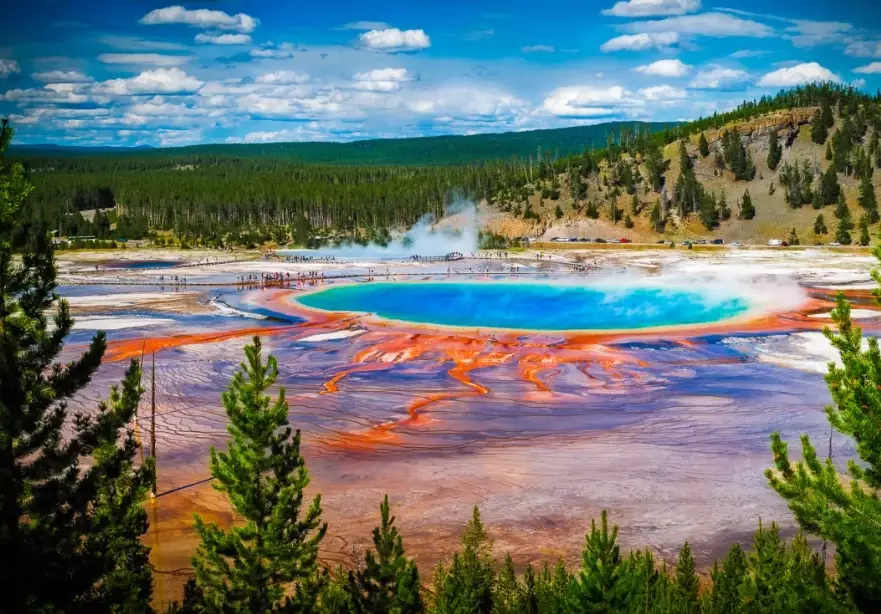
| Viewing Method | What You'll See | Pros | Cons |
|---|---|---|---|
| Ground-Level Boardwalk | Close-up views of the microbial mats, steam, and the spring's edge. You can feel the heat and hear the water. | Immersive, sensory experience. Accessible. Great for seeing details and other nearby features like Excelsior Geyser. | You cannot see the full, iconic colorful expanse of the spring. Your view is dominated by the steam plume. |
| Grand Prismatic Overlook Trail | The famous, full aerial view of the entire colorful disk. The postcard shot. | The definitive, breathtaking view. Perfect for photos. Less crowded than the main boardwalk. | Requires a separate, moderate 1.6-mile round-trip hike with about 200 feet of elevation gain. Not directly accessible from the main parking lot. |
Let's be honest, the boardwalk can feel a bit... underwhelming at first. You're right next to this giant thing, but all you see is steam and the colorful runoff channels. It's still cool, but it's not *the* view. The overlook is non-negotiable if you want the full Grand Prismatic Spring Yellowstone experience.
Seriously, do the hike.
The trailhead for the overlook is not at the main Midway Geyser Basin parking lot. You have to drive about a mile south towards Old Faithful and look for the Fairy Falls trailhead parking area. That's where you start the hike. The first part is through a recovering burned forest, then you climb a hillside. The trail is well-maintained, but wear good shoes. The view from the top is 100% worth every step.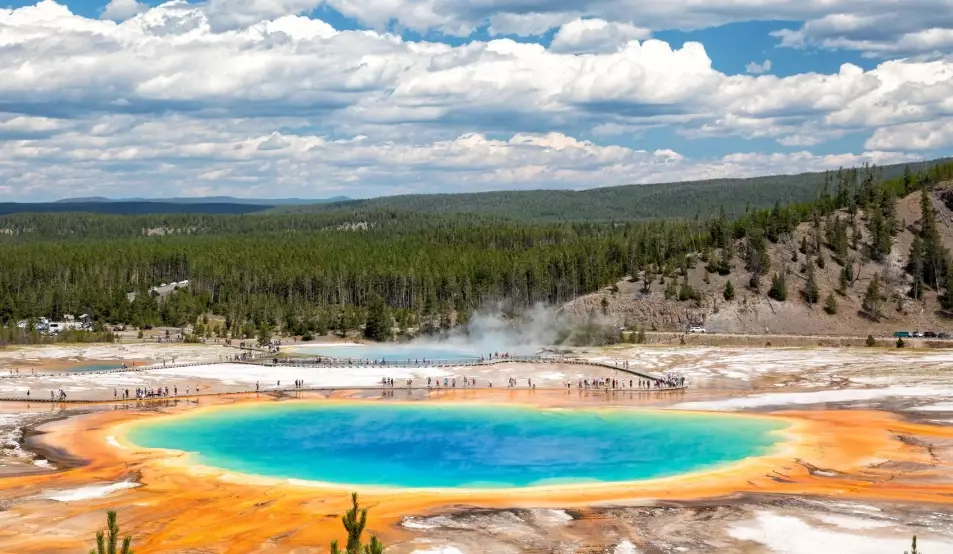
When is the Best Time to Visit?
Timing is everything with natural wonders, and the Grand Prismatic Spring is no exception.
- Season: The park is fully open from late May to early October. Summer (June-August) has the most reliable access but the biggest crowds. Early fall (September) is my personal favorite—fewer people, cooler temps, and the steam shows up better against the crisp air. Winter access is limited to guided snowcoach or snowmobile tours, which is a surreal and quiet way to see it, but you likely won't do the overlook hike.
- Time of Day: As mentioned, early morning or late afternoon. The angle of the sun in these hours provides the best lighting to penetrate the steam and make the colors pop. Midday sun tends to create a lot of glare and haze.
- Weather: A cool, clear day is ideal. On a very cold day, the steam plume is enormous and can completely obscure the spring (a cool sight in itself, but frustrating if you want the colorful view). On a completely windless, hot day, the steam can sit low on the water, giving you a clearer view from the boardwalk than usual.
Pro Photographer's Secret: For the best photos from the overlook, go on a day with a light breeze. This will blow the steam to one side, giving you a clear window to shoot the colors without a giant white plume in the way. Patience is key—wait for the steam to shift.
Safety and Etiquette: This Isn't a Swimming Pool
This needs its own section because it's so important. The ground around the Grand Prismatic Spring is thin, brittle, and scalding hot. The water is acidic and near boiling. People have been severely burned and killed by leaving the boardwalks in Yellowstone's thermal areas.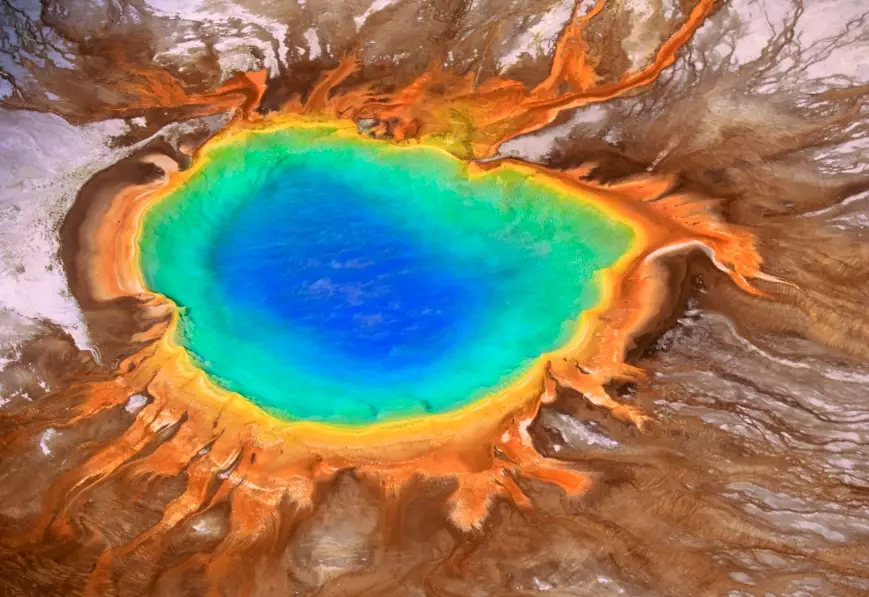
The rules are simple but absolute:
- Stay on the designated boardwalks. Always. No exceptions. The National Park Service is not kidding about this. The crust can look solid but can collapse into a boiling pool underneath. You can find all the critical safety guidelines directly from the source on the NPS Yellowstone safety page.
- Do not throw anything into the spring. Not a coin, not a rock, nothing. It can clog the vent and damage the feature.
- Supervise children closely. Hold their hands. The boardwalks have railings, but kids are quick.
- Leash your pets. And honestly, consider if bringing them on the boardwalk is a good idea—the heat and crowds can stress them out.
- Be prepared for strong sulfur smells. It's the distinct scent of a geothermal area—like rotten eggs. Some people find it overwhelming.
Respect the rules. They exist for a reason.
The Science Behind the Rainbow: Why Is It So Colorful?
Okay, let's geek out for a minute. The colors of the Grand Prismatic Spring Yellowstone are a masterpiece of microbiology, not chemistry.
The center of the spring is a sterile, searing blue. That's because the water is so incredibly hot (around 160-180°F) that nothing can live in it. The deep blue color is simply the natural result of water absorbing the red wavelengths of light and reflecting the blue ones. It's the same reason clean, deep ocean water looks blue.
Now, as the water flows outward from the center, it cools. And this is where the magic happens. Different communities of thermophiles (heat-loving bacteria and archaea) establish themselves in specific temperature zones.
- Outer Cooler Rings (Yellow, Orange, Red): These vibrant bands are massive bacterial mats. The colors come from pigments (like carotenoids) inside the microbes, which they use for photosynthesis and to protect themselves from the intense sunlight. Different pigments thrive at different temperatures, creating the ringed effect. The U.S. Geological Survey has done fascinating research on these microbial ecosystems, which you can read about in their hydrothermal systems overview.
So the spring is essentially a giant, natural petri dish. The colors are a live map of the water temperature. It's a living artwork that changes slightly with the seasons, the sun, and the flow of the spring.
What Fuels the Heat?
The engine for the Grand Prismatic Spring, and all of Yellowstone's geothermal activity, is the Yellowstone Caldera—a massive, active supervolcano. Magma relatively close to the surface heats underground water. That pressurized, superheated water then finds its way up through cracks in the earth's crust to create hot springs, geysers, and fumaroles.
The Grand Prismatic Spring is essentially a window into that immense underground furnace. It's a constant, gentle outflow, unlike a geyser which erupts when pressure builds up.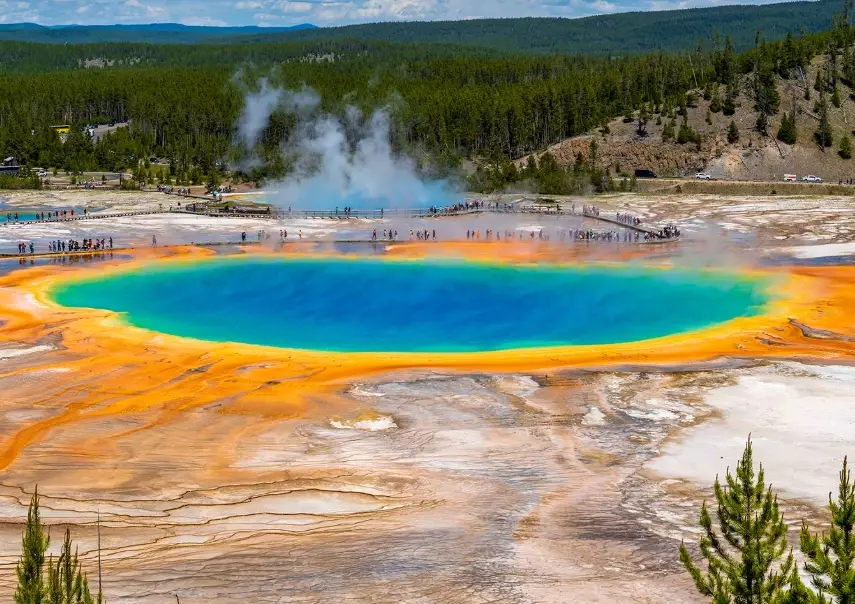
Beyond the Grand Prismatic: What Else is in Midway Geyser Basin?
While you're there, don't rush off. The boardwalk loop takes you past other incredible features:
- Excelsior Geyser Crater: This monstrous pool dumps over 4,000 gallons of boiling water into the Firehole River every minute. It's a sight and sound you won't forget.
- Turquoise Pool: A beautiful, milky blue hot spring with delicate sinter formations around its edges.
- Opal Pool: A smaller but often brilliantly colored pool.
Take your time. Compare the colors and behaviors. Each one is unique.
Visiting the Grand Prismatic Spring Yellowstone is more than just checking off a landmark. It's a lesson in geology, microbiology, and the raw power of our planet. It's a reminder of how small we are and how strange and beautiful nature can be. Plan well, see it from above, and take a moment to appreciate not just the view, but the incredible natural processes that create it. It's one of those places that truly earns the word "awesome."
Hopefully this guide gives you everything you need to have an unforgettable experience. Trust me, seeing that rainbow from the overlook for the first time is a memory you'll keep forever. Now go make it happen.
Frequently Asked Questions (What You Really Want to Know)
I've gotten a ton of questions from friends and readers over the years. Here are the big ones.
Can you swim in the Grand Prismatic Spring?
Absolutely not. It is illegal, extremely dangerous, and would damage a fragile ecosystem. The water is hot enough to cause third-degree burns in seconds. Plus, the mineral deposits are delicate. Swimming is strictly prohibited, and rangers will issue hefty fines.
Why is the water so blue?
As explained above, the intense blue in the center is due to the scattering of sunlight in the deep, incredibly clear, and sterile hot water. It's a physical property of the water itself, not caused by any added substance or microbe.
Has it ever erupted like a geyser?
The Grand Prismatic Spring is not a geyser; it's a hot spring, which means it has a steady convection flow that prevents pressure from building up to cause an eruption. However, its neighbor in the Midway Geyser Basin, Excelsior Geyser, *was* a massive geyser that now functions as a boiling, crater-like hot spring. So the basin has explosive history!
Do the colors change?
Yes, but slowly. The colors can appear more vivid in summer when microbial mats are most active, and more subdued in winter. They can also shift over longer periods due to changes in water temperature, flow, or mineral content. Drought or seismic activity can sometimes influence this.
Is it worth visiting if I only have one day in Yellowstone?
Yes, it's a top-tier attraction. If you have one day on the Lower Loop, pair it with Old Faithful and the Canyon area. Just commit to getting there early and doing the overlook hike for the real payoff. Don't just settle for the boardwalk view.
What should I bring?
Good walking shoes (especially for the overlook hike), water, a sun hat, and a windbreaker or layer. The basin can be windy and cool even on a hot day. And of course, your camera.