Let's be honest. The Instagram shot of Delicate Arch with fifty people in line? The bumper-to-bumper traffic in Yellowstone's Hayden Valley? It can drain the magic right out of a national park visit. For over a decade, I've been weaving my way through the park system, and my most profound moments haven't been at those iconic spots. They've been in the quiet parks, the ones that demand a little more effort and reward you with something far more valuable: genuine solitude and a raw, unfiltered connection with the landscape.
These lesser-known national parks aren't "worse" versions of the famous ones. They're different. They trade overwhelming scale for intimate wonder, crowds for quiet, and convenience for adventure. Visiting them requires a shift in mindset and preparation.
Your Quick Guide to Getting Off the Grid
What Makes a Park "Off the Path"?
It's not just low visitor numbers. A park like Great Smoky Mountains gets millions, but you can find solitude on a Tuesday in November. A true "off the beaten path" park has one or more of these traits:
Physical Inaccessibility: No major airport nearby. A long drive from the interstate. Maybe you need a ferry or a small plane. Isle Royale is the poster child for this.
Lack of Iconic "Postcard" Features: They don't have a Half Dome or Old Faithful. Their beauty is subtle, complex, or requires exploration to reveal itself. Think of the ancient bristlecone pines in Great Basin—you have to hike to meet them.
Minimal Development: Few or no hotels, one gas station 50 miles away, limited cell service. Your trip becomes more self-reliant. North Cascades is famously a "park you hike through," not drive.
The payoff? Trails where you see more animal tracks than footprints. Campsites you don't have to book six months in advance. The feeling of discovery, like you're in on a secret.
Four Underrated Parks You Should Know
Here are a few of my favorites that perfectly embody the spirit of the road less traveled.
1. Congaree National Park, South Carolina
Everyone goes to the Smokies. Almost no one goes here. Congaree protects the largest intact expanse of old-growth bottomland hardwood forest in the U.S. It feels primordial. The boardwalk trail is flat and easy, making it fantastic for families, but the magic is in the silence and the scale of the trees. In spring and fall, the park floods—that's its natural state. Rent a canoe from the park and paddle through the flooded forest canopy. It's an otherworldly experience you simply cannot get anywhere else in the system.
2. Isle Royale National Park, Michigan
This is the deep end of the pool. Accessible only by ferry (from Michigan or Minnesota) or seaplane, it's the least-visited national park in the lower 48 for a reason. It's a remote island in Lake Superior, a wilderness defined by moose, wolves (though their population fluctuates), and rugged trails. This isn't a day-trip park. You come to backpack, kayak, or basecamp at the historic Rock Harbor Lodge. The solitude is absolute. I once hiked the Greenstone Ridge for two days without seeing another soul. Be warned: the weather is notoriously fickle, and the black flies in early summer are a force of nature.
3. Great Basin National Park, Nevada
Drive for hours through the vast, empty Great Basin desert, and suddenly the Snake Range rises over 13,000 feet. This park is a masterpiece of contrasts. You can tour the stunning Lehman Caves (book ahead), then drive up to Wheeler Peak. From there, hike the alpine trail to see the ancient bristlecone pines—some over 4,000 years old. At night, the sky is so dark it's an official International Dark Sky Park. The lack of light pollution means the Milky Way looks like a painted stripe across the sky. The nearby town of Baker has about three businesses total. You are on your own out here.
4. North Cascades National Park, Washington
Calling this a "national park" is almost a technicality. Unlike its famous siblings Rainier and Olympic, North Cascades has no iconic drive-through sight. It's a vast, rugged wilderness of jagged peaks, more than 300 glaciers, and deep green valleys. The main road, Highway 20, skirts the complex. To really experience it, you must strap on a pack. The trail to Cascade Pass is a lung-buster, but the view of the Johannesburg Mountain massif is arguably more dramatic than anything in the more popular parks. Services are minimal. It's a place for hikers, climbers, and kayakers, not windshield tourists.
| Park | Key Feature | Best For | Logistical Note |
|---|---|---|---|
| Congaree | Floodplain Forest & Canoeing | Families, Easy Access, Unique Ecosystems | Mosquitoes are fierce in summer; visit in cooler months. |
| Isle Royale | Island Wilderness & Wildlife | Serious Backpackers, Solitude Seekers | Ferry/plane tickets & lodging require booking 6-12 months ahead. |
| Great Basin | Ancient Trees & Dark Skies | Stargazers, Hikers, Cave Lovers | Extremely remote. Fill gas tank in Ely or Delta before arriving. |
| North Cascades | Alpine Scenery & Glaciers | Hikers, Climbers, Photographers | Most "park" is wilderness. Focus on specific trailheads, not "seeing the park." |
How to Plan Your Off-the-Beaten-Path Trip
This is where most people get tripped up. You can't wing it like you might at a Grand Canyon or Zion.
Research is Non-Negotiable: Start with the National Park Service website for the park you choose. But go deeper. Read recent trip reports on sites like AllTrails. Check the park's social media for current conditions—a late snowmelt can close trails in North Cascades into July.
Redefine "Convenience": Your lodging might be a campground, a rustic lodge 90 minutes from the park entrance, or your own tent. I made the mistake once of assuming I'd find a motel near Great Basin. I ended up sleeping in my car at a trailhead (which was allowed, and actually amazing). Plan your meals. A simple camp stove, a cooler, and groceries from the last big town are your best friends.
Embrace the Season: Shoulder seasons (late spring/early fall) are often ideal. Fewer people, milder weather. Summer in Isle Royale is buggy. Winter in most of these places is for experts only. Call the park's ranger station. They are the single best source of unfiltered, current advice.
A quick story: My first time in Congaree, I just walked the boardwalk. Nice, but forgettable. The next time, I talked to a ranger for ten minutes. He pointed me to the Kingsnake Trail, a muddy, unmaintained path that dove into the heart of the floodplain. I got lost twice, saw a dozen river otters, and had the forest to myself. That conversation transformed the trip. Always talk to a ranger.
Essential Gear You Might Not Have Considered
Beyond the usual hiking boots and backpack, these items move from "nice to have" to "critical" in remote parks.
Satellite Communicator (Garmin inReach/Zoleo): This is your lifeline where there's no cell service. It allows for two-way texting and has an SOS button. I don't go into the backcountry of any remote park without one now. It's not just for emergencies; it's to let family know you're okay when you're off-grid for days.
Water Filtration System: Not just tablets. A quick-flow filter (Sawyer Squeeze, Katadyn BeFree) lets you drink safely from streams and lakes without carrying your body weight in water bottles. Critical in places like Isle Royale or North Cascades where streams are plentiful.
Physical Maps & Guidebook: Your phone will die. GPS can fail. A paper map from the park visitor center and a detailed guidebook (like a FalconGuide) are indispensable. They also help you discover trails and features you'd never find online.
Tire Repair Kit & Air Compressor: Many access roads are gravel or rough. A simple puncture can strand you hours from help. A plug kit and a small compressor that plugs into your car's 12V outlet can get you back to civilization.
Your Questions Answered
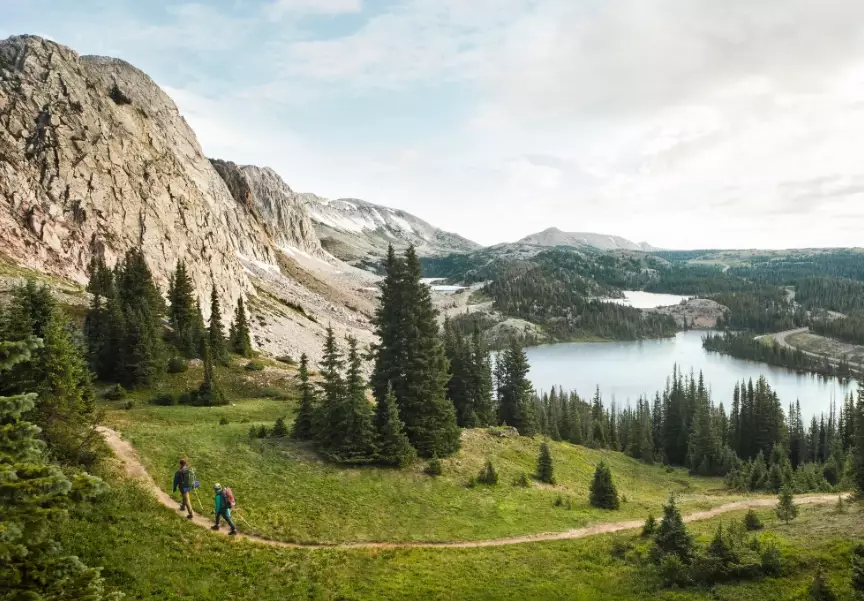
The path less traveled isn't always easier. It demands more planning, more self-reliance, and a willingness to embrace uncertainty. But the reward is something increasingly rare: a true sense of discovery, a personal connection with a wild place, and memories that aren't shared with a crowd of strangers. Skip the traffic jam. Find your own park.