Let's cut to the chase. The best hiking socks aren't the thickest, the most expensive, or the ones with the coolest pattern. They're the ones that manage moisture, reduce friction, and fit your foot and boot like a second skin. Get this wrong, and a 10-mile hike turns into a miserable slog with hot spots and blisters. Get it right, and you barely think about your feet all day. After years of trial and error (and some painful lessons), I've learned that your sock choice is as critical as your boot choice.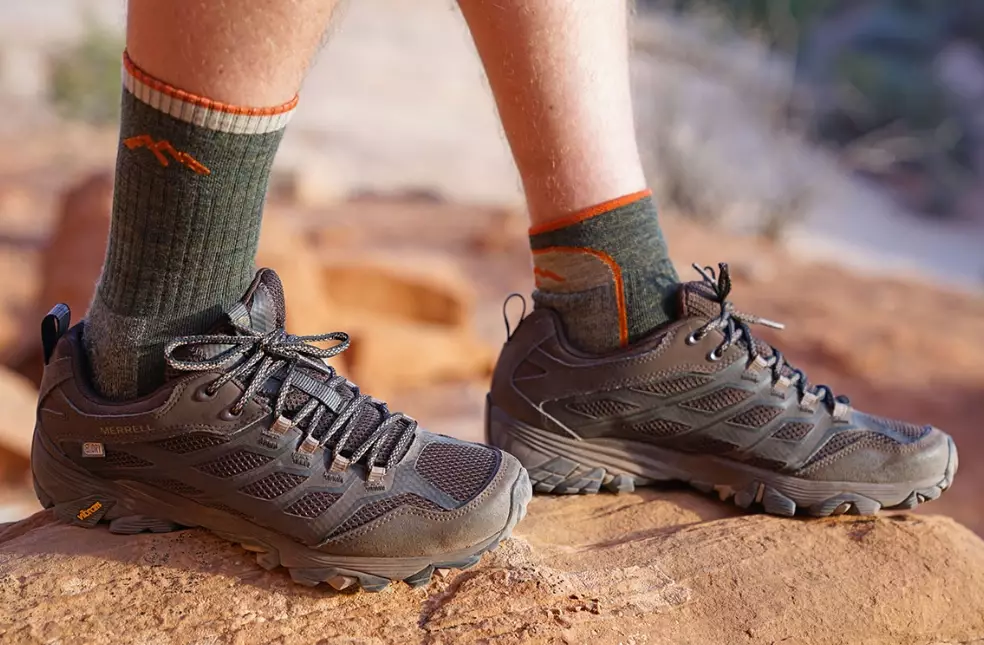
Your Quick Guide to Smarter Sock Choices
The Fabric Showdown: Wool vs. Synthetics vs. Blends
This is the core of the debate. Walk into any store, and you'll be bombarded with options. Here’s the real-world breakdown, not just the marketing copy.
| Material | Best For | Key Advantages | Potential Drawbacks |
|---|---|---|---|
| Merino Wool | All-season hiking, temperature regulation, odor resistance. | Naturally wicks moisture, retains warmth when wet, resists odors for days, soft against skin. | Less durable than synthetics, can be more expensive, dries slower. |
| Synthetics (Polyester, Nylon) | Fast-drying pursuits, wet conditions, budget-friendly options. | Extremely durable, dries incredibly fast, often more affordable. | Can hold odors more readily, may feel less temperature-regulating in extreme cold. |
| Wool-Synthetic Blends | The sweet spot for most hikers seeking balance. | Combines wool's comfort & odor control with synthetic durability & drying speed. My personal go-to. | Performance depends on blend ratio; not as specialized as pure materials. |
| Silk or Coolmax Liners | Extreme blister prevention, winter layering, ultra-long distances. | Minimizes friction drastically, adds a warm layer without bulk. | Adds complexity (two layers to manage), can be too warm in summer. |
I used to be a merino purist until a thru-hike section on the Appalachian Trail. My pure merino socks developed holes at the heels within 300 miles. I switched to a 75% merino / 25% nylon blend, and the next pair lasted over 500 miles with similar comfort. The Outdoor Industry Association notes the trend toward high-performance blends for this exact reason.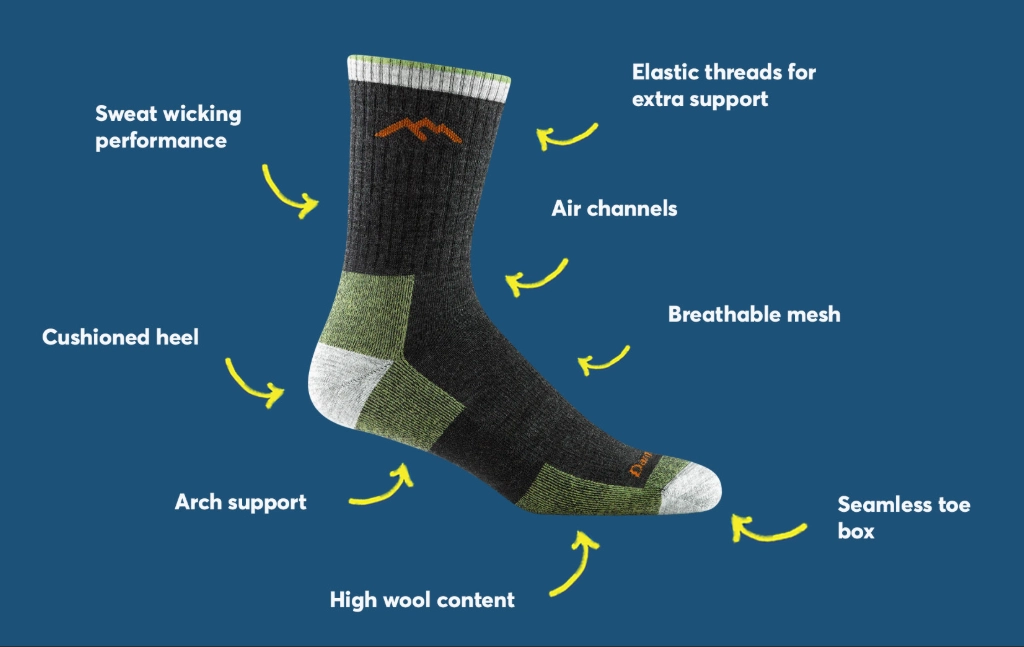
How Much Cushion Do You Really Need? It's Not Obvious.
Cushioning is about impact protection and fill. More cushion isn't automatically better.
No-Show / Light Cushion
Think trail runners or well-broken-in boots on smooth trails. This is for fast-and-light hiking where you prioritize ground feel and minimal bulk. Too much cushion here can actually cause slippage inside a snug shoe.
Medium Cushion
The workhorse. Suitable for 90% of day hikes and backpacking trips. Provides protection on rocky terrain without making your boots feel tight. This is the safe, recommended starting point.
Heavy / Maximum Cushion
Reserved for heavy backpacking loads, very rugged terrain, or if you're prone to foot fatigue. The catch? They take up significant space. If your boots are sized perfectly for medium-cushion socks, heavy ones will compress your feet, impair circulation, and cause problems. You must size your boots accordingly.
A mistake I see: someone buys bulky socks for "extra comfort" on their first backpacking trip, but their boots, fitted with thinner socks, now crush their toes on descents. Painful.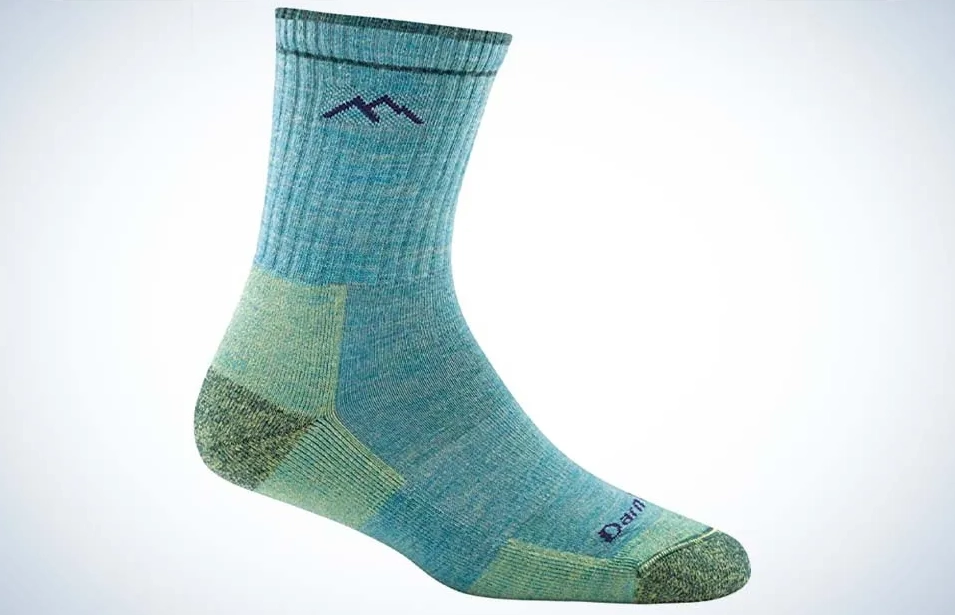
Sock Height, Seams, and The Elusive Perfect Fit
Fit is king. A poorly fitting sock will create blisters no matter the material.
Sock Height: Crew-length (rising to mid-calf) is the standard for hiking. It protects your calf from boot chafing and debris. Ankle socks invite dirt, pebbles, and boot collar rub. Over-the-calf styles are for serious bushwhacking or winter.
The Seam Issue: Toe seams can be blister factories. Look for flat-locked seams or, even better, seamless toe closures. Run your finger inside the toe box. If you feel a prominent, raised ridge, put it back. Some brands now knit the entire sock in a tube shape, eliminating the toe seam altogether.
Getting the Fit Right: The sock should be snug without compression. No loose fabric that can bunch up (a blister guarantee), especially at the heel or under the arch. It should hold its position without sliding down. According to guidance from the American Podiatric Medical Association, socks that are too tight can restrict circulation as much as tight shoes can.
When to Consider Specialized Features
Beyond the basics, some features solve specific problems.
Left/Right Specific Socks: Not a gimmick. They're anatomically shaped for a more precise fit, reducing excess material. I was skeptical until I tried a pair on a long, steep descent. The lack of slack fabric around my little toe was noticeably more secure.
Compression Socks: These are for recovery or managing circulation on very long, stationary periods (like a long flight to a trek). They're generally not for the active hiking phase itself for most people, as they can be overly restrictive.
Waterproof Socks: Like Sealskinz. A niche product. They keep water out but also trap sweat in. Useful for crossing icy streams or in persistently wet, cold conditions (think UK bog-hopping). In general hiking, they often lead to sweaty, pruned feet. Your better bet is fast-drying socks paired with waterproof-breathable boots or quick-drying shoes.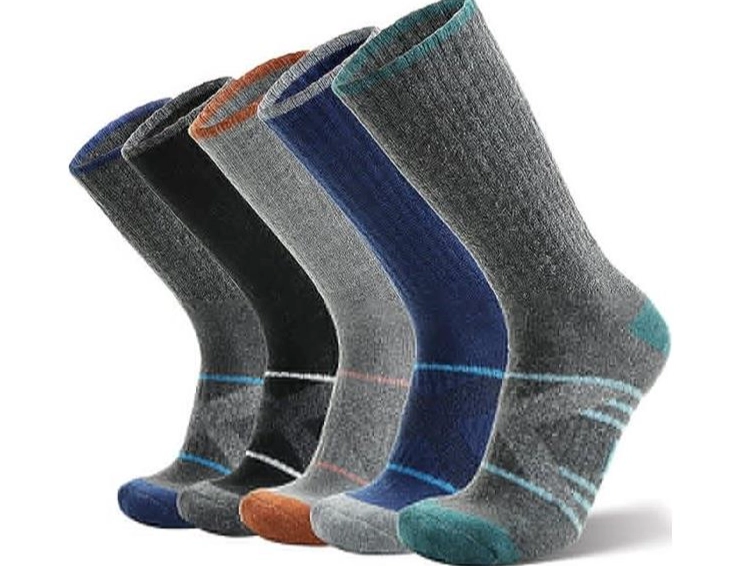
Making Your Socks Last: Care and Maintenance
Good socks deserve good care. Never use fabric softener—it coats the fibers, destroying their moisture-wicking and breathability. Wash in cool or warm water and tumble dry on low heat. High heat shrinks wool and degrades elastic. For heavy odor in synthetics, a soak in a vinegar-water solution or a sports detergent before washing works wonders.
Always pack a spare pair. On multi-day trips, the routine is simple: wash today's socks in a stream (if environmentally appropriate) or with a small amount of water, wring out, and strap them to the outside of your pack to dry while you hike in your fresh pair. Rotate. Dry feet are happy feet.
Your Hiking Socks Questions Answered
Are thicker socks always better for hiking?
No, this is a common misconception. Thickness (cushion) is about protection from impact and abrasion. On a smooth trail with a light pack, thick socks add unnecessary bulk and can overheat your feet. They also change the volume inside your boot, which can lead to a sloppy fit and blisters if your footwear isn't sized to accommodate them. Match the cushion to the terrain and load, not the assumed "toughness" of the hike.
Can I just wear cotton athletic socks for a short hike?
You can, but you're rolling the dice. Cotton absorbs moisture like a sponge and holds it against your skin. On a cool, dry, one-hour walk, you might get away with it. Add sweat, a stream crossing, or a few hours, and that damp cotton loses all cushion, wrinkles easily, and dramatically increases friction. It's the single fastest way to create blisters. The investment in one pair of proper hiking socks is worth it for any hike beyond a casual stroll.
 How often should I change my socks on a long backpacking trip?
The golden rule is to never let moisture build up. At any significant stop (lunch, a scenic overlook), take off your boots and socks to air out your feet. If your socks feel damp, change them. For most people, this means changing once during a full day of hiking. Always put on dry socks before making camp for the evening. Carry at least two, preferably three, pairs for a multi-day trip: one to wear, one drying on your pack, and one clean pair reserved for sleeping.
My heels always get blisters, no matter the sock. What am I doing wrong?
Heel blisters often point to a fit issue beyond the sock. First, ensure your boots are the right size—your heel should be locked in place with minimal vertical lift when walking. If the boot is too big, your foot slides. Second, try a heel-lock lacing technique to secure your ankle better. Finally, for stubborn cases, apply a thin piece of moleskin or a specialized blister prevention tape directly to your skin on the blister-prone spot before putting on your sock. The sock then rubs against the tape, not your skin.
Are expensive hiking socks worth the money?
Up to a point. A $25 pair from a reputable outdoor brand will almost always outperform a $5 generic pack. The engineering in yarn, knitting, and fit is real. However, the difference between a $25 pair and a $40 pair is often marginal—maybe more luxurious merino content or a specific eco-certification. Diminishing returns set in quickly. Your best value is in the mid-range from trusted brands known for durability. Think of them as a consumable piece of safety gear, not just clothing.
Choosing the best hiking socks boils down to understanding the job they need to do: manage moisture, reduce friction, and protect without bulk. Start with a medium-cushion wool-blend crew sock that fits impeccably. From there, you can branch out based on your specific adventures. Your feet will thank you for every mile.