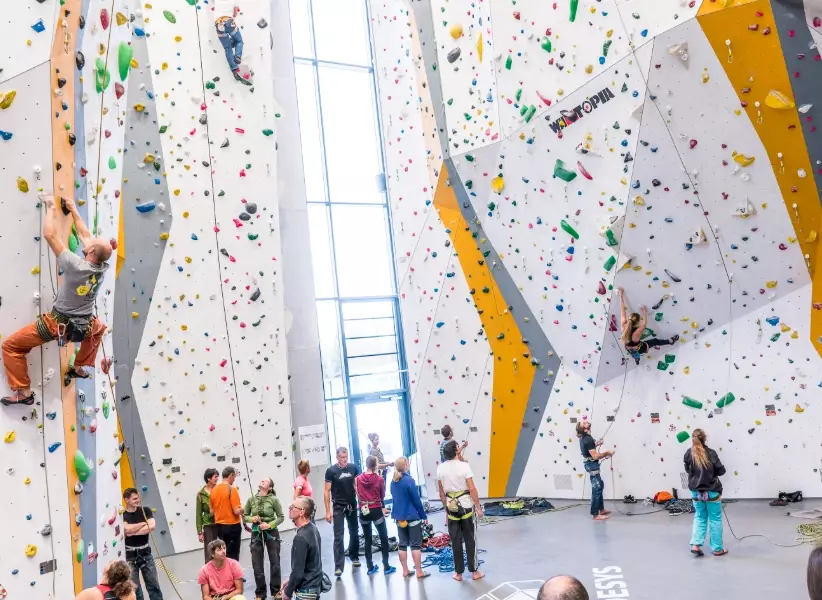
You walk into a climbing gym for the first time, buzzing with excitement. Then you overhear a conversation: "I was working that crimpy overhang, got the heel hook beta from Sarah, but then took a whipper right before the crux. My belayer was solid, though." It might as well be a foreign language. Understanding climbing terms isn't about sounding cool—it's about safety, communication, and unlocking a deeper connection to the sport. This glossary cuts through the jargon so you can focus on the fun part: climbing.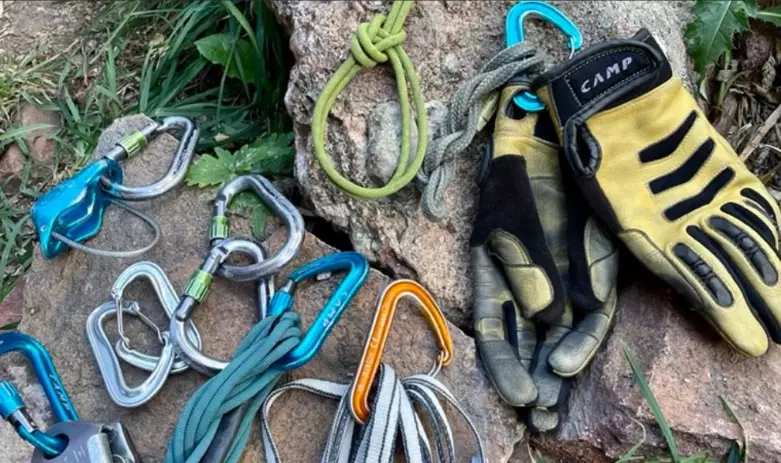
Your Quick Guide to Climbing Speak
Why Climbing Lingo Matters
Let's be clear. This isn't just trivia. Misunderstanding a term like "off belay" can have real consequences. The language of climbing evolved for efficiency and precision. On a windy cliff face, you need short, unmistakable commands. In a guidebook, concise terms convey complex features. Knowing the slang also helps you absorb advice, ask better questions, and integrate into the community. It turns confusing noise into useful information.
I remember a new climber frantically yelling "Take!" repeatedly while dangling. His patient belayer finally said, "I have you on take. Do you need me to lower?" The climber just didn't know the word "lower." A simple vocabulary gap caused a lot of panic.
Gear Talk: Your Essential Equipment Glossary
You can't talk about the tools without knowing their names. Here are the big ones.
Hardware: The Metal Stuff
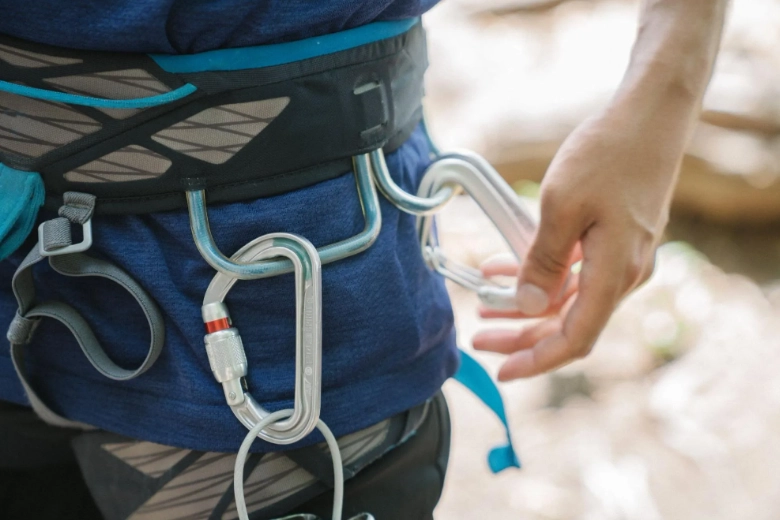
Carabiner (or 'Biner): The aluminum or steel oval, D, or pear-shaped clip with a spring-loaded gate. Never call it just a "clip." Quickdraw (or 'Draw): Two carabiners connected by a sturdy fabric sling. You clip the rope into one end; the other end clips into bolts on the wall. Belay Device: The mechanical piece (like an ATC or GriGri) that your belayer uses to control the rope and catch falls. Cam/Nut: Removable protection gear for traditional climbing. Cams expand, nuts wedge. Collectively called "pro."
Software: The Soft Stuff
Harness: What you wear. The leg loops and waist belt should be tight. Dynamic Rope: The stretchy life-line designed to absorb the energy of a fall. Static ropes (for hauling or rappelling) are different and dangerous to lead climb on. Chalk/Chalk Bag: Magnesium carbonate to dry sweaty hands, carried in a small pouch clipped to your harness.
On the Wall: Movement and Technique Jargon
This is the fun, descriptive slang that makes climbing sound like a dance.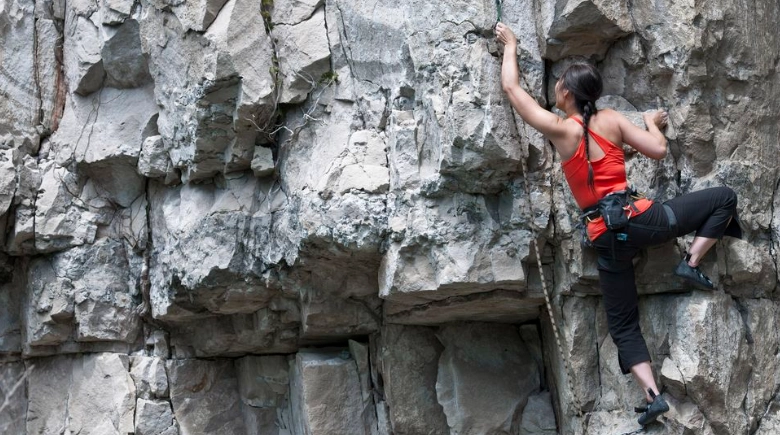
Smearing: Using the friction of your climbing shoe rubber on a flat hold or the wall itself. It's a trust exercise with your feet. Edging: Standing precisely on the thin edge of a hold. Crimping: Gripping a tiny, sharp hold with your fingertips bent at 90 degrees. Overuse can strain tendons. Pinching: Grabbing a hold between your thumb and fingers.
Heel Hook/Toe Hook: Using your heel or toe to pull yourself in or stabilize, often on a hold behind you. A game-changer on overhangs. Mantle: Pushing down on a hold to lift your body up, like getting out of a swimming pool. Dyno (Dynamic Move): A controlled jump to a distant hold. All power, no subtlety.
Then there's Beta. This is any information about how to do a climb. "What's the beta for this move?" It could be a sequence of holds, a specific heel hook, or just "use the sidepull on the left." Some climbers love detailed beta; others prefer to figure it out themselves ("going beta-free"). Asking for beta is fine, but offering it unsolicited ("spraying beta") is often considered rude.
Safety First: The Non-Negotiable Communication Terms
These words are protocol. They must be clear, loud, and acknowledged.
| Term | Who Says It | What It Means & Why It's Critical |
|---|---|---|
| On Belay? | Climber | Question to the belayer: "Are you ready to secure me?" |
| Belay On. / On Belay. | Belayer | Confirmation: "Yes, I am ready and you are secured." |
| Climbing? | Climber | Final check before leaving the ground: "I am about to start." |
| Climb On. | Belayer | Final go-ahead: "I am focused, proceed." |
| Take! | Climber | "Remove all slack, hold my weight." For resting or falling. |
| Slack! | Climber | "Give me more rope." The opposite of 'Take'. |
| Watch Me! | Climber | "I might fall, be extra alert." A heads-up. |
| Falling! | Climber | Shouted during a fall. Belayer's cue to brake. |
| Lower! | Climber | "I'm done, lower me to the ground." NOT "Let me down." |
| Off Belay | Climber (at anchor) | "I am secure independently, you can remove me from belay." |
Listen up. The most common mistake I see is mixing up "Take" and "Lower." If you're hanging and want to get down, you say "Lower." "Take" means stop my downward motion and hold me here. Confusing them wastes energy and creates frustration.
Terms for When Things Go Airborne
Whipper: A long, dramatic fall. The badge of honor for trying hard. Deck: To hit the ground. The thing you absolutely avoid. A "deck potential" fall is a serious, dangerous one. Punge: A fall on a slack rope, resulting in a long, swinging arc. Can be fun on purpose, scary by accident.
Route Beta: Describing the Climb Itself
This is the language of guidebooks and post-climb storytelling.
Route vs. Problem: A route is for roped climbing (sport or trad). A problem is for bouldering (short, powerful climbs over crash pads).
Hold Types: Jug: A big, easy-to-grab hold. A welcome rest. Sloper: A rounded, sloping hold with no positive edge. All about friction and body tension. Pocket: A hole you can fit fingers into. One-finger pockets are called "mono's" and are brutal. Sidepull / Undercling: Holds pulled sideways or upwards, respectively.
Wall Features: Overhang: Wall angle greater than 90 degrees (leans out). Slab: Angle less than 90 degrees (leans in). Requires balance over strength. Arete: A sharp, outside corner of rock. Diar: An inside corner. Roof: A severe overhang, like climbing a ceiling.
Crux: The hardest move or sequence on a climb. "The crux is pulling the roof." Pump / Pumped: The burning, swollen feeling in your forearms from sustained effort. Being "too pumped" means you can't hold on anymore. Flash: To complete a climb on the first try with prior beta. Onsight: To complete a climb on the first try without any prior beta (the purest style). Redpoint: To complete a climb after previous practice and falls (common for hard sport climbs).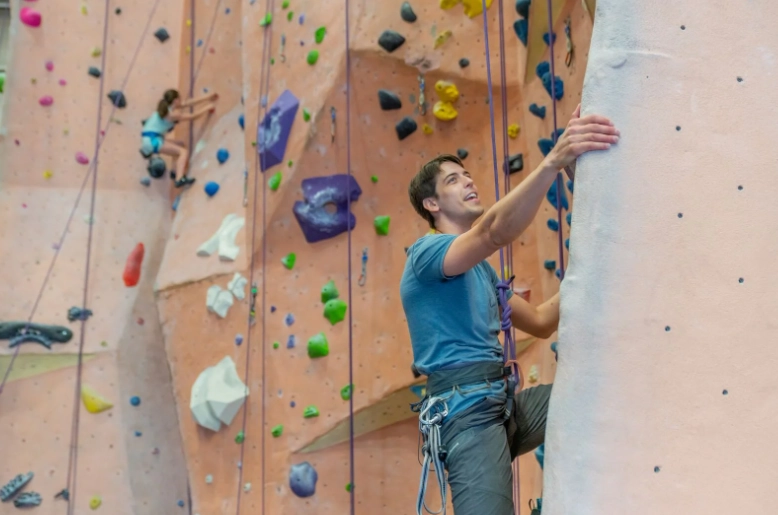
Your Climbing Language Questions Answered
How can I remember all these climbing terms as a beginner?
Don't try to. It's overwhelming. Focus on the safety-critical ones first. Master the core belay commands ('On belay', 'Climbing', 'Take', 'Slack', 'Lower'), the names of your basic gear (harness, carabiner, belay device, rope), and terms related to falling ('Whipper', 'Deck'). The rest, like route-specific beta or advanced techniques, you'll absorb naturally by climbing more and listening to others. Treat it like immersion in a new language—you learn the survival phrases first, then the conversational stuff.
What should I do if my climbing partner uses a term I don't understand?
Stop them and ask. Immediately. This is especially true for safety commands. A simple "Sorry, what does that mean?" or "Can you show me?" is not only acceptable, it's responsible. I'd much rather have a partner who asks a hundred questions than one who nods along pretending to get it. The climbing community, at its best, values clear communication and safety over ego. If someone makes you feel dumb for asking, find a new partner.
Are there any climbing terms that are commonly misused or confused?
A few come to mind. The command sequence has a subtle one. Technically, the belayer initiates with "On belay" (stating they are ready), and the climber confirms with "Belay on." But in many gyms, you'll hear the climber ask "On belay?" and the belayer answer "Belay on." The key is the two-way exchange, not the exact phrasing. Another is "Rappel" (US) vs. "Abseil" (UK/Europe). The biggest fuzzy one is "Beta." Some use it as a catch-all for any route info. Purists say beta is specifically about movement sequence—not the grade, not the location, just how to do the moves. When someone gives you beta, it's okay to ask, "Is that for the sequence, or just where the route goes?"
What's the most important climbing term for safety?
It's not a single term. It's the entire ritual of the partner check and the verbal commands that go with it. That moment before you climb where you physically check each other's harness buckle, knot, and belay device, followed by the clear call-and-response: "On belay?" "Belay on." "Climbing?" "Climb on." This ritual forces a mental shift from chatting to focused climbing mode. Skipping it, or mumbling through it, is the first step toward complacency. The most dangerous term is silence where there should be clear communication.
 The language of climbing is a living thing. New terms emerge, especially with the rise of indoor competition climbing. But the core vocabulary we've covered here is timeless. It connects you to decades of climbing history and to every other climber at the crag or in the gym. Learn it, use it, and climb with more confidence and connection. Now get out there. Climb on.