You've just started climbing. The gym feels exciting, the community is welcoming, and sending your first V2 or 5.10 feels like a major victory. But lurking beneath that initial progress are habits—some obvious, some incredibly subtle—that can stall your improvement, increase your risk of injury, or just make climbing less fun. Avoiding these common beginner climbing mistakes is the fastest way to build a solid, safe, and enjoyable foundation. This isn't about natural talent; it's about smart practice from day one.
What You'll Learn in This Guide
- Mistake #1: Relying Too Much on Arm Strength
- Mistake #2: Wearing Ill-Fitting or Wrong Shoes
- Mistake #3: Skipping a Proper Warm-Up
- Mistake #4: Ignoring Your Feet (The Silent Game-Changer)
- Mistake #5: Misusing or Misunderstanding Basic Gear
- Mistake #6: Projecting All Wrong
- Mistake #7: Not Knowing How to Rest
- Mistake #8: Letting Ego Dictate Your Session
- Mistake #9: Neglecting Your Skin
- Mistake #10: Chasing Grades Over Movement
- Your Climbing Questions Answered
Mistake #1: Relying Too Much on Arm Strength
This is the classic. You see a hold, you pull on it. Your arms burn out in 15 minutes. I did this for months, wondering why my friends who looked less "strong" were climbing harder routes.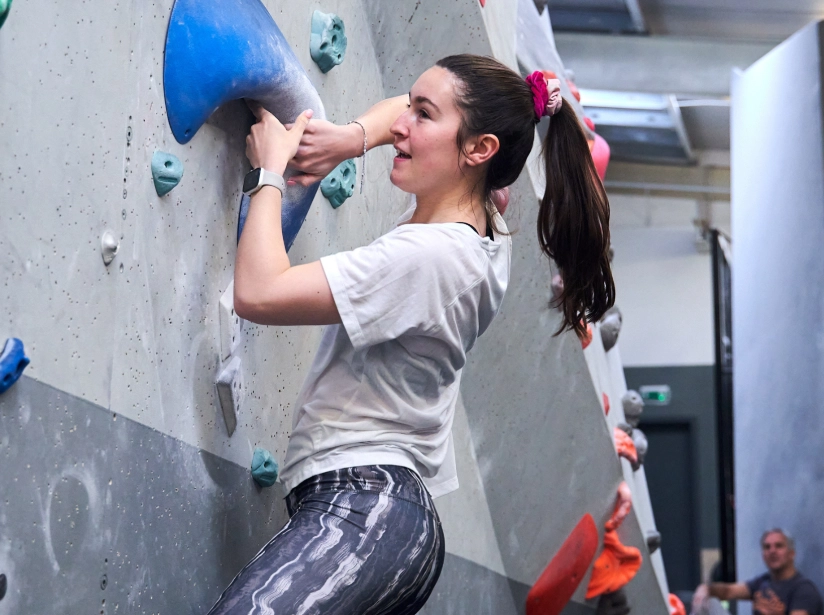
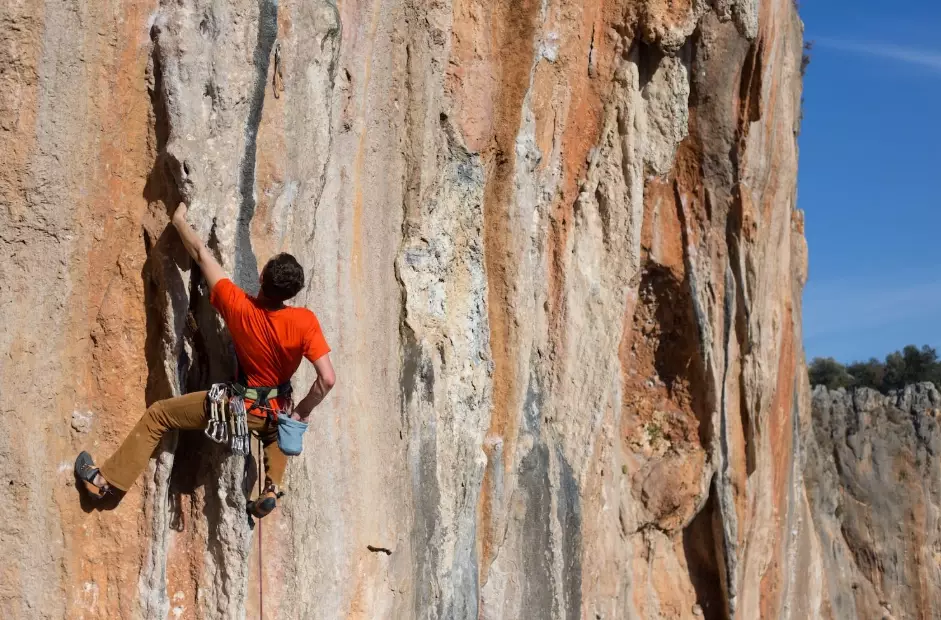
The reality is, climbing is a full-body puzzle where your legs are the primary engine. Your arms and fingers are for steering and connecting, not for doing all the lifting. When you pull yourself up with pure arm strength, you're fighting gravity inefficiently.
How to Choose the Right Climbing Shoes
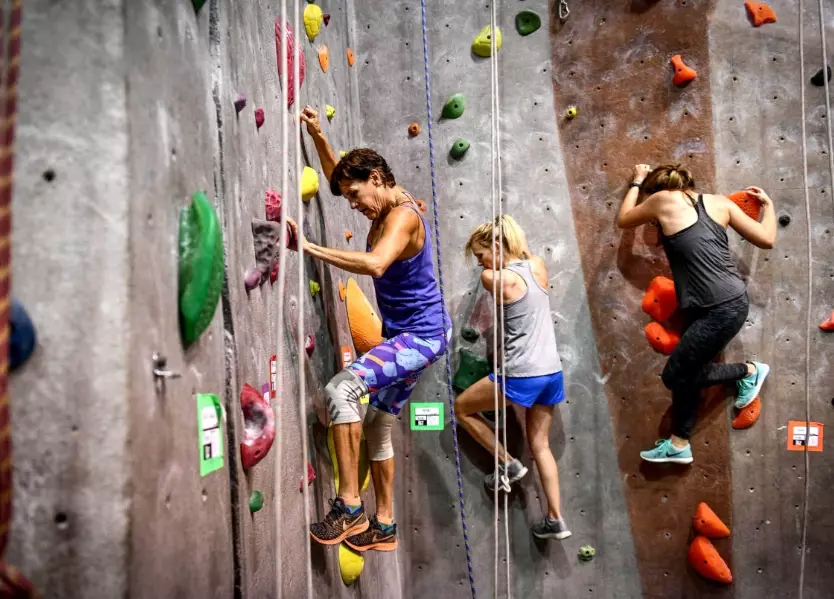
The fix starts with your mindset. Before you even reach for a hold, ask: "Where can I place my feet to make this move easier?" Focus on driving through your legs to stand up, keeping your arms relatively straight. Practice "silent feet" drills where you place each foot precisely and quietly. Watch experienced climbers—their arms often look relaxed while their legs do the work.
Mistake #2: Wearing Ill-Fitting or Wrong Shoes
Buying your first pair of shoes is a rite of passage. The mistake is thinking they need to be excruciatingly tight. Yes, performance shoes are snug, but beginner shoes shouldn't cripple you. If your toes are painfully curled and you can't wear them for a full gym session, they're too small. You'll learn bad footwork because you're focused on the pain, not the placement.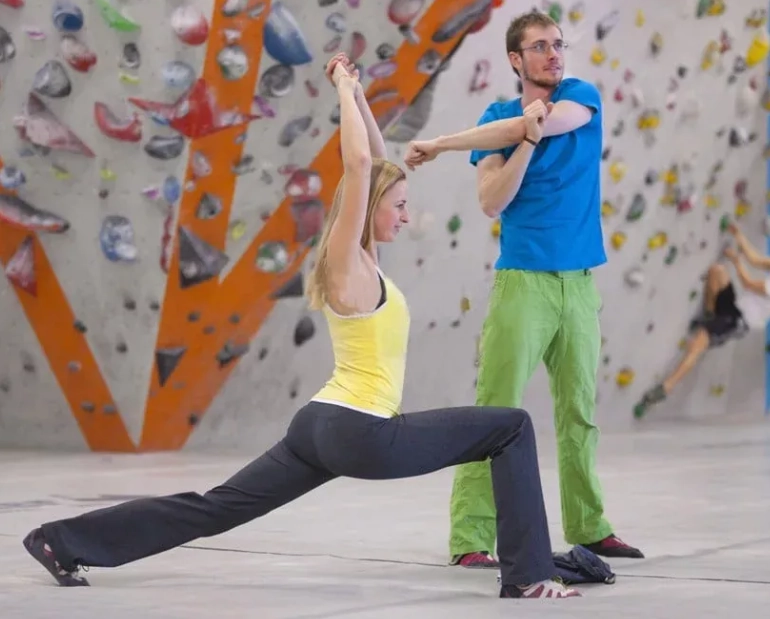
Conversely, wearing loose, floppy shoes means you have no sensitivity or precision on small footholds. You'll slip off holds you should be able to stand on.
For your first pair, aim for a comfortably tight fit. Your toes should be at the end but not aggressively curled. You should be able to keep them on for an hour. Brands like La Sportiva Tarantula or Scarpa Origin are designed for this. Save the ultra-aggressive downturned shoes for later when you're cranking on steep overhangs.
Mistake #3: Skipping a Proper Warm-Up
Walking in and jumping on the hardest problem you tried last week is a recipe for a pulley strain. Your tendons and muscles are cold. A proper warm-up isn't five arm circles.
Start with 5-10 minutes of light cardio (jumping jacks, a bike). Then, do some dynamic stretches for your shoulders, hips, and wrists. Finally, and most importantly, climb easy. Spend 15-20 minutes climbing routes or boulders 2-3 grades below your max. Focus on perfect, fluid movement. This gets blood flowing to the specific muscles and tendons you'll use, priming your nervous system. I learned this the hard way after a minor finger injury. Now, my warm-up is non-negotiable.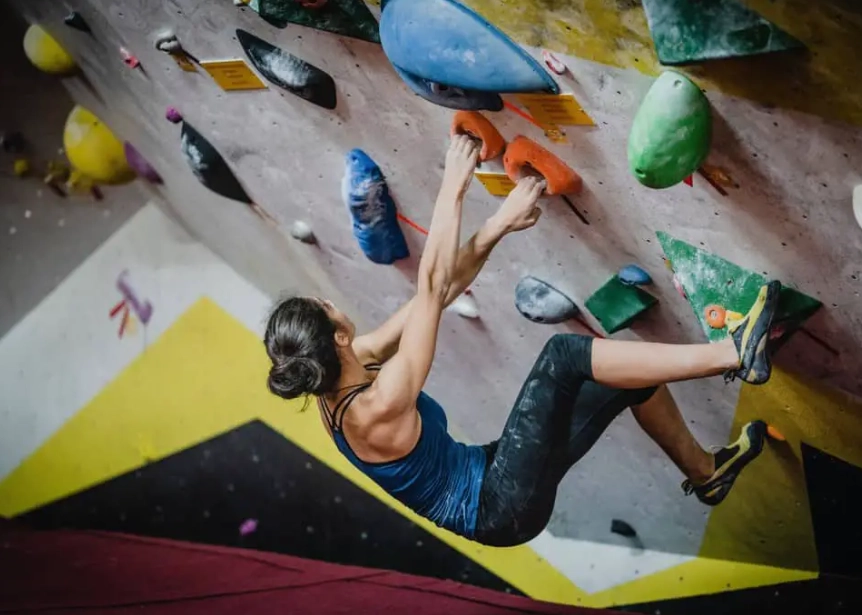
Mistake #4: Ignoring Your Feet (The Silent Game-Changer)
This expands on Mistake #1. Beginners look up at their hands. Experts watch their feet until the moment they place them. Poor footwork isn't just about strength; it's about trust and technique.
- Smearing: Using the friction of the shoe rubber on a blank or sloped wall. Beginners often avoid this, looking only for defined edges.
- Flagging: Dangling a leg out to the side to counterbalance your weight and prevent you from swinging out. It feels unnatural but is incredibly stable.
- Backstepping: Turning your hip into the wall and using the outside edge of your shoe. This opens up your reach and engages your core.
What is "Smearing" and Why Does It Matter? It's the technique of pressing the sole of your climbing shoe against a featureless or sloped surface to create friction and support. It matters because not every foothold is a nice little edge. Learning to trust your rubber on a smear opens up countless more climbing possibilities and teaches crucial weight distribution. Practice on a slightly overhanging wall with no footholds—just press and trust.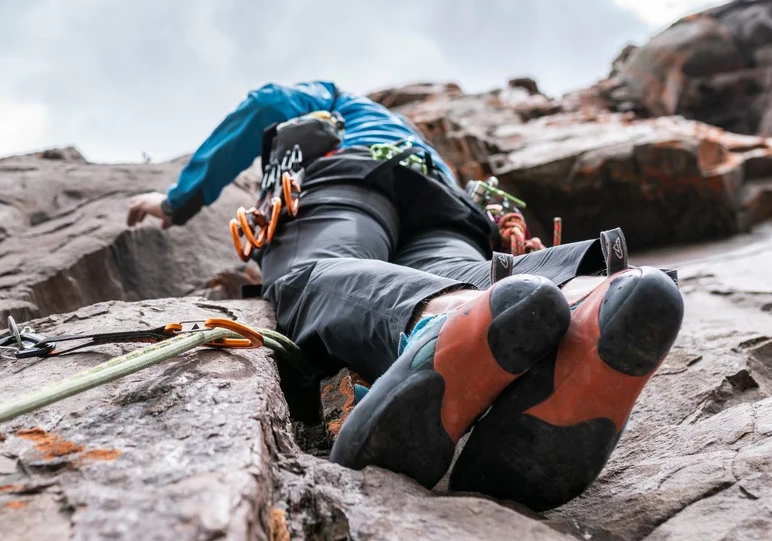
Mistake #5: Misusing or Misunderstanding Basic Gear
If you're moving outdoors or even using gear in the gym, complacency is dangerous. This isn't about advanced systems; it's about the fundamentals everyone glosses over.
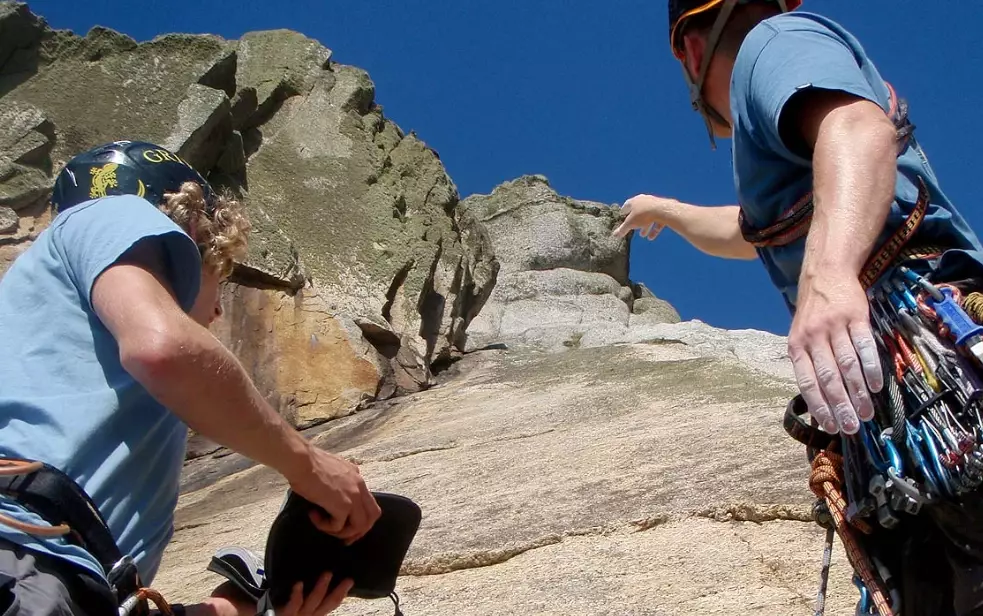
Belaying: Not keeping a hand on the brake strand of the rope at all times. "Short-roping" your partner by not giving enough slack smoothly. Not communicating clearly ("On belay?", "Climbing!").
Chalk: Using way too much. A thick layer of chalk on your hands actually decreases friction. It also gunks up holds for everyone else. A light dusting is plenty.
Harness: Wearing it too loose or with the leg loops twisted. The buckle should be doubled back. For authoritative information on safe practices, resources from organizations like the American Alpine Club or safety pages from National Park Service climbing areas are invaluable.
Take a course. Have an experienced climber check your systems. Never assume you've got it figured out.
Mistake #6: Projecting All Wrong
"Projecting" is working on a climb harder than you can do in one try. Beginners either avoid it entirely (only climbing what they can flash) or bash their heads against the same move for an hour with no strategy.
Effective projecting is analytical. Can't do a move? Break it down.
- Is it a footwork issue? Try a different foot sequence or flag.
- Is it a body position issue? Are you square to the wall when you should be turned?
- Is it a grip issue? Can you use an open-hand grip instead of a full crimp?
Work individual moves, then link two moves, then three. Rest fully between attempts. If you're getting more tired and worse, move on. Come back fresh next session. The progress happens in your brain between attempts, not just in your muscles during them.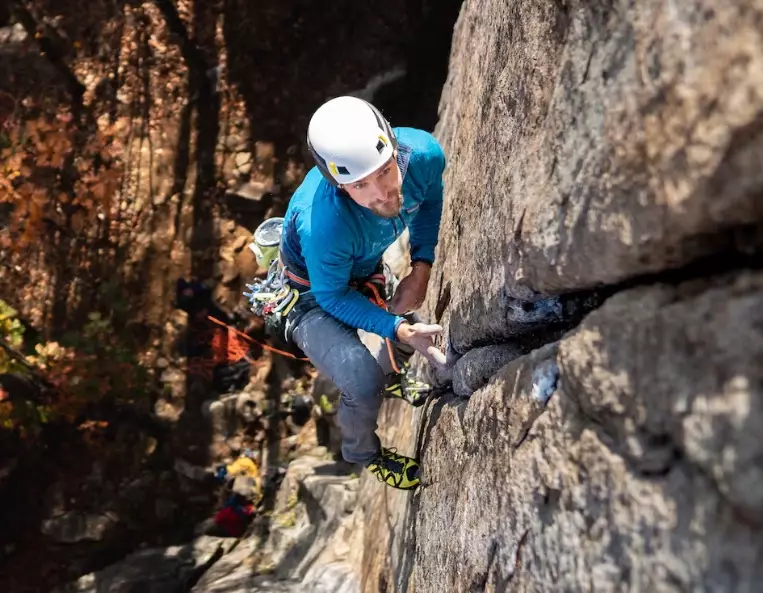
Mistake #7: Not Knowing How to Rest
There are two types of rest: mid-climb and between climbs.
Mid-climb rest (on a route): Finding a stable position where you can relax your arms, shake out your hands, and recover. Beginners often panic and rush through these good rests. Look for a ledge, a good jug, or any stance where you can stand comfortably on your feet with straight arms. Practice shaking one arm at a time.
Between climbs: Climbing is not a HIIT workout where you go to failure every two minutes. You need 3-5 minutes of rest between hard attempts to replenish the ATP in your muscles. If you're trying a hard boulder problem, sitting for 5 minutes is not too long. Chat, hydrate, watch others. Your performance will skyrocket.
Mistake #8: Letting Ego Dictate Your Session
This manifests in several ways: only climbing at your limit, refusing to down-climb or practice on easy terrain, getting visibly frustrated when you fall, or being intimidated to ask questions.
The gym is a laboratory, not an arena. Some of my most productive sessions involve climbing easy routes backwards or traversing along the bouldering wall focusing solely on silent, precise footwork. Leave the grade-chasing mentality at the door sometimes. The climbers who progress fastest are the ones curious about movement, not just outcomes.
Mistake #9: Neglecting Your Skin
Your skin is your direct interface with the rock or plastic. Ripped tips or flappers will end your session instantly. Beginners often climb until their skin is raw and painful.
Pay attention. If a spot feels hot and thin, stop climbing on that type of hold (jugs are especially abrasive). Keep your skin dry with chalk, but brush excess off. After climbing, wash your hands to remove chalk and grime, and use a moisturizer like Climb On or Joshua Tree salve to help them recover. File down rough calluses to prevent them from catching and tearing. It's mundane, but crucial.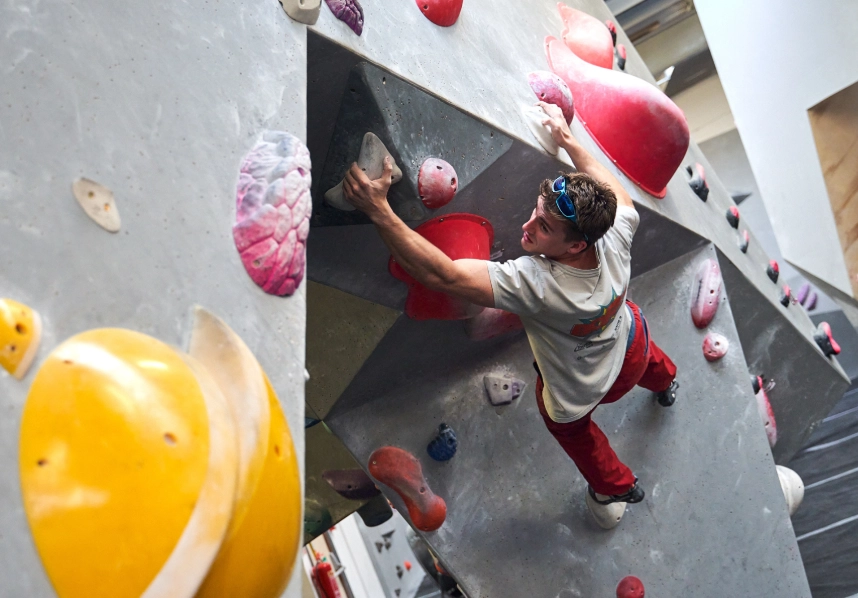
Mistake #10: Chasing Grades Over Movement
"I just want to send V4." That's a fine goal, but if it's your only goal, you'll develop a lopsided skill set. You might muscle your way up a V4 on jugs but be completely shut down by a technical V2 on slabs.
Set skill-based goals instead. "This month, I want to get comfortable with drop-knees." "I want to practice three climbs where I focus only on keeping my hips close to the wall." "I want to learn how to properly dyno." The grades will follow the skills, not the other way around. The most respected climbers aren't just the ones who climb the hardest number; they're the ones who move with an economy and grace that makes it look easy.
Your Climbing Questions Answered
I’m scared of falling, even in the gym. Is this normal?
Completely normal. Fear is a rational response to height and uncertainty. The key is to build trust incrementally. Start by taking practice falls on top-rope. Ask your belayer, then simply let go from a low height. Do this repeatedly, gradually increasing the height. For bouldering, practice falling correctly—knees bent, rolling onto your back—from the top of easy problems. Your brain needs to learn that the systems (rope, pad, belayer) work. Avoidance reinforces the fear; controlled exposure diminishes it.
How often should a true beginner climb to avoid injury?
Start with two non-consecutive days per week. Your tendons and ligaments take much longer to adapt than your muscles. That soreness you feel is your muscles; the silent strain is on your pulleys (the ring-like structures in your fingers). Even if you feel you could climb more, stick to twice a week for the first 2-3 months. Use your off days for antagonist training (push-ups, shoulder presses) to balance the pulling muscles and prevent shoulder issues.
Everyone talks about "using your legs." What does that actually mean on a steep wall?
On steep terrain, it's less about standing up and more about pushing with your feet to keep your body into the wall. Imagine you're trying to press your hips towards the climbing surface. If your feet cut (swing off), it's often because you stopped actively pushing into them. Engage your core to connect the push from your feet to the pull of your hands. It’s a full-body tension game. A good drill is to climb an overhang using only the biggest holds, focusing solely on keeping your toes glued to the footholds with constant pressure.
Is it bad etiquette to try a boulder problem if someone else is working on it?
Not necessarily, but spatial awareness is key. Don't jump on the problem right next to them where a fall could cause a collision. Give them space—wait until they've finished their attempt and stepped off the mat. A simple "Mind if I hop on this one?" is always appreciated. Climbing gyms are shared spaces. Observing others work a problem can also be a great learning opportunity, so sometimes waiting a minute benefits you too.