You're at the crag, guidebook in hand, staring at a list of routes. "The Nose: 5.14a or 5.9 C2." "Biographie: 9a+ (5.15a)." It looks like a secret code. In a way, it is. Climbing grades are that code—a shorthand for difficulty, a language spoken by climbers worldwide. But here's the thing most articles won't tell you: grades are a conversation starter, not a definitive rule. They're subjective, fluid, and heavily influenced by your height, style, and even the weather. Getting hung up on the number is the fastest way to have a bad day. Understanding the system behind it is how you find climbs you'll love and progress safely.
Quick Navigation: What You'll Learn
The Big Four Grading Systems You Need to Know
Globally, a few systems dominate. The one you use depends entirely on where you are and what you're climbing. Trying to convert between them is a party trick, not a science. The table below gives you the rough equivalents, but remember—these are approximations.
| System | Primary Use | Format Example | Key Thing to Remember |
|---|---|---|---|
| Yosemite Decimal System (YDS) | Sport & Trad climbing in the US | 5.10a, 5.11d, 5.14c | The "5." means technical rock climb. The number (10) and letter (a) indicate difficulty. |
| French Numerical System | Sport climbing in Europe & globally | 6a, 7b+, 9a | Starts at 1 (easiest). Uses letters a, b, c and + for refinement. No upper limit. |
| UIAA Scale | Alpine & trad in Germany, Austria, parts of Europe | VI-, VII+, IX- | Uses Roman numerals. The + and - are crucial. A VII+ is significantly harder than a VII. |
| British Technical Grade / E-Grade | Trad climbing in the UK & Ireland | E1 5b, E5 6a | Two-part grade: "E" for overall seriousness (E1=easiest), number for technical difficulty. |
Most international sport climbing destinations use the French system. If you're American traveling to Spain or France, you'll need to get comfortable with seeing 7a instead of 5.11d. The conversion charts are helpful, but your body will be the real translator after a few climbs.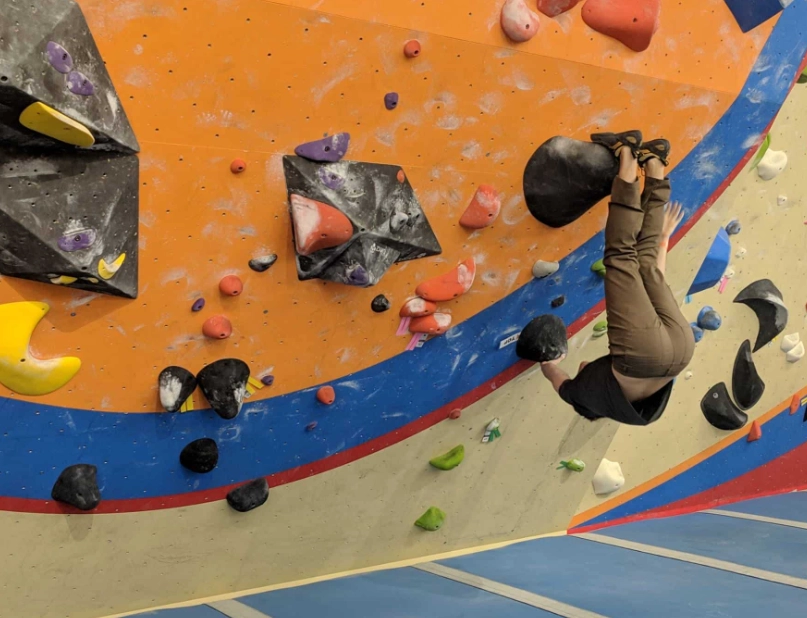
Inside the Yosemite Decimal System (YDS): More Than Just a Number
The YDS is where most North American climbers start. It seems straightforward: higher number, harder climb. But the devil's in the details.
The system breaks down like this: Class 1 is walking. Class 2 is hiking with hands occasionally needed. Class 3 is scrambling. Class 4 is exposed scrambling where a fall could be serious. Class 5 is technical rock climbing requiring a rope.
Everything you think of as "rock climbing" lives in Class 5. That's why every grade starts with "5."
YDS Sub-grades: From 5.0 to 5.9, it's just the number. After 5.9, it gets refined with letters. So it goes: 5.10a, 5.10b, 5.10c, 5.10d, then 5.11a, and so on. A 5.10d is one notch harder than a 5.10c, and significantly closer to 5.11a than it is to 5.10a. This is a common point of confusion for beginners who think all 5.10s are similar.
The 5.10 Barrier and Grade Inflation
Historically, 5.10 was considered the ceiling of human ability. When climbers started breaking into 5.11, they had to add the letters. This creates a psychological "barrier" for new climbers. A 5.10a feels like a major milestone because it once was.
There's also grade inflation, or "sandbagging." An old-school 5.9 in Yosemite or the Gunks might feel like a modern 5.10+ somewhere else. The first ascensionist sets the grade, and if they were a crusher, their perception of "easy" might be your project. Always read the guidebook comments.
French, British & UIAA Grades Demystified
Let's cross the Atlantic.
The French system is beautifully simple and open-ended. It starts at 1 and goes up. From 5 onward, letters a, b, c are added, and a + can be appended to a or b (e.g., 6a+, 7b+). You never see a "c+". A 6a+ is harder than a 6a but easier than a 6b. The lack of a cap means it's future-proof, as seen with grades like 9c (roughly 5.15d).
The UIAA system (used by the German and Austrian Alpine Clubs) feels more old-world. Grades are Roman numerals from I (easiest) upward. The + and - modifiers are not optional extras—they are the core of the grade. A VII- is a full grade easier than a VII, and a VII+ is a full grade harder. Skipping the modifier is like calling a YDS climb "5.10" without the letter—it's incomplete.
The British system is unique because it tries to grade two things: technical difficulty and overall seriousness. A route graded E5 6a means: the hardest move is around French 6a (approx. 5.10b), but the route is an "E5" level of adventure. E stands for "Extremely Severe." The E-grade considers protection quality, fall consequences, and stamina. A safe, well-protected 6a might be E1. A poorly protected 6a on a sea cliff might be E5. It's a system born from the bold, scary nature of British trad.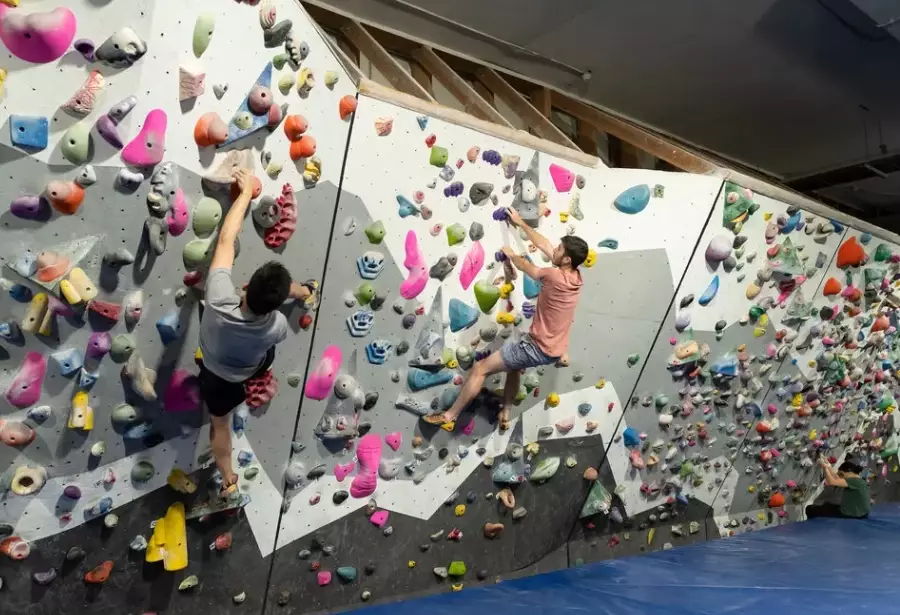
Bouldering: The V-Scale and Font Scale
Bouldering has its own world. No ropes, just short, powerful problems.
The V-scale (V for Vermin, after climber John "Vermin" Sherman) is standard in the US. It starts at V0 and goes up (V1, V2,... V17). The jumps are not linear. The difference between V4 and V5 can feel much larger than between V1 and V2.
The Fontainebleau scale (or "Font" scale) is the European counterpart. It uses numbers from 1 to 9, with letters and sometimes a + (e.g., 6A, 7B+, 8C). A "1" is a walk, a "3" is an easy scramble, and real bouldering starts around 4. The letters go from A (easiest) to C (hardest) for each number.
My personal take? The Font scale has more nuance in the mid-range, which I prefer. A 7A feels distinct from a 7A+, whereas a V6 can encompass a wide range. But that's just me.
Beware the Gym Grade: Indoor climbing gym grades are notoriously soft compared to outdoor grades. A gym V4 might be an outdoor V2 or even V1. This is the number one cause of frustration for climbers making the transition outdoors. Use gym grades to track your progress in the gym, but reset your expectations when you hit real rock.
How to Actually Pick a Route for Your Level (The Real-World Method)
Forget the chart for a second. Here's how you choose a climb, drawn from a decade of watching people get it wrong.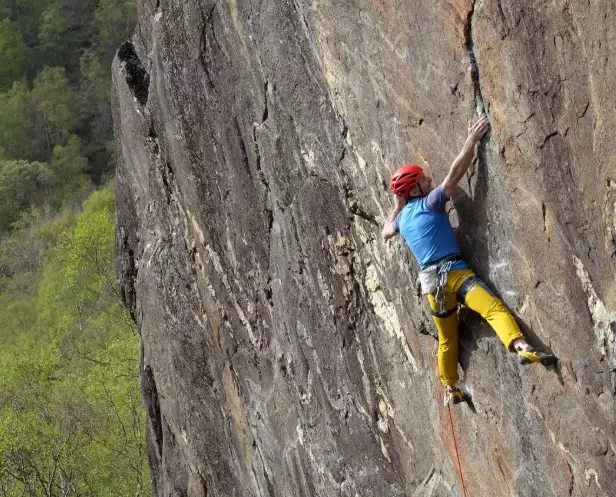
First, know your "onsight" grade versus your "project" grade. Your onsight grade is what you can reasonably climb first try, on sight, without beta. Your project grade is what you might work on over several sessions. They are often 2-3 number/letter grades apart. If you onsight 5.10a, a 5.10d could be a fun project, and a 5.11a might feel impossible.
Second, read between the lines of the guidebook. Look for style descriptors: "crimpy," "slabby," "overhanging jug haul," "technical face." If you're 6'4" with a negative ape index, a route described as "reachy" might be your 5.9, while a "short person's beta" 5.9 might feel like 5.10c to you. I'm average height, and I've been spanked by "5.8" offwidth cracks that felt like wrestling an angry refrigerator.
Third, ask other climbers, but be specific. Don't ask "Is this 5.10a hard?" Ask "How was the protection on the crux?" or "Was it more about balance or power?" Their body language and details tell you more than the grade.
Finally, adopt the "climber's code" for trying hard: attempt routes at your project grade when you have time, energy, and a good spotter. Stick to your onsight grade when you're tired, it's getting late, or you just want to enjoy moving on rock without existential dread.
Why a 5.10 in Utah Isn't a 5.10 in Maine
Rock type and climbing culture create massive grade variations. Sandstone, granite, limestone, and basalt all demand different techniques.
Smith Rock, Oregon (Volcanic Tuff): The birthplace of American sport climbing. Grades here are generally considered "stiff" or "sandbagged," especially the older routes. A Smith 5.10c often feels like a 5.11a elsewhere. The rock is sharp, the holds are small, and the style is technical and sustained.
The Red River Gorge, Kentucky (Sandstone): Known for steep, pumpy climbs on huge holds. Grades here, especially on modern sport routes, are often considered "soft" or "grade-friendly." A 5.11a at the Red might feel more straightforward than a 5.10d at Smith. It's about power endurance over subtle footwork.
Yosemite Valley, California (Granite): The holy ground. Yosemite grades, especially on classic cracks and slabs, are the definition of sandbagged. A 5.9 on the Swan Slab off the Glacier Point Apron is a rite of passage that has brought many a confident gym climber to their knees. The grades respect history and the sheer boldness of the first ascents.
The lesson? When you visit a new area, drop your grade expectation by one or two letter grades for the first day. Climb a few easier routes to learn the rock's friction, the typical hold type, and the local style. You'll have more fun and avoid injury.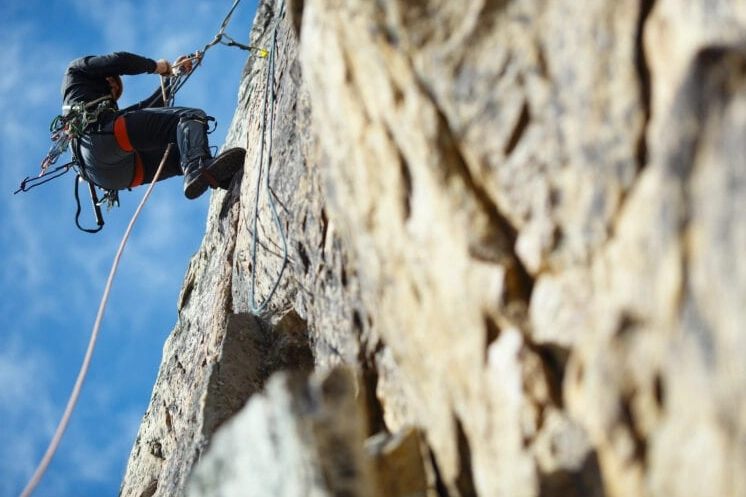
Your Climbing Grade Questions Answered
Not at all. This is the most common transition. Indoor walls have brightly colored, positive holds bolted onto a uniform surface. Real rock has subtle features, variable texture, and no color coding. You're learning a new skill. Focus on footwork, reading the rock, and trusting your shoes on smaller edges. Drop the grade, be patient, and your outdoor performance will catch up.
Plateaus are often about a specific weakness, not general fitness. If you fall on 5.11a routes, analyze why. Is it a single powerful move (limit strength)? Is it getting pumped halfway up (endurance)? Is it a tricky slab move (technique/balance)? Pick a route at 5.11a that highlights your weakness and work it as a project. Drill the specific move. Get beta from others. Also, try climbing more routes well below your limit—focusing on perfect, efficient movement can unlock higher grades more than just trying harder.
They're related but separate. In a grade like "5.9 C2," the "5.9" is the hardest free climbing section. The "C2" is the aid climbing difficulty. The "C" stands for "clean aid," meaning you use removable gear, not permanent pitons. The number indicates difficulty, with C1 being easy and C5 being extremely difficult. "A" grades (A1-A5) are for piton aid, which is much less common now. So this route goes at 5.9 if you free climb it, or C2 if you aid it. They measure completely different skills.
It's for international visitors. A problem in Switzerland might be listed as "7A (V6)" to help Americans. The first grade is the local standard (Font), the second is the approximate conversion. Always trust the primary local grade. Conversions are estimates, and the local community's consensus is what matters. Over time, you'll develop a feel for both scales.