You hear "Ice Climbing Olympics" and your mind might jump to the Winter Games. It’s not there yet, but the sport has its own pinnacle event that’s every bit as intense, technical, and breathtaking as anything you’d see in Lausanne or Beijing. I’m talking about the UIAA Ice Climbing World Championships. For over two decades, this has been the arena where the best climbers on the planet battle gravity on vertical sheets of ice and plastic. It’s a spectacle of raw power, delicate balance, and sheer nerve.
I remember watching my first world championship stream a few years back. The speed climbers were a blur, a chaotic scramble up a 15-meter wall that looked impossible. The lead climbers moved with a slow, deliberate precision that was hypnotic. I was hooked. But I also had a ton of questions. What are the rules? How do they climb so fast? Is that even real ice?
This guide is everything I wish I’d known then. We’ll break down the two distinct disciplines, peek at the specialized gear, and look at how you can follow the action. We’ll even dig into the ongoing push to get ice climbing onto the Olympic stage itself.
What’s Inside This Guide
What is the Ice Climbing Olympics?
Let’s clear this up first. The "Ice Climbing Olympics" is the colloquial name for the UIAA Ice Climbing World Championships. The UIAA (International Climbing and Mountaineering Federation) is the global governing body, and this event is their Super Bowl. It’s held annually (conditions permitting) and crowns world champions in both speed and lead climbing.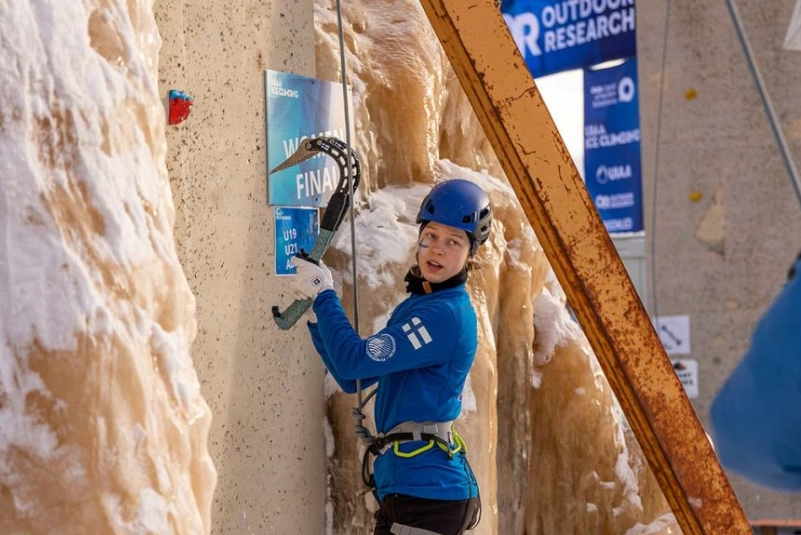
The competition typically takes place on a spectacular man-made ice structure—think a giant, freestanding ice tower or a wall coated in thick, textured ice. Locations have ranged from the frozen canals of the Netherlands to the mountains of South Korea. The atmosphere is electric, a mix of festival and high-stakes sport.
Key Point: While not an Olympic sport yet, the UIAA World Championships represent the absolute highest level of competitive ice climbing. The athletes, the pressure, the glory—it’s the real deal. The UIAA has been actively campaigning for the sport's inclusion in the Winter Olympics, with demonstration events held in the past to showcase its appeal to the International Olympic Committee.
Speed vs. Lead: Two Worlds on Ice
This is where things get fascinating. Competitive ice climbing splits into two utterly different events. It’s like comparing the 100m dash to ballet.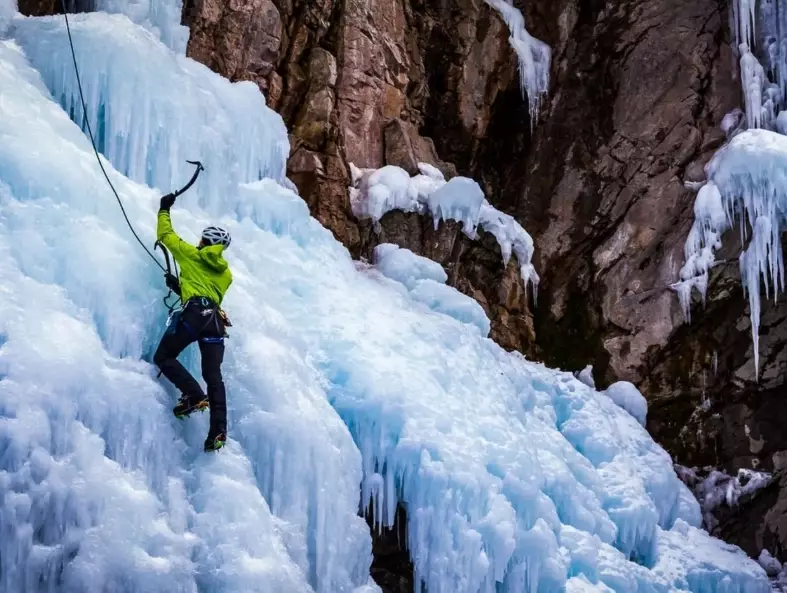
Speed Climbing: The Controlled Sprint
The goal is simple: get from the bottom to the top of a standardized 15-meter wall as fast as possible. The wall has a fixed layout of holds. Men’s world records are now dipping below an insane 5 seconds. Women are breaking 7 seconds.
It looks chaotic, but it’s a meticulously practiced sequence. Every swing, every foot placement is rehearsed thousands of times. The technique is less about careful hooking and more about dynamic, explosive movement. It’s pure power and efficiency. A stumble of a tenth of a second can mean the difference between gold and fourth place.
Lead Climbing (Difficulty): The Vertical Puzzle
This is the cerebral counterpart. Climbers have a limited time (usually 4-6 minutes) to ascend a longer, more technical route—often over 20 meters. The routes are never seen by athletes beforehand. They get a short observation period from the ground to plan their sequence.
The ice here is often a mix of real ice and artificial features. The challenge is figuring out how to use your tools and crampons on weird bulges, overhangs, and delicate features. It’s about problem-solving under extreme physical duress. The highest hold reached determines the score. Falls are common, and watching a climber fight through the "pump"—the burning fatigue in their forearms—is a masterclass in mental fortitude.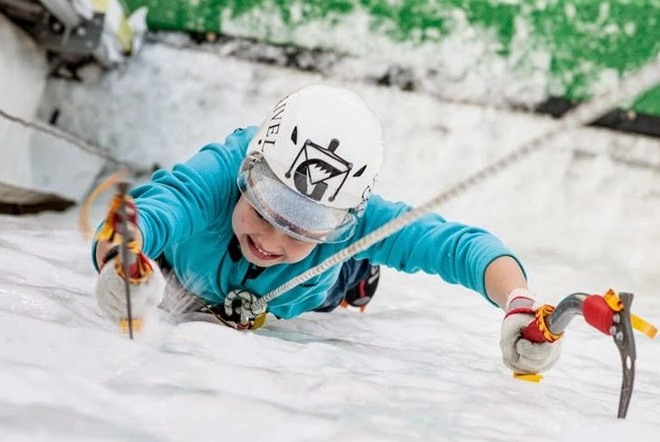
The Gear Breakdown: Not Your Average Crampons
Forget the gear you’d take on a winter mountaineering trip. Competition gear is a different beast, optimized for plastic and artificial ice. Here’s a quick comparison:
| Gear Type | Speed Climbing | Lead Climbing | Notes |
|---|---|---|---|
| Boots | Ultra-lightweight, flexible for ankle flick. | Stiff, supportive, with a pronounced toe welt for precise front-pointing. | Stiffness is key for lead to transfer every ounce of power to the point. |
| Ice Tools | Shorter shafts, less aggressive picks designed to clear quickly. | Longer, more technical. Picks are often modular and aggressively curved for positive hooking. | Many lead climbers use different tools for each hand based on the route's demands. |
| Crampons | Vertical front points, often mono-points, for fast kicking. | Horizontal front points (dual points) for edging on plastic holds. | This is a huge difference. Horizontal points act like climbing shoe rubber on small edges. |
| Clothing | Minimal, breathable. No insulation needed for a 5-second effort. | Still lightweight but may have light insulation for longer hangs on ice. | Helmets are mandatory. Gloves are thin for sensitivity. |
One subtle mistake I see new competitors make? Using the same crampon setup for both disciplines. It kills your performance. Speed requires that snappy, direct engagement; lead requires the platform and trust of horizontal points.
How to Watch Ice Climbing Competitions
Gone are the days of grainy, hard-to-find footage. The UIAA has massively upped its streaming game.
Your best bet is the UIAA YouTube channel. They livestream World Cup events and the World Championships, usually with decent commentary that explains the nuances. The streams are free and archived, so you can watch at your leisure.
For the absolute best viewing experience, nothing beats being there. The energy is contagious. Check the UIAA event calendar. If a World Cup is within driving distance, go. You’ll hear the thud of tools, see the ice spray, and feel the collective gasp when a climber sticks a crazy dyno.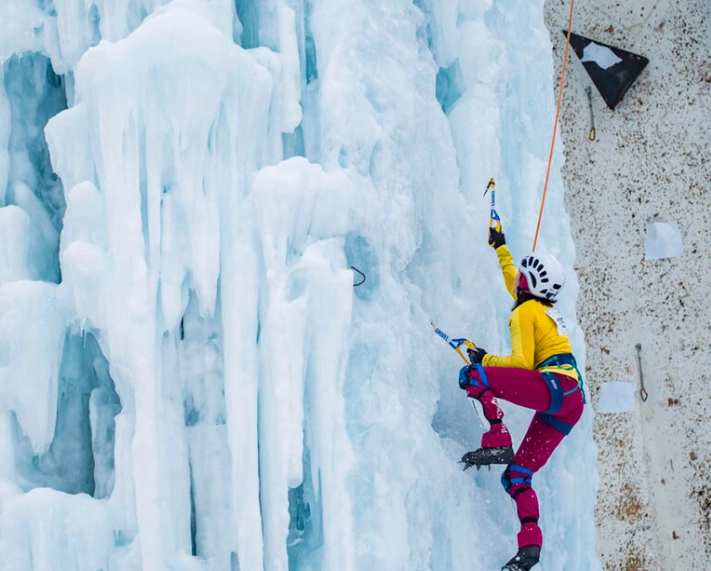
How Can You Train Like an Ice Climbing Olympian?
You won’t be winning a world title next year, but you can absolutely train using their principles. It’s a blend of specific strength, technique, and painful endurance.
1. Find a Dry-Tooling Wall. This is non-negotiable. You need to practice the movement on plastic. Many climbing gyms are adding these walls. No gym nearby? Some dedicated athletes build simple wooden structures in their garages.
2. Build Grip and Forearm Endurance. This is your engine. Repeaters on a fingerboard, dead hangs, and tool-assisted pull-ups are staples. But don’t neglect the opposite: open-hand grip and wrist extensor work to prevent injury.
3. Technique Drills Over Power. Instead of just climbing until you fall, set specific drills. Practice matching your tools on a hold. Work on precise, quiet foot placements. Climb a route using only one tool. This deliberate practice yields faster improvement than mindless laps.
4. The Mental Game. Competition climbing is 50% mental. Practice on-sighting (climbing a route without prior info). Simulate competition pressure by having a friend set a timer or watch you. Learn to breathe and focus when your forearms are screaming.
The path often starts with a local competition. Search for “dry tooling competition” or “ice climbing comp” in your region. Enter. It’s humbling, incredibly fun, and the community is wonderfully supportive.
The Future: The Olympic Dream
Will we see ice climbing in the Winter Olympics? The UIAA is pushing hard. The sport ticks a lot of boxes: it’s visually dramatic, has clear winners and losers, and appeals to a youth demographic. The artificial structures mean it can be held indoors or in any climate, removing a major logistical hurdle.
The main challenge is the crowded Olympic program. Adding a sport means cutting another. But with climbing (sport and bouldering) now firmly in the Summer Games, the precedent is set. The dream is alive. Every spectacular World Championship broadcast is an audition for that Olympic stage.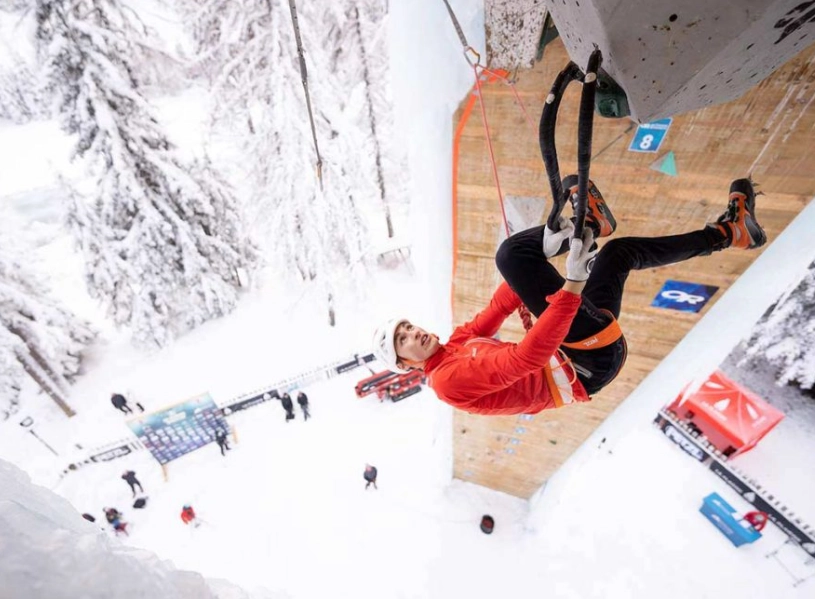
Your Ice Climbing Competition Questions Answered
So there you have it. The "Ice Climbing Olympics" might not be in the Olympic program yet, but it possesses all the intensity, skill, and drama of the world's greatest sporting event. Whether you're a climber looking for a new challenge or a fan seeking an exhilarating watch, this sport has something to offer. Check out a stream, feel the adrenaline, and maybe you’ll be inspired to seek out a dry-tooling wall yourself. The vertical world awaits.