Picking a climbing rope isn't like choosing a pair of socks. Get it wrong, and you're not just uncomfortable—you're in serious danger. Yet, walk into any gear shop or browse online, and you're hit with a wall of numbers: 9.8mm, 70m, dry-treated, UIAA Falls 7. What does it all mean? I've watched friends buy their first rope based solely on color (a terrible idea) or the cheapest price (an even worse one). After a decade of clipping bolts and placing gear, I've learned that your rope is the single most personal piece of gear you own. It's the one thing you absolutely must trust with your life, every single time. This guide will strip away the confusion. We won't just list specs; we'll translate them into real-world performance so you can choose a rope that fits your climbing, your budget, and keeps you safe for years.
What You'll Learn
What is Dynamic vs. Static Rope? (It's Not What You Think)
This is the first and biggest fork in the road. Most climbers only need a dynamic rope. But let's be clear about why.
A dynamic rope is designed to stretch. That stretch is its superpower. When you fall, the rope elongates, absorbing the massive energy generated and reducing the impact force on your body, your gear, and your belayer. All modern single, half, and twin ropes for rock climbing, ice climbing, and mountaineering where falls are possible are dynamic. The UIAA (International Climbing and Mountaineering Federation) sets strict standards for how much force a dynamic rope can transmit during a standardized fall.
A static rope has minimal stretch, usually less than 5%. It's for hauling gear, ascending fixed lines in caving or canyoneering, or for rescue scenarios where you don't want bounce. Using a static rope to catch a lead fall is extremely dangerous—the shock load can be high enough to snap your gear or injure your spine.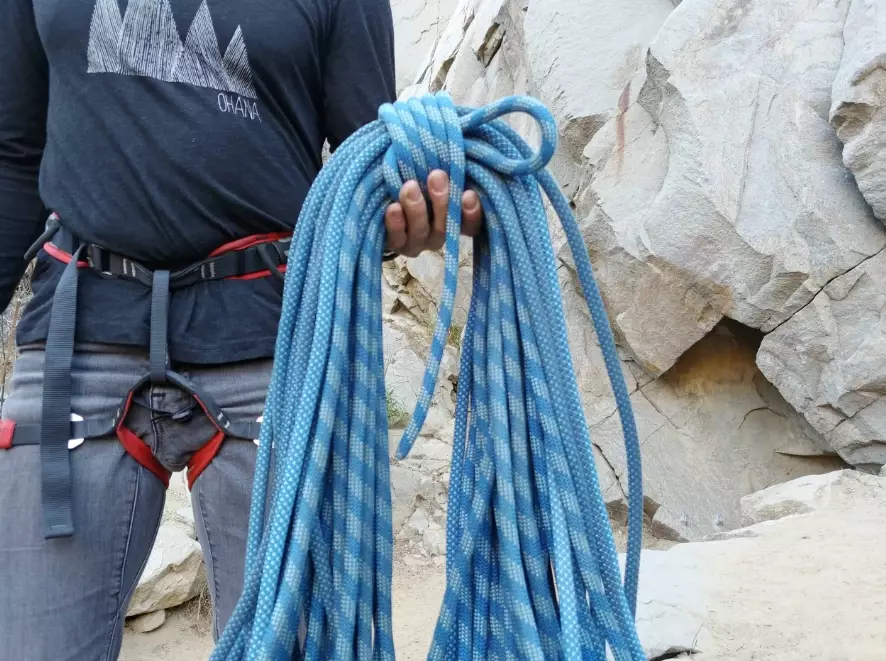
The Three Dynamic Rope Categories
Even within dynamic ropes, you have a choice based on how you plan to use them.
| Type | How It's Used | Best For | Weight & Bulk |
|---|---|---|---|
| Single Rope | Used alone, clipped through every piece of protection. Marked with a ① symbol. | Most rock climbing, especially sport climbing and trad on straightforward routes. The workhorse. | Heaviest per meter, but you only carry one. |
| Half Rope | Used in a pair. You clip each rope to alternating pieces of gear. Marked with a ½ symbol. | Trad climbing on wandering routes, ice climbing, alpine climbs. Reduces rope drag, offers redundancy. | Lighter per rope than a single, but you carry two. |
| Twin Rope | Used in a pair. Both ropes are clipped through every piece of protection. Marked with a ∞ symbol. | Technical alpine and ice climbing where maximum safety and redundancy are critical in harsh conditions. | Lightest and thinnest per rope, but must always be used as a pair. |
I made the mistake early on of using half ropes as twins on a steep ice route. The theory seemed similar, but the catch felt different—harsher. A guide later explained that twin ropes are engineered to work as a unit to absorb force, while halves are meant to work more independently. It's a subtle but important engineering distinction.
How to Choose a Climbing Rope: The 5-Step Checklist
Forget the marketing fluff. Your decision boils down to five concrete factors. Think of this as your pre-purchase filter.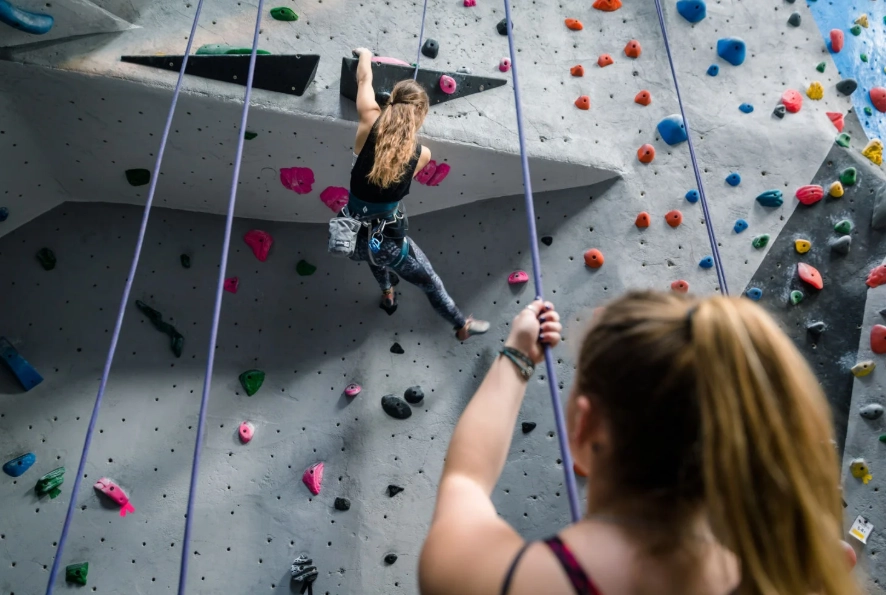
1. Climbing Rope Diameter: The Thickness Trade-Off
Diameter is the headline number, and it's a direct trade-off between durability and weight/handling.
- 9.2mm – 9.5mm (Skinny/Lightweight): These are dream ropes for hard redpoint attempts or long alpine routes where every gram counts. They handle incredibly fast and feel light on your harness. The downside? They have fewer sheath strands, so they wear out faster, especially from frequent top-roping or abrasive rock. I wouldn't recommend one as your first and only rope.
- 9.6mm – 9.9mm (All-Around): This is the sweet spot for probably 70% of climbers. You get a great balance of durability, manageable weight, and good handling. A 9.8mm rope is the gold standard for a reason—it does everything well without major compromises.
- 10.0mm – 10.5mm (Workhorse): These are tanks. They have thick sheaths, can withstand years of gym use, top-roping, and teaching beginners. The trade-off is they're heavier, stiffer initially, and bulkier to coil and carry. Perfect for a crag rope that sees a lot of action.
2. Climbing Rope Length: 60m, 70m, or 80m?
This is dictated by your local crags and ambitions. The old standard was 60m. Now, 70m is becoming the new normal, and for good reason.
A 70m rope gives you flexibility. It lets you climb many modern 35m (115ft) sport routes on a single strand with plenty of rope left for knot and belayer distance. It also allows you to rappel 35m with a 70m rope (half its length), whereas with a 60m rope, you'd be stuck trying to rappel 30m at most. Before you buy, check the guidebooks for your favorite areas. In places like Red River Gorge or newer sport areas, a 70m is often the minimum requirement to get down safely.
An 80m rope is a specialist tool for long alpine routes or specific big walls. It's heavy and overkill for most single-pitch climbing.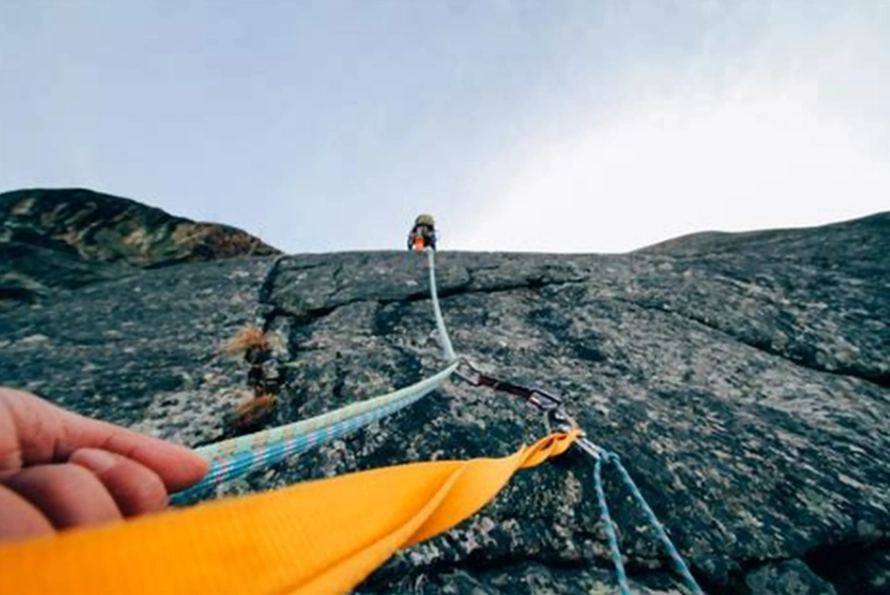
3. Climbing Rope Weight
Weight is usually listed as grams per meter (g/m). Multiply that by your rope length to get the total weight. A 70m x 9.8mm rope typically weighs between 4.2kg and 4.6kg (9.3–10.1 lbs).
But what does that feel like? Carry a 5kg bag of flour up a steep approach trail. That's your rope's weight, plus all your other gear. For long alpine days or multi-pitch climbs where you're carrying the rope on your back, shaving 300-400 grams with a thinner rope can make a real difference in fatigue.
4. The Middle Mark
This seems trivial until you're 40 meters up a multi-pitch route at dusk, trying to find the middle for your rappel. A clear, durable middle mark is a lifesaver. Some ropes have a subtle pattern change, others a bold black mark. I prefer the bold ones—they're easier to see when you're tired and the light is fading.
5. Dry Treatment & UIAA Fall Rating
Dry Treatment: This is a coating that makes the rope shed water and resist dirt absorption. It's not fully waterproof, but it helps. For ice climbing, alpine climbing, or climbing in damp climates (like the UK or Pacific Northwest), it's worth the extra 15-20% cost. For dry desert or gym climbing, you can skip it to save money.
UIAA Falls: This is a durability rating. The test involves dropping an 80kg weight on a 2.8m section of rope repeatedly until it breaks. Most ropes achieve 5-9 falls. A higher number indicates a stronger, more durable sheath and core. However, don't fixate on this. A rope rated for 7 falls will still last for years of normal use. The test is extremely severe. Think of it as a measure of safety margin, not a direct indicator of how long your rope will last.
Inside Your Rope: Construction & Long-Term Care
All modern dynamic ropes use a kernmantle construction. The kern (core) is thousands of continuous nylon filaments that provide 80-90% of the strength and dynamic stretch. The mantle (sheath) is a tightly woven braid that protects the core from abrasion and UV light.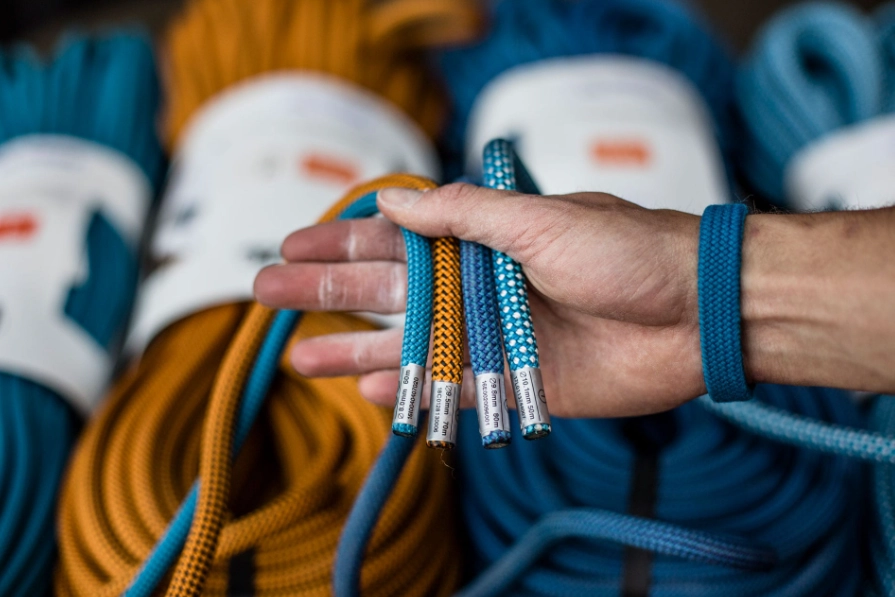
The weave pattern of the sheath affects handling. A tighter weave feels smoother and is more durable but can be stiffer. A looser weave feels softer and more supple right out of the bag but may fuzz up faster.
How Do I Care for My Climbing Rope?
Care is what separates a rope that lasts two seasons from one that lasts five.
- Keep it clean: Dirt is microscopic grit that saws at the fibers from the inside. For a deep clean, use a lukewarm bath with a tiny bit of rope-specific detergent (never harsh chemicals). Rinse thoroughly and air dry away from direct sun.
- Keep it out of the sun: UV radiation degrades nylon faster than almost anything. Don't leave your rope baking on a sunny ledge or in your car's back window.
- Store it right: Loosely coil it or use a rope bag. Avoid tight, permanent coils that stress the same spots. Store it in a cool, dry, dark place.
- Watch the edges: Be mindful of sharp rock edges. Use a rope pad or your pack to protect it on rappel. Never step on your rope—you're grinding dirt into it.
I have a 9.8mm workhorse rope that's seen hundreds of pitches. It's fuzzy, but it passes the hand-inspection test. It lives in a dedicated canvas bag, gets washed once a year, and has never been left in the sun. It's still my go-to for cragging.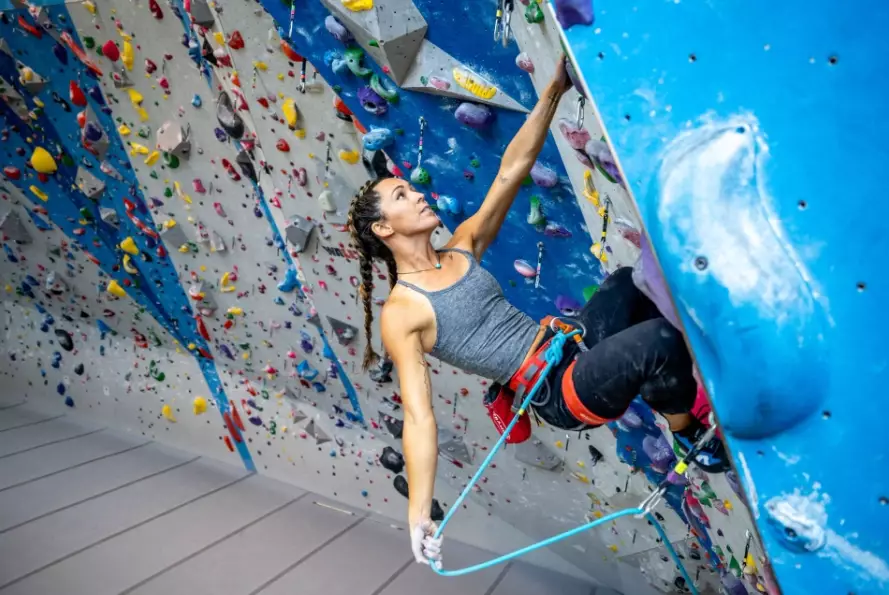
Your Rope Questions, Answered
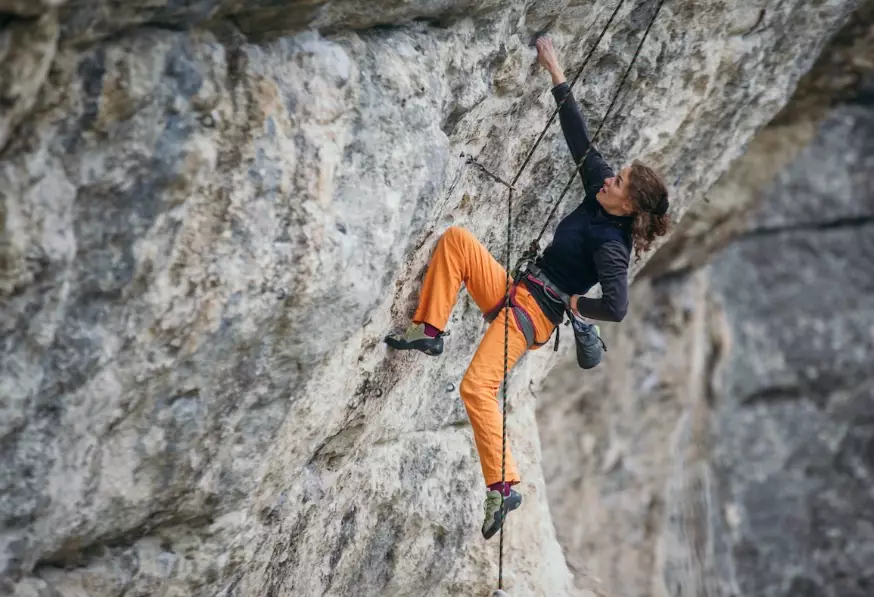 Can I use a single rope for top-roping?
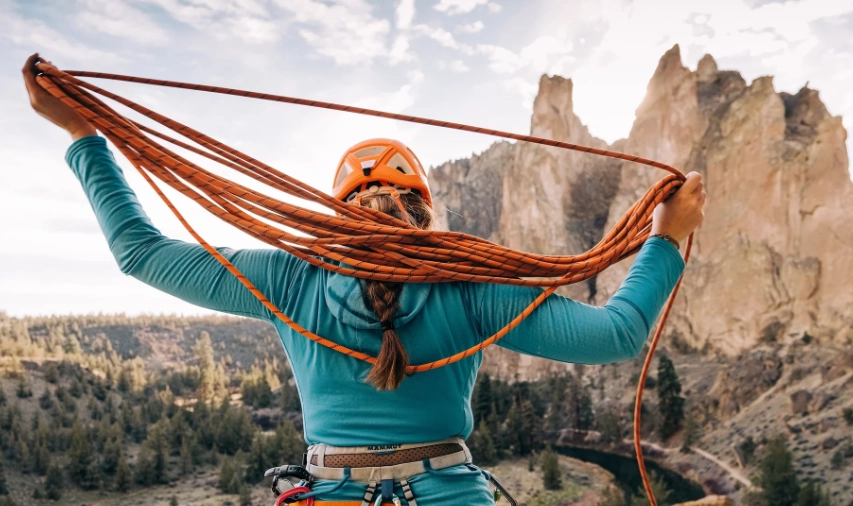 Choosing a rope is a commitment. It's the core of your safety system. Don't get paralyzed by the options. Define your primary use case (sport cragging? alpine objectives?), set a budget, and use the checklist here. Handle a few in a shop if you can. Feel the difference between a 9.8 and a 10.2. That tangible sense, combined with the specs, will lead you to the right lifeline. Then, take care of it. A good rope is a partner you build trust with over time.