You're at the crag, pulling your rope out of the bag. Your harness feels familiar. You rack your draws without a second thought. It's ritual. But here's the uncomfortable truth most of us push aside: every piece of that kit has a silent lifespan, and its failure isn't a dramatic event you see coming. It's a slow, invisible process of wear, stress, and UV damage that culminates in a single, catastrophic moment. I've seen it—a rope core shot hidden under a seemingly intact sheath, a carabiner gate with a hairline crack from a drop onto concrete years prior. This isn't about fear; it's about developing a relationship with your gear where you learn its language of wear.
What You'll Learn in This Guide
Why a "Quick Look" Isn't Good Enough
We've all done it. A glance at the rope, a tug on the harness buckles, and we call it good. This complacency is the biggest enemy. The UIAA (International Climbing and Mountaineering Federation) sets safety standards, but they can't account for the grit from Red Rock, the saltwater at Thailand's beaches, or the chemical residue from a gym floor. Your gear's life is dictated by its environment and use, not a calendar date.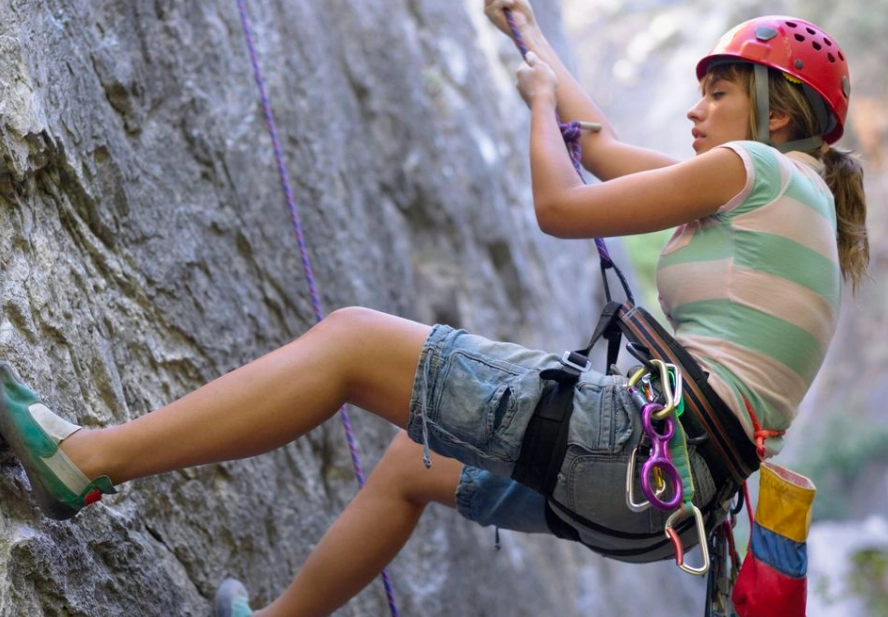
Think of it this way: a rope that's taken dozens of lead falls on sharp-edged limestone is in a different world than one used solely for top-roping on smooth granite. A carabiner dropped once from the top of a multipitch route onto a ledge has potentially suffered internal damage no visual check can reveal.
The goal isn't to find gear that's obviously destroyed. It's to identify gear that's on the path to failure before it gets there.
The Deep-Dive Inspection: Rope, Harness, & Hardware
Let's move past generalities. Here’s exactly what to look for, piece by piece. Grab your gear and follow along.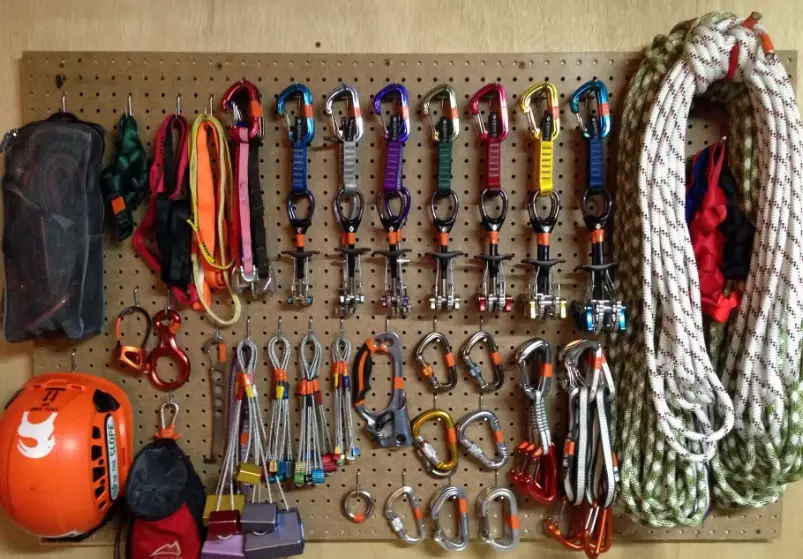
Your Lifeline: The Rope
Don't just run it through your hands. Feel it. Find a well-lit area and slowly feed the rope between your thumb and fingers, applying slight pressure.
- The Ends Are the Enemy: The first and last 5-10 feet see the most wear from tying in, belaying, and rubbing on the ground. Look for fraying, hardening, or a flattened, pancaked feel. This is where most “core shots”—where the protective sheath is worn through to the load-bearing core—start.
- Mid-Rope Mystery: Feel for any sudden changes in diameter (a thin spot or a stiff lump). A soft, mushy spot can indicate core damage. Look for discolored, shiny patches—that's melted sheath from friction, severely weakening the fibers.
- The "Milk Test" is a Myth: Bending the rope to see if strands separate (“milking”) isn't a reliable indicator of health. A stiff, non-dynamic rope is a bigger red flag than one that milks a bit.
Your Connection Point: The Harness
Harness failure is rare but devastating. The mistake? Only checking the waistbelt and leg loops.
The Belay Loop is Critical. This single piece of webbing handles all belaying, rappelling, and often lowering forces. Inspect it inch by inch. Look for cuts, abrasions (especially where it contacts carabiners), and any areas that feel stiffer than the rest. Pay obsessive attention to the stitching (the bar-tacks) where it connects to the waistbelt. Any pulled threads are a retirement flag.
Check the Tie-In Points. Those two reinforced loops you thread the rope through? They get constant abrasion from the rope. Run your fingernail inside them. If you catch on any cuts or excessive fuzziness, it's time for a new harness.
Buckles and Adjusters. Do the buckles engage smoothly and hold securely? Any cracks in the plastic? For metal buckles, check for corrosion.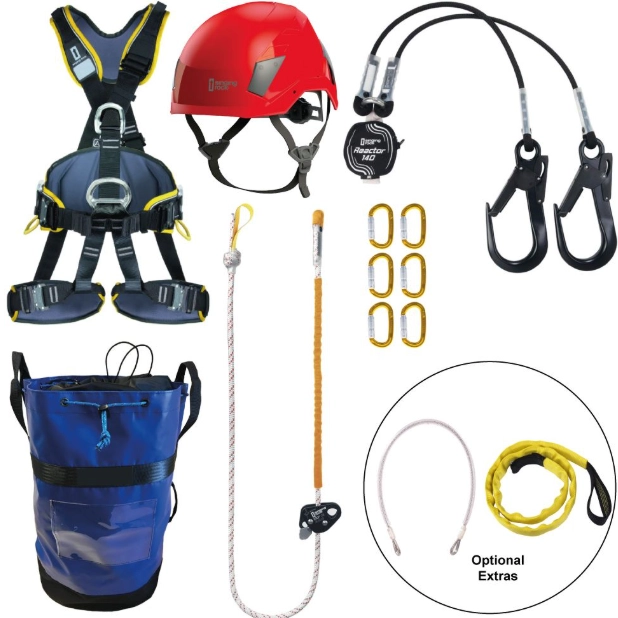
The Links in the Chain: Carabiners & Quickdraws
Visual inspection comes first, but functional testing is non-negotiable.
- Gate Action: The gate should open smoothly and snap shut positively. Listen for a clean "click," not a sluggish close. For screwgates, the sleeve should turn easily without grit.
- Gate Play: A tiny bit of side-to-side movement is normal. Excessive wobble (more than 1mm) indicates wear in the pivot point.
- The Nose and Notch: Check for sharp burrs or grooves on the nose (the hook end) and the matching notch on the frame. Deep grooves compromise strength.
- Quickdraw Dogbone: Inspect the sewn sling for cuts, abrasion, and UV fading (it turns pale and brittle). Feel along the stitches.
I once found a carabiner with a hairline crack at the base of the gate, right near the hinge. It was only visible when holding it at a specific angle in bright sunlight. It had been on my rack for months.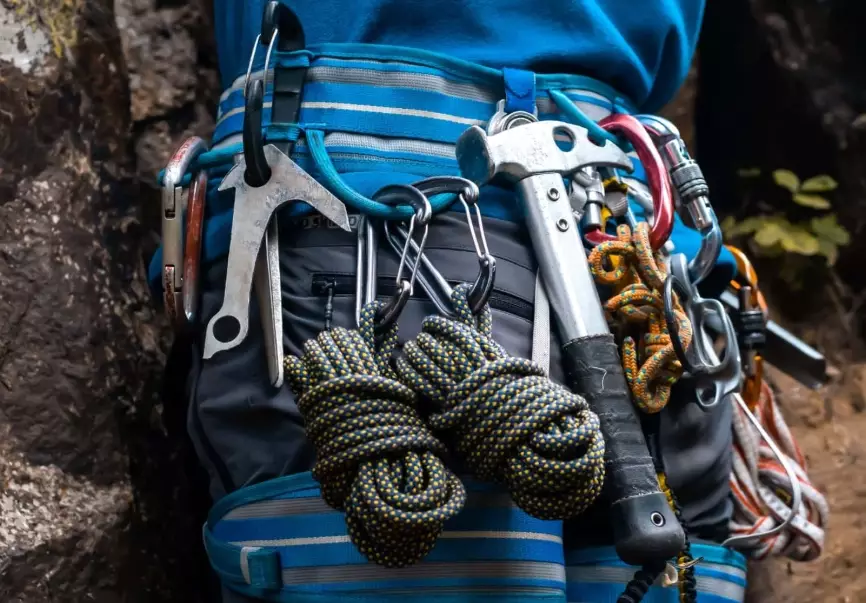
Friction Devices: Belay & Rappel Devices
Grime is the killer here. Built-up dirt and aluminum oxide (that grey-black paste) dramatically reduces braking performance.
- Clean slots and grooves with a stiff-bristled brush (a toothbrush works).
- Check for any deep gouges or sharp edges that could cut your rope.
- For assisted-braking devices (like a GriGri), test the cam action. It should engage smoothly without sticking. Check the manufacturer's guide for wear indicators.
Beyond Inspection: Maintenance & Storage Secrets
How you treat gear between climbs determines its lifespan.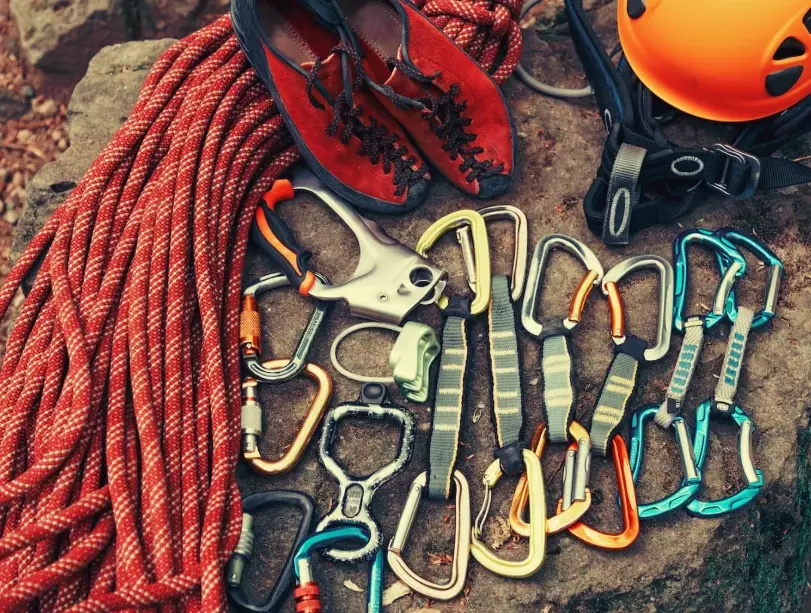
Cleaning: Ropes and slings love a bath. Use lukewarm water and a mild, non-detergent soap (actual rope wash or a pure glycerin soap). Agitate gently, rinse thoroughly, and air-dry away from direct sun and heat sources. Never use a washing machine or dryer.
Storage: Keep gear cool, dry, and dark. A damp, sun-baked car trunk is a gear execution chamber. UV radiation degrades nylon silently. Store ropes loosely coiled in a breathable bag, not tightly wound. Hang harnesses by the waistbelt, not the leg loops.
The Logbook: This is a pro move few recreational climbers do. Note major falls, significant drops, or unusual events (like a chemical spill) next to the gear's purchase date. It turns guesswork into informed judgment.
Building a Safety Culture, Not Just a Checklist
Safety is a team sport. Make partner checks a non-negotiable ritual. It's not just about buckling each other's harnesses.
Verbally confirm: “Rope end back?” “Knot double-backed?” “Belay device threaded correctly?” “Carabiner locked?” This verbal loop catches the mental slips visual checks miss.
Create an environment where calling out a concern is encouraged, not awkward. “Hey, your quickdraw sling looks faded,” should be met with a “Thanks for spotting that,” not defensiveness.
Your Top Gear Safety Questions Answered
Your gear is a partner, not a tool. Learning its language of wear—the feel of a softening rope, the look of a worn belay loop, the sound of a gritty carabiner gate—is as fundamental a skill as tying a figure-eight. It transforms safety from a chore into a core part of your climbing practice. Now go listen to what your kit is telling you.