Let's settle this right away: for most dogs, a harness is a safer, more comfortable, and more effective walking tool than a traditional collar. If your dog pulls, has a delicate neck (think small breeds or those prone to tracheal collapse), or you just want more control, a harness is the way to go. This isn't just my opinion; organizations like the American Veterinary Medical Association often recommend harnesses to reduce injury risk. But not all harnesses are created equal, and a poorly chosen or fitted one can cause chafing, restrict movement, or even teach your dog to pull harder. I've fitted hundreds of harnesses over the years, from squirmy puppies to powerful sled dogs, and I'm here to cut through the marketing hype.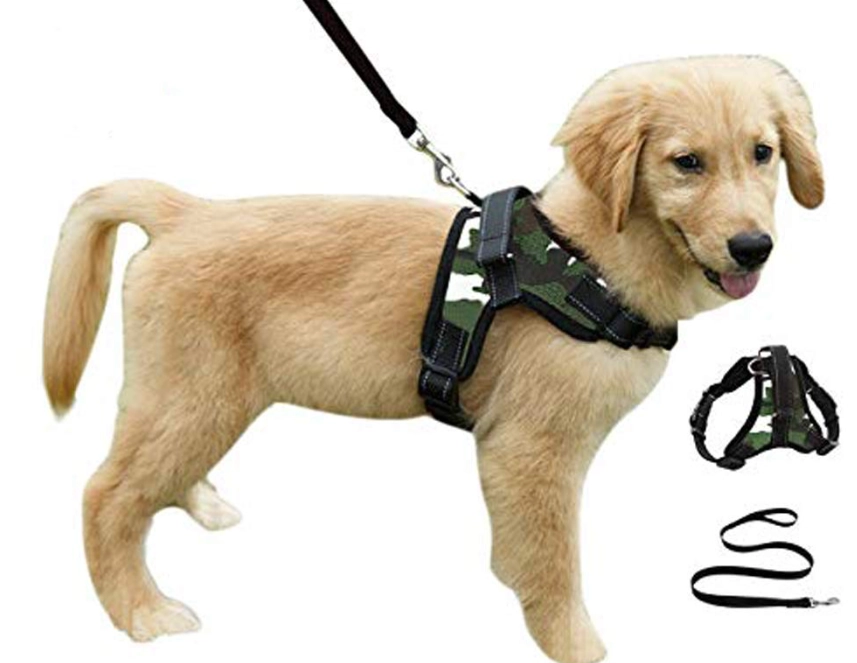
Quick Guide: What's Inside
Why Choose a Harness Over a Collar?
Think about where the pressure goes. A collar puts all the strain on a small ring of your dog's neck. For a dog that pulls, this constant pressure can lead to serious issues. The Canine Health Foundation notes that pressure on the trachea can exacerbate conditions like tracheal collapse, common in Yorkies, Pugs, and other small breeds. It can also affect the thyroid gland and spine.
A harness distributes that force across the stronger chest and shoulders. It's simply better physics. The control you get is different, too. With a collar, you're essentially steering the head. With a harness, you're guiding the body. This is crucial for training. A front-clip harness, in particular, gives you leverage to gently turn your dog back towards you when they pull, which is a much clearer communication than just choking them on a collar.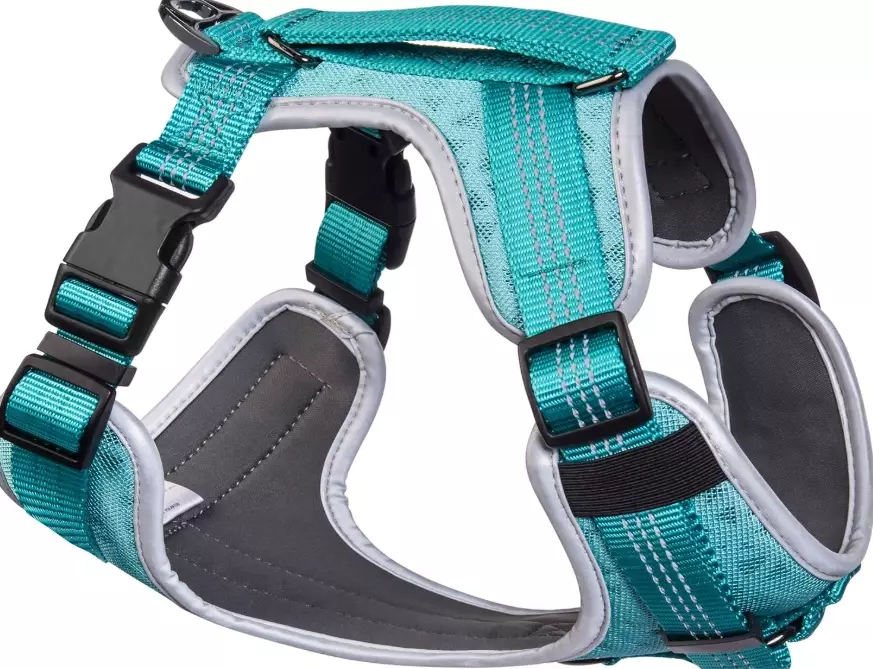
Quick Verdict: Use a collar for holding ID tags. Use a harness for walks, hiking, or any activity involving a leash. It's safer and gives you more training options.
Types of Dog Harnesses Explained
The three main designs serve completely different purposes. Picking the wrong one is like using a screwdriver to hammer a nail.
| Harness Type | Best For | Key Advantage | Potential Drawback |
|---|---|---|---|
| Front-Clip (No-Pull) | Dogs that pull on the leash. Training loose-leash walking. | Gentle steering effect. Dog pulls, turns back towards you. Highly effective for training. | Can twist if not fitted properly. Some dogs may find the chest strap initially awkward. |
| Back-Clip | Well-trained dogs, casual walks, car rides (if crash-tested). Dogs with sensitivity on their chest/sternum. | Easy to put on. Comfortable for dog. Doesn't interfere with natural gait. | Offers zero leverage for pulling. Can encourage a dog to pull harder (like a sled dog). |
| Dual-Clip (Front & Back) | Versatility. Training transition (front clip now, back clip later). Active owners who switch between control and freedom. | Maximum flexibility. Use front clip for training/pulling, back clip for hiking or trained walking. | Often bulkier and more expensive. More straps to adjust. |
There are also specialized types like step-in harnesses (great for dogs who hate things going over their head) and tightening harnesses (like the "Martingale" style for sighthounds). My general rule? If pulling is the issue, start with a front-clip. It's a game-changer.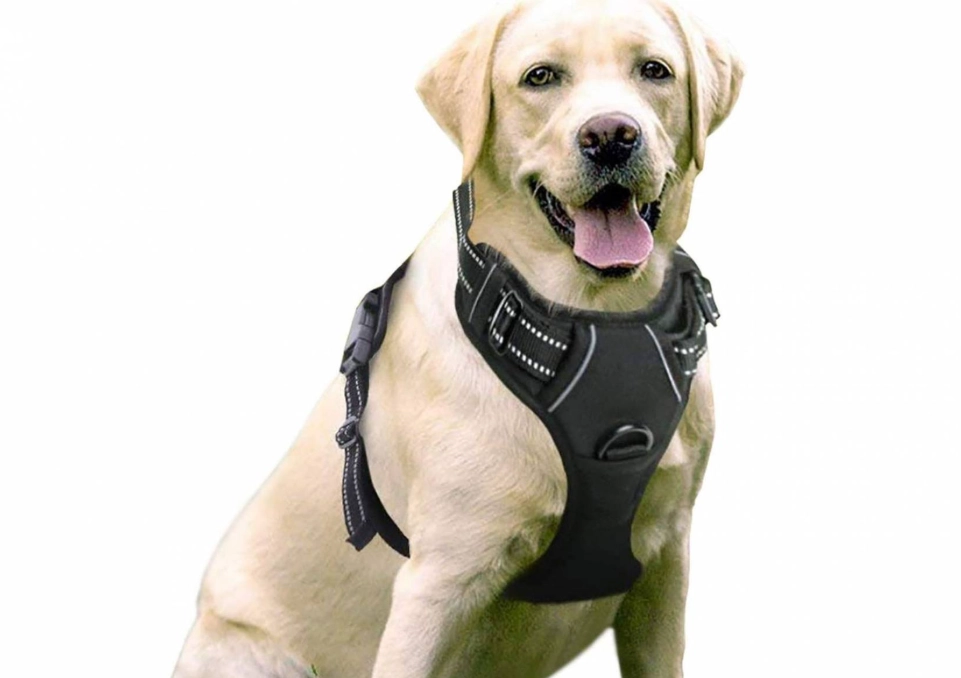
How to Choose the Perfect Harness
Forget the breed size chart on the box for a second. Those are vague guidelines. The only thing that matters is your individual dog's measurements. Here's the process I use with every client's dog:
1. Measure in the Right Spots. Use a soft tape measure.
Neck: Where a collar would sit.
Chest/Girth: This is the most critical. Measure around the widest part of the ribcage, right behind the front legs.
Length: From the base of the neck (where the collar sits) to the point where the bottom of the harness would rest on the sternum.
2. Material Matters. Look for padded mesh in high-friction areas (armpits, chest). Avoid cheap, non-breathable nylon that can cause hot spots. For water-loving dogs, a quick-dry material is key.
3. Check the Hardware. Plastic buckles are fine for Chihuahuas; metal D-rings and buckles are non-negotiable for strong dogs over 30 lbs. Give the D-ring a firm tug. It should be welded or riveted, not just stitched over.
4. Assess Adjustability.
Multiple adjustment points (usually 2-4) mean a better fit. A harness that only adjusts at the chest will gape at the neck on many dogs.
5. The Two-Finger Test is Gospel. Once on, you should be able to comfortably slide two fingers under any strap. One finger is too tight. A whole hand is too loose. Pay special attention under the front legs.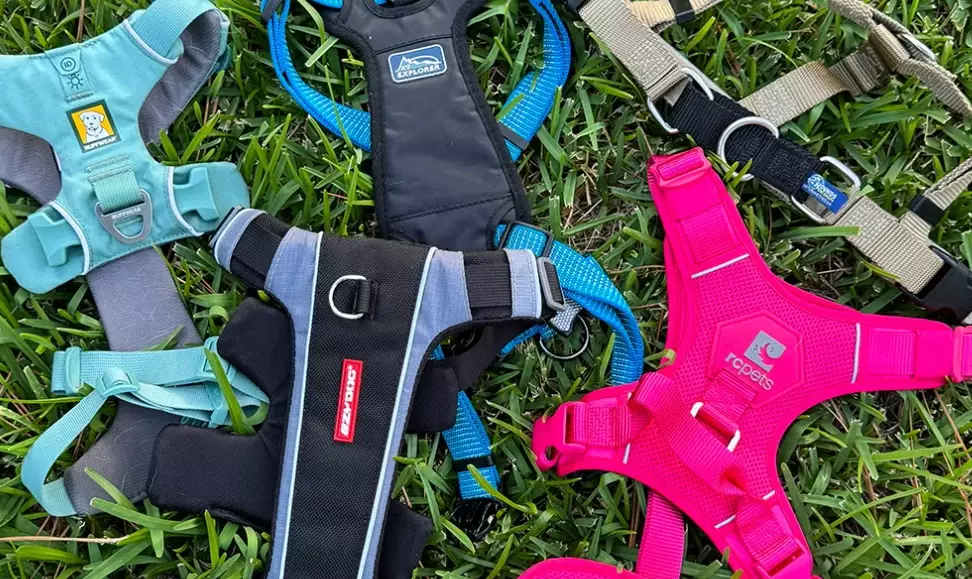
My Pet Peeve: The "Comfort" Padding Illusion
Thick, memory foam padding looks great but can be a trap. On a correctly fitted harness, the straps shouldn't be digging in enough to need an inch of foam. That foam often just adds bulk, traps heat, and makes fine-tuning the fit harder. A thin, breathable mesh pad is usually more comfortable in the long run.
How to Put on a Dog Harness Correctly
Most people get this subtly wrong. A misaligned harness is uncomfortable and less effective. Let's use a common front-clip harness as our example.
Step 1: Loosen All Straps. Before you even approach your dog, unbuckle and loosen every adjustable strap. This makes it easier to slip on.
Step 2: Identify the Neck and Chest Loops. The larger loop typically goes over the head. The smaller loop/belly strap will buckle around the chest.
Step 3: The Head Loop. Slip the larger loop over your dog's head. It should sit high on the neck, similar to a collar position. This is the first common mistake—letting it sit too low.
Step 4: The Chest Strap. Bring the two ends of the belly strap under your dog's chest, just behind the front legs. Buckle it. For most harnesses, the buckle sits on the side, not underneath the belly where it can rub on the ground when the dog lies down.
Step 5: The Fine-Tune Fit. Now, adjust. Start with the neck strap so it's snug but not tight (two-finger test). Then adjust the chest/girth strap. Finally, many harnesses have a third strap along the sternum—adjust this to prevent the front horizontal strap from riding up into the armpits.
The harness should sit flat against the body without twisting. The front D-ring should be centered on the breastbone. If it's off to one side, the chest strap is likely uneven.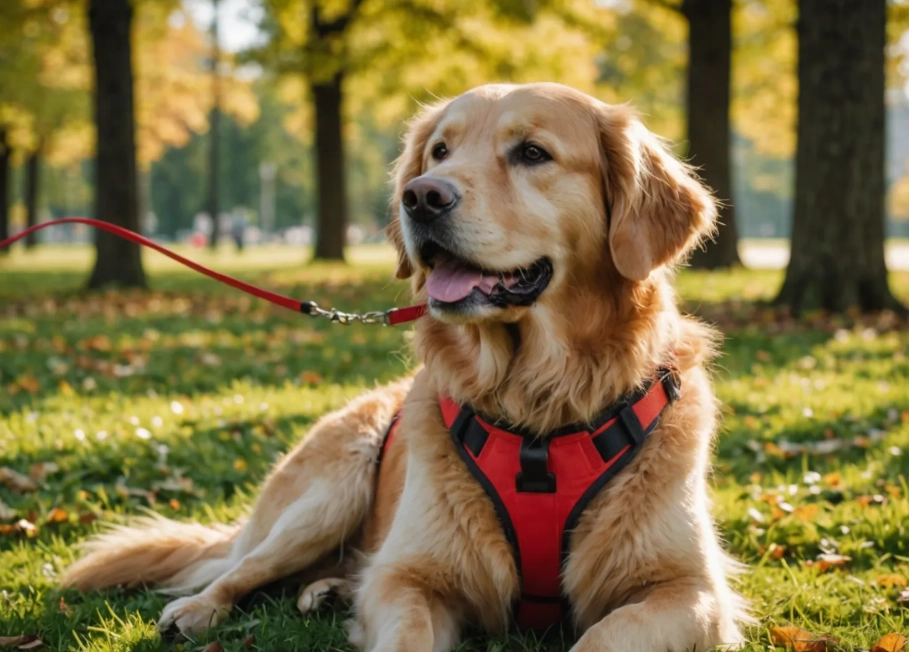
Common Harness Mistakes to Avoid
- Too Loose: The harness shifts side-to-side, chafes, and your dog could potentially back out of it. The front-clip loses all steering power.
- Too Tight: Restricts shoulder movement, causing an unnatural gait. Can rub hair raw and cause pressure points. You'll see your dog constantly scratching at it.
- Wrong Type for the Job: Using a back-clip harness on a dedicated puller. You're just enabling the behavior.
- Ignoring Wear and Tear: Check straps and stitching monthly, especially where the D-ring attaches. Fraying or stretched stitching means it's time for a replacement.
- Leaving it On Unattended: A harness is for walks and outings. Take it off indoors to prevent matting of fur, overheating, and to give their skin a break.
Harness Dog FAQs
My dog hates putting his head through the harness loop. What can I do?
This is incredibly common, especially with rescue dogs or step-in harness converts. Forcing it creates a negative association. Instead, hold the head loop open wide with both hands and lure your dog's nose through with a high-value treat held on the other side. Don't try to slip it over the head yet. Just get the nose through, treat, and remove. Repeat until they're comfortable. Then gradually slide it further each time. Alternatively, switch to a step-in harness style that avoids the head loop altogether.
The harness rubs the hair under my dog's armpits raw. Is this normal?
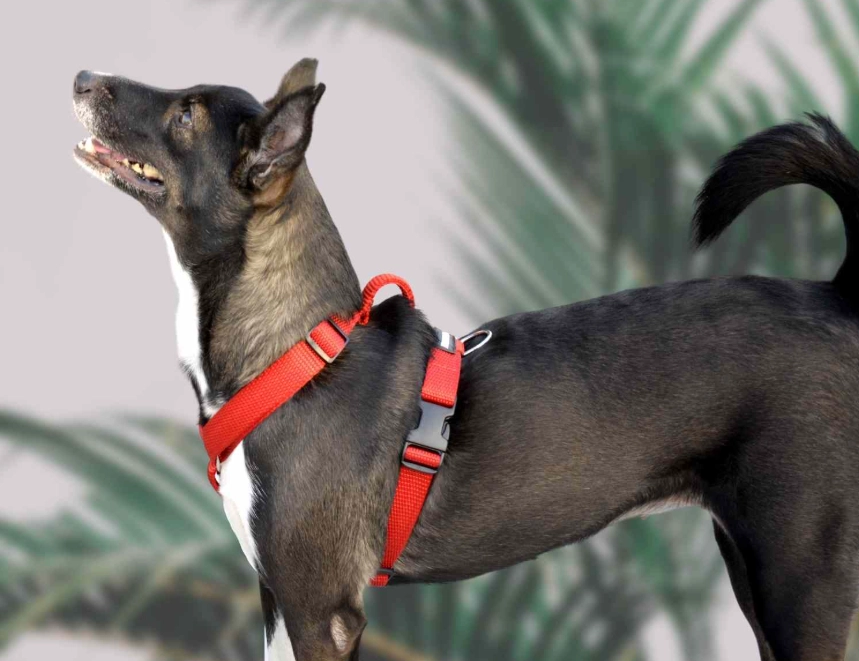
No, this means the fit is wrong. The most likely culprit is the horizontal chest strap sitting too high and too close to the leg joint. Loosen the neck strap slightly and tighten the sternum strap (if it has one) to pull the chest strap down onto the breastbone, away from the soft armpit area. Also, ensure the material is a smooth, padded mesh, not a rough seam. For dogs with very fine fur, like Greyhounds, you might need a harness specifically designed with wider, softer straps for their anatomy.
 I have a strong breed like a Husky or Labrador that pulls. Will a front-clip harness really work?
It's the best tool to start with, but it's not a magic cure. The harness gives you the mechanical advantage to communicate effectively. When your dog pulls, the front clip allows you to gently turn them off-course and back towards you, breaking the forward momentum. However, you must pair this with reward-based training when they walk on a loose leash. The harness manages the pulling while you teach the desired behavior. For extreme pullers, a dual-clip harness used with a double-ended leash (attached to both front and back clips) can offer even more control.
Can my dog wear a harness all day, even in the house?
I don't recommend it. Think of a harness like your own shoes—comfortable for a walk, but you take them off when you get home. Constant wear can mat fur, trap moisture and heat against the skin, and the straps can cause pressure points over many hours. It also becomes a chewing target for bored dogs. The only exception might be a very lightweight, tag-holding "house harness" for a dog that absolutely will not tolerate a collar, but even then, monitor closely.
How often should I wash my dog's harness?
More often than you think. Dirt and sweat act like sandpaper against the skin. If it's visibly dirty or starts to smell, wash it. Check the label, but most nylon/mesh harnesses can go in a mesh laundry bag on a gentle, cold cycle. Air dry completely—do not put it in the dryer, as heat can weaken the webbing and melt plastic buckles. Washing also lets you do a thorough inspection for wear.