Your ice climbing axe isn't just a tool; it's your connection to the mountain. It's the difference between a confident, fluid ascent and a fight for every inch. I've watched climbers struggle with gear that's working against them, and I've felt the magic when the right axe becomes an extension of your body. This guide isn't about listing specs. It's about helping you understand what really matters, so you can choose a partner for the vertical world that won't let you down.
What's Inside This Guide
The Three Axe Types: Matching Tool to Terrain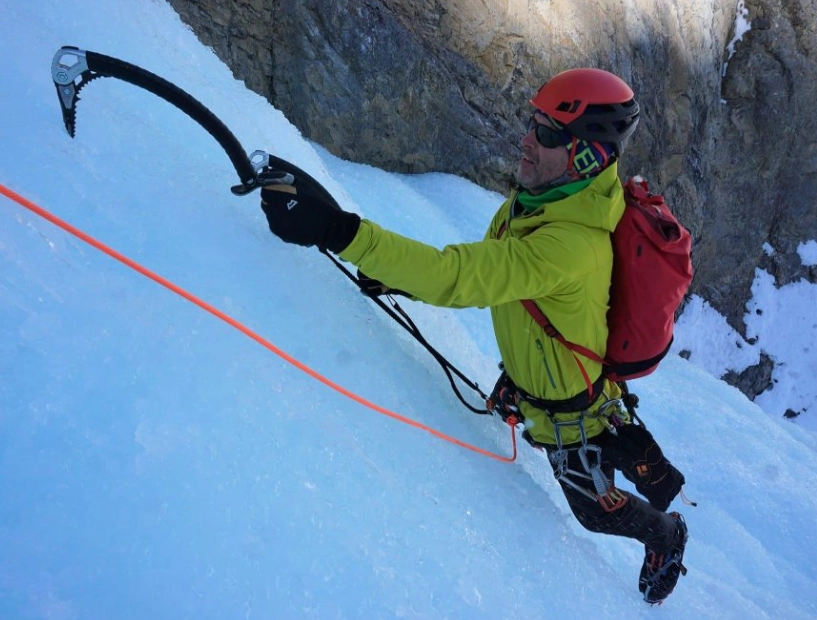
1. Mountaineering Axes (The All-Rounder)
Think of these as the Swiss Army knife. Straight shaft, classic shape. They're for walking on snow slopes, self-arresting, and cutting steps. The length is key—it should reach your ankle when you're standing straight, arm at your side. Brands like Black Diamond Raven or Petzl Glacier Literide dominate here. Perfect for your first winter ascent of a non-technical peak.
But here's the thing nobody tells you: that classic "T" rated (Technical) shaft is overkill for 90% of mountaineering. Unless you're planning serious mixed climbing with it, a "B" (Basic) rating is lighter, cheaper, and just as safe for general use. I learned that after carrying unnecessary weight for years.
2. Technical Ice Tools (The Specialist)
This is what most people mean by "ice climbing axe." Shorter, curved, aggressive. Designed for swinging into vertical or overhanging ice. The curve isn't just for looks—it keeps your knuckles away from the wall and provides better clearance. The grip is ergonomic, often with a pronounced "trigger finger" rest.
The big debate: moderate curve vs. aggressive curve. A moderate curve (like the Petzl Nomic) is more versatile, better for less-than-perfect ice and learning technique. An aggressive curve (like the Black Diamond Fuel) hooks like a dream on steep, featured ice but can be unforgiving on bad placements. Start moderate.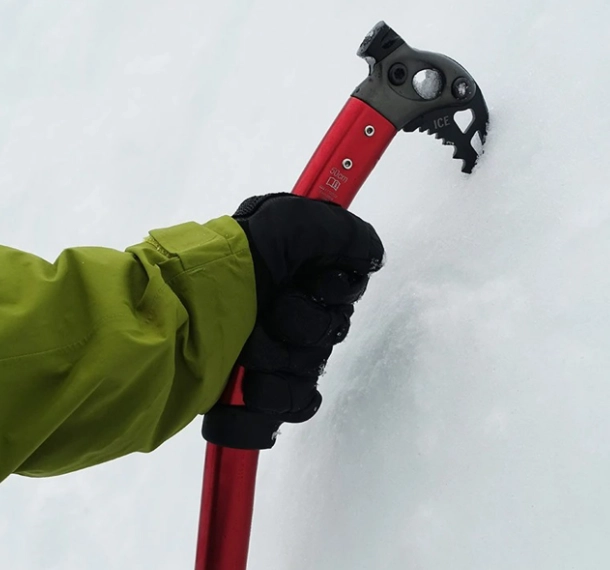
3. Hybrid Axes (The Bridge)
A growing category. They look like a technical tool but have a slightly straighter profile and often come with a classic adze or hammer. The Grivel Tech Machine or Camp Cassin X-Dream are prime examples. They're brilliant for alpine routes that mix ice, rock, and snow. You get decent performance on steep sections without sacrificing the utility needed for digging or pounding pitons.
Quick Rule: If you're mostly on snow slopes, get a mountaineering axe. If you're aiming at waterfall ice, get a technical tool. If your objective is a mixed alpine route, lean towards a hybrid.
Anatomy of an Ice Axe: Key Features Explained
Let's look under the hood. These details separate a good tool from a great one.
The Pick: This is the business end. Look at the teeth (aggressive for hard ice, fewer for mixed) and the bend. A "reversed" pick (like on Petzl's Quarks) is designed to reduce leverage and stick better. The steel quality matters—high-end chromoly steel holds an edge longer but can be brittle if you hit rock.
The Shaft: Material is everything. Aluminum is light and stiff, great for pure ice. Carbon fiber is even lighter and damps vibration, but it's expensive and I've seen it crack in extreme cold. Steel is bombproof and common in mountaineering axes, but heavy. For your first technical tool, aluminum is the sweet spot.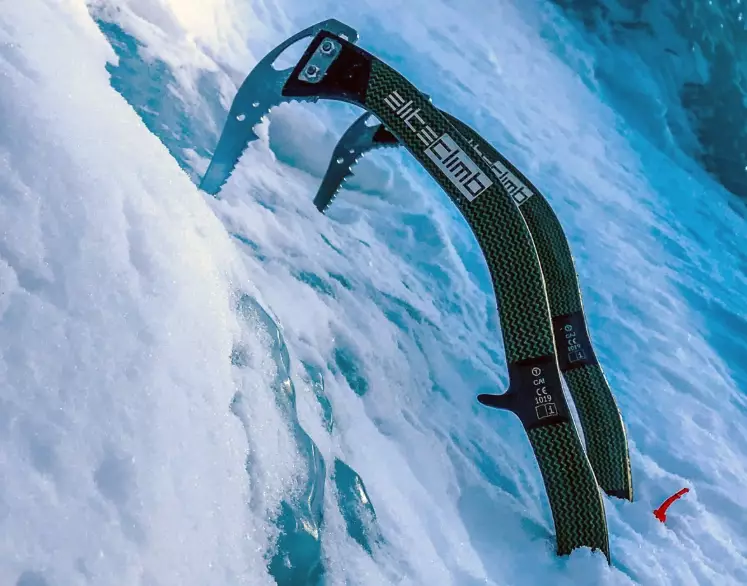
The Grip: Don't underestimate this. A rubberized or textured grip is crucial when your hands are sweaty or wet. Some tools have removable grip panels to adjust weight. The shape should fit your hand comfortably in both a matched grip (for steep terrain) and a crossed grip (for resting).
The Pommel/Spur: That little hook or plate at the bottom. On steep terrain, you hook it over your wrist leash to take weight off your grip. A poorly designed pommel can dig into your wrist painfully. Test it.
How to Choose the Right Ice Climbing Axe for You
Forget "the best." Think "the best for me." Ask yourself these questions.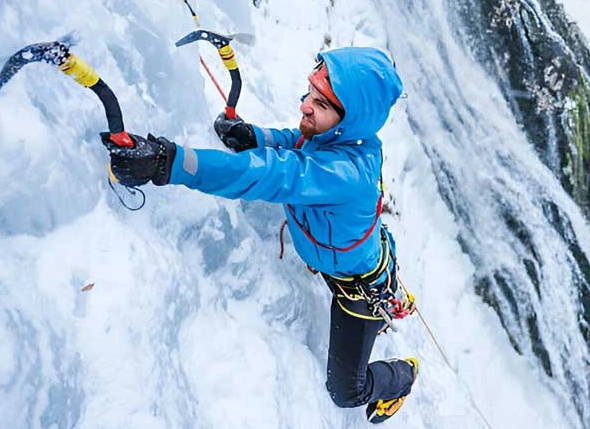
What are you climbing? Be honest. Dreaming of frozen waterfalls in Ouray? That's a technical tool. Planning a winter ascent of Mount Baker? That's a mountaineering axe. Your most frequent objective dictates the primary tool.
What's your experience level? Beginners should avoid the most aggressive tools. They're harder to place cleanly and can mask poor technique. A moderate-curve tool teaches you to swing properly.
How does it feel? This is non-negotiable. If you can, go to a shop and hold different models. Make a mock swing. Does it feel balanced? Does the grip fit? An axe that feels "right" in the store will feel right on the mountain. Online reviews can't replace this.
Leash or Leashless? Modern tools are designed for leashless climbing, with ergonomic grips and finger rests. It offers incredible freedom to move your hands. But it requires stronger grip endurance. Leashes provide security and rest but tether you to the tool. Most new climbers benefit from starting with leashes to build confidence.
Top Brands and Models: A Quick Comparison
Here's a snapshot of the current landscape. This isn't exhaustive, but it covers the leaders and their philosophies.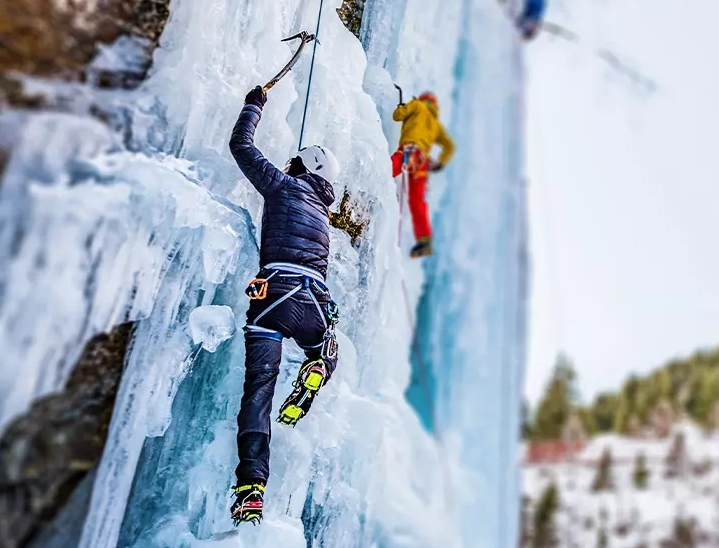
| Brand/Model | Type | Best For | Key Feature | Consideration |
|---|---|---|---|---|
| Petzl Nomic | Technical Tool | Steep ice, competition, technical mixed | Highly refined balance, dual-density grip | High price, very specialized |
| Black Diamond Fuel | Technical Tool | Overhanging/featured ice, strong climbers | Aggressive pick curve, very "grabby" | Less forgiving on poor placements |
| Grivel Tech Machine | Hybrid | Alpine ice & mixed, all-around versatility | Interchangeable picks/hammers, robust build | Heavier than pure ice tools |
| Camp Cassin X-Dream | Hybrid/Technical | Mixed climbing, moderate ice | Excellent pick geometry for rock torquing | Grip can feel bulky for small hands |
| Black Diamond Raven | Mountaineering Axe | Glacier travel, snow ascents, beginners | Classic, reliable, cost-effective | Not for vertical ice climbing |
Remember, the "best" tool is the one you use with confidence. I climbed for years on a pair of mid-range tools that everyone said were "okay." I knew them intimately, and that mattered more than the latest tech.
Pro Tips: Maintenance and Technique Insights
Buying the axe is step one. Keeping it safe and using it well is the real journey.
Sharpening: This is an art. A razor-sharp pick is dangerous—it becomes brittle and can snap. Use a fine flat file. Follow the original angle. You're removing burrs and maintaining the edge, not creating a knife point. If it sticks with a solid "thunk," it's sharp enough. If it skids or requires a huge swing, it's time.
Storage: Never store your axe with the pick buried in a gear bag where it can saw through other items (or the bag itself). Use a rubber pick guard. Keep it dry to prevent corrosion, especially on the pivot points of modular tools.
The Swing: It's not an arm swing; it's a wrist flick. The power comes from a relaxed, controlled motion that snaps the pick into the ice. A common mistake is gripping too tightly and muscling it in. That wastes energy and often results in a poor placement that shatters the ice. Practice on a low-angle ice cone or even a log. Listen for the sound.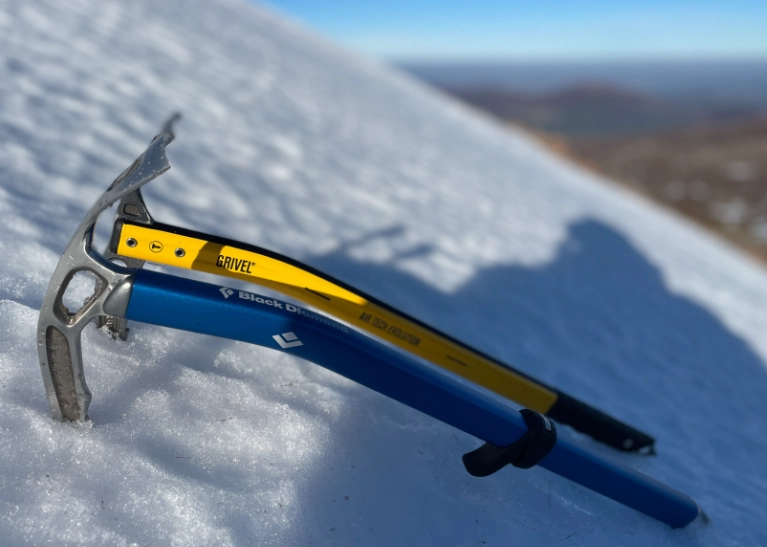
Safety Check: Before every climb, inspect your tools. Look for hairline cracks in the shaft, especially near the head. Check that all screws (on modular picks) are tight. Wiggle the pick to test for play. A failing tool is not something you want to discover mid-lead.
Your Ice Axe Questions, Answered
Choosing and using an ice axe is a personal journey. It's about finding the balance between performance, comfort, and confidence that works for your goals. Start with the right category, prioritize feel over hype, and remember that the most important feature is the climber attached to it. Now get out there and find your vertical line.