You've seen them dangling from backpacks, clipped to dog leashes, and of course, on the harness of every climber. The humble carabiner. Most people know it's a metal clip, but ask "what are carabiners used for?" and you'll usually get a one-word answer: climbing. That's like saying a smartphone is only for making calls. It misses the whole picture.
I've been using these things for over a decade, from scaling big walls in Yosemite to just keeping my house keys from getting lost. I've also seen the subtle, dangerous mistakes people make when they don't understand the full scope of a carabiner's purpose and limits. Let's fix that.
What You'll Discover
What Exactly is a Carabiner?
At its simplest, a carabiner is a specialized metal snap-link with a spring-loaded gate. Its job is to create a secure, quick, and reversible connection between two things. The key word is specialized. The ones you buy at the hardware store for a couple of bucks are fundamentally different from the ones holding a climber's weight.
The main components are the spine (the solid back), the gate (the moving part), and the basket (the rounded end that holds things). The gate mechanism—whether a simple snap or a screw-lock—is what defines its security level. Think of it as the lock on your front door. A twist-lock is more secure than one that just clicks shut if someone leans on it.
The Core Use: Climbing and Mountaineering
This is where carabiners were born and where their design is pushed to the absolute limit. In climbing, they aren't just connectors; they are the fundamental links in your safety chain. Every single one has a specific, non-negotiable job.
The Three-Point Safety System
In a typical climbing setup, you'll see carabiners used in three critical ways:
- Belay Device Attachment: A locking carabiner connects your belay device (the friction tool that controls the rope) directly to your harness's belay loop. This connection manages all the force of a falling climber.
- Rope to Anchor: At the top of a climb or on a multi-pitch route, carabiners (often two, opposed and reversed) connect the rope to a secure anchor point in the rock.
- Quickdraws: This is two carabiners connected by a short sewn sling. One carabiner clips to a bolt in the rock, the other clips the rope. This is what protects you as you climb, allowing the rope to run freely while keeping you attached to the wall.
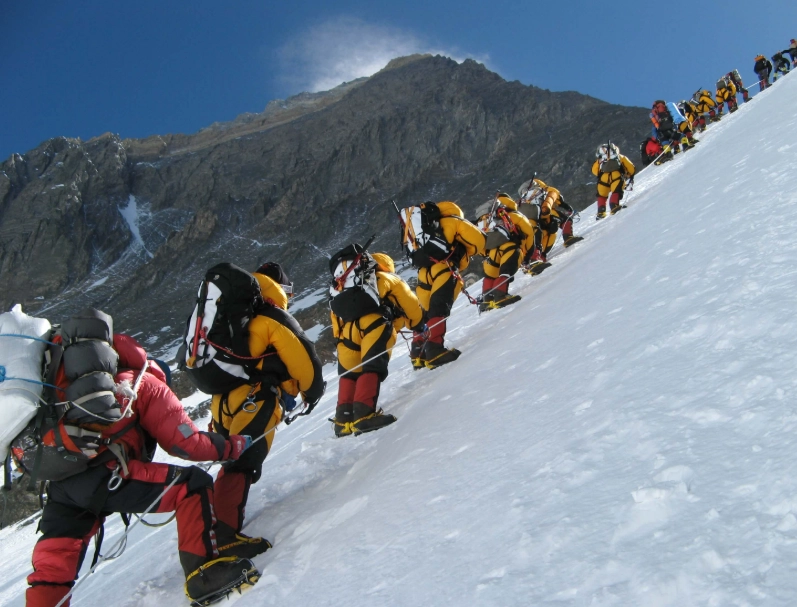
In mountaineering, they're used for clipping into fixed lines on glaciers, building snow anchors, and attaching gear to harnesses. The environment is harsher, so reliability is everything.
Beyond the Crag: Everyday and Adventure Uses
This is where it gets fun. The principles of a secure, quick connection apply everywhere. Here’s a breakdown of how people use carabiners outside of vertical worlds.
Organization & EDC (Everyday Carry)
This is probably the second most common use after climbing.
- Key rings: Obvious, but effective. A carabiner on your belt loop keeps keys accessible.
- Bag organization: Clip a water bottle, mug, or gloves to the outside of your backpack. I use one to keep my dog's poop bag dispenser handy and off the ground.
- Wallet/Phone tether: For festivals or crowded places, a short leash from your belt to your valuables can save the day.
Camping & Hacking Your Gear
Carabiners shine in the outdoors as improvised solutions.
- Bear bag hangs: Essential for suspending food away from wildlife. The carabiner is the crucial link between your rope and the food sack.
- Tarp and hammock rigging: Adjust tension quickly or create quick-release points for your rainfly.
- Gear lofts: Inside your tent, clip a carabiner to a loop and hang a headlamp, creating instant ambient lighting.
- Water bottle holder for a trekking pole: Saw this on a long thru-hike. Genius.
Fitness, Work, and Home
Their utility is endless.
- Gym equipment: Attach resistance bands to a sturdy post or door.
- Tool organization: In a workshop, hang frequently used wrenches or tape measures from a pegboard hook via a carabiner for easy grab-and-go.
- Improvised pulley: Need to lift something awkward? A carabiner over a strong branch can act as a simple pulley to change the direction of pull.
- Laundry line tensioner: Clip into the end of a line and hook it to a farther point to tighten it.
The rule here? If it involves "hooking" or "hanging" something securely but temporarily, a carabiner is a candidate.
How Do I Choose the Right Carabiner?
This is where most people go wrong. Grabbing any old clip for any job is a recipe for failure or, worse, injury. Your choice depends entirely on the intended use and the consequences of failure.
| Carabiner Type | Best For | Key Features | NOT For |
|---|---|---|---|
| Non-Locking (Wire/Solid Gate) | Climbing quickdraws, gear organization, key rings, lightweight backpack clips. | Lightweight, easy one-handed operation. Rated for climbing forces (22+ kN). | Any life-support connection where the gate could be bumped open. |
| Locking (Screwgate, Twistlock, Autolocker) | Belaying, anchoring, attaching critical gear (like a dog in a risky spot), any connection where accidental opening would be bad. | Gate locks shut manually (screw/twist) or automatically. Prevents accidental opening. | Quickdraws (too slow), ultra-lightweight packing. |
| Non-Climbing Grade (Hardware Store) | General organization, hanging lightweight items, non-critical tasks. Often marked "Not for climbing." | Cheap, varied shapes and sizes. Weak gate springs, lower strength. | ANY load-bearing activity for a person. Holding more than ~50 lbs dynamically. |
My personal rule: If a failure of the connection could result in injury, damage, or significant loss, use a locking carabiner designed for climbing. The extra few dollars and ounces are irrelevant. For my keys? A cheap one is fine. For clipping my camera bag to a safety line on a boat? That gets a locker.
Critical Safety Mistakes to Avoid
I've made some of these myself early on. Learn from them.
1. Using Non-Climbing Carabiners for Load-Bearing Tasks. This is the big one. Those aluminum clips from the craft store might have a 50 lb rating stamped on them, but that's a static, ideal load. A dog lunging on a leash creates a dynamic force much higher. A human sitting back on a hammock clipped with a cheap carabiner? That's an accident waiting to happen. The gate is the weakest point, and on non-climbing biners, it can deform and pop open under shock loads.
2. Ignoring Cross-Loading and Gate-Opening. Even a climbing-rated carabiner is only at full strength when loaded along its major axis (spine to basket). If the load pulls across the narrow side (cross-loading) or against an open gate, strength plummets. In an anchor, carabiners should be oriented so the rope or sling can't push against the gate.
3. Mixing Metals on a Single Connection. Don't clip an aluminum carabiner directly to a steel one, especially in a salty or wet environment (like sailing). This causes galvanic corrosion, which can severely weaken the aluminum carabiner. It's a slow, invisible killer.
4. Forgetting to Lock It. With a screwgate, the mantra is "screw it, check it." It's a habit. I once finished a long, easy climb, got to the anchor, and was about to clip in when I realized my belay carabiner was only half-screwed. Fatigue makes you sloppy. Autolocking carabiners (like Mammut's Smart or Petzl's Ball-Lock) solve this, but they're more expensive.
Your Carabiner Questions, Answered
So, what are carabiners used for? They're used for security, for organization, for improvisation, and for adventure. They're a simple tool with profound applications. Understanding their purpose—from holding a fall on El Capitan to just making sure you don't drop your keys in a river—is the first step to using them safely and effectively. Choose the right tool for the job, respect its limits, and that little metal clip will open up a world of possibilities.