You're at the gym or the crag, and you hear a climber ask for a "quickdraw," a "belay device," or maybe a "cam." If you're new, it sounds like a foreign language. Even after a few years, I still see experienced folks mixing up terms or buying the wrong piece because they didn't know its proper name or function. Let's cut through the jargon. This isn't just a list. It's a functional breakdown from someone who's spent a decade figuring this out, often the hard way.
Your Quick Climbing Gear Checklist
The Non-Negotiables: Core Safety Gear
This is the stuff that keeps you off the ground. Get this wrong, and nothing else matters.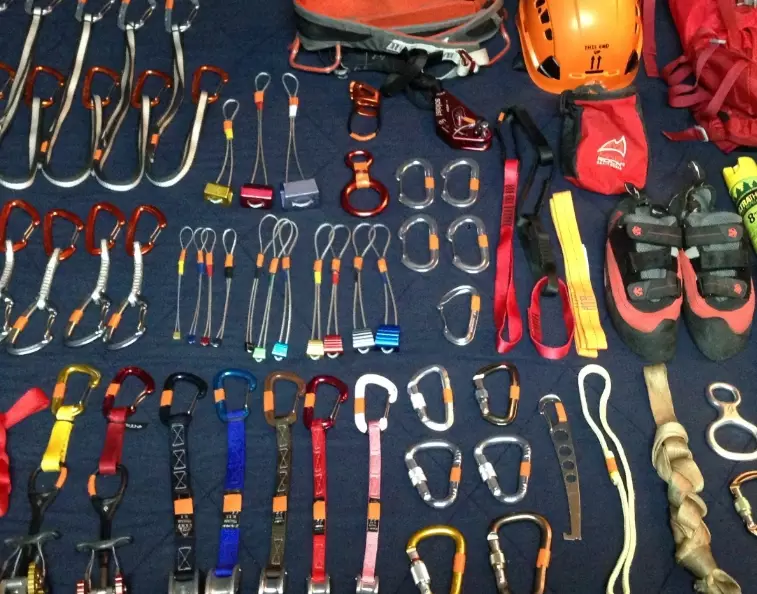
Harness
Your connection point to the rope. It's not just a seatbelt; it's your workstation. The two key parts everyone misses: the belay loop (the sturdy, reinforced loop in the front where you attach your belay device) and the gear loops (the smaller loops on the waistbelt for carrying carabiners and protection). A common mistake? Choosing a harness based on color instead of leg loop adjustability. If you plan to climb in different seasons with varying layers, get one with fully adjustable leg loops.
Helmet
Obvious, right? Yet, I see people bouldering without them under loose rock. In climbing, it's called a climbing helmet or a rock helmet. Don't use a bike helmet. Climbing helmets are designed for impacts from above (falling rocks) and side impacts (smacking the wall). Brands like Petzl and Black Diamond are the standards.
Belay Device and Locking Carabiner
These are a pair. The belay device is the metal tool that creates friction on the rope to catch a fall. The most common type for beginners is an assisted-braking device (ABD) like a Petzl GriGri or an Edelrid Mega Jul. They're safer for new belayers. The traditional tubular device (like an ATC) is lighter and cheaper but requires more skill.
You attach the belay device to your harness's belay loop with a locking carabiner. This is a specific type of carabiner with a locking gate (screwgate or twistlock) to prevent it from accidentally opening. It's not optional for belaying.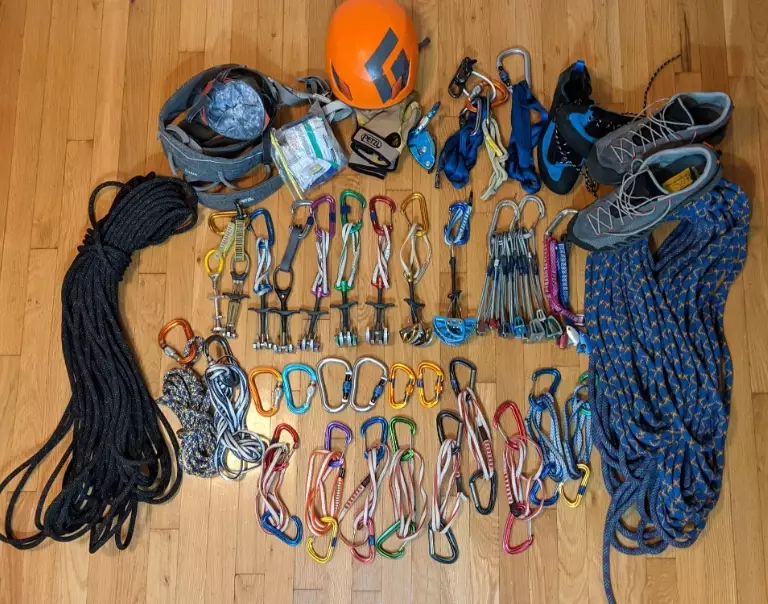
The Technical Stuff: Placing Protection
This is where the language gets fun. For roped climbing outside, you need to build anchors in the rock. The gear you place is collectively called protection or pro.
| Equipment Name | Common Nickname | Primary Use | Key Feature |
|---|---|---|---|
| Spring-Loaded Camming Device (SLCD) | Cam (e.g., "a #0.5 Camalot") | Placed in parallel-sided cracks. | Expandable lobes; works in a wide range. |
| Stoppers / Nuts | Nuts or Wires | Passive protection for constricting cracks. | Wedges in place; lightweight and simple. |
| Hexentric | Hex | Passive protection for irregular cracks. | Can be placed actively (cammed) or passively. |
| Quickdraw | Draw | To connect the rope to protection. | Two carabiners pre-connected by a strong fabric sling. |
A quickdraw isn't protection itself; it's the connector. You clip one end (the bolt-end carabiner, usually straight-gate) into the protection you placed or a permanent bolt in the rock. You clip the rope into the other end (the rope-end carabiner, usually bent-gate for easier clipping).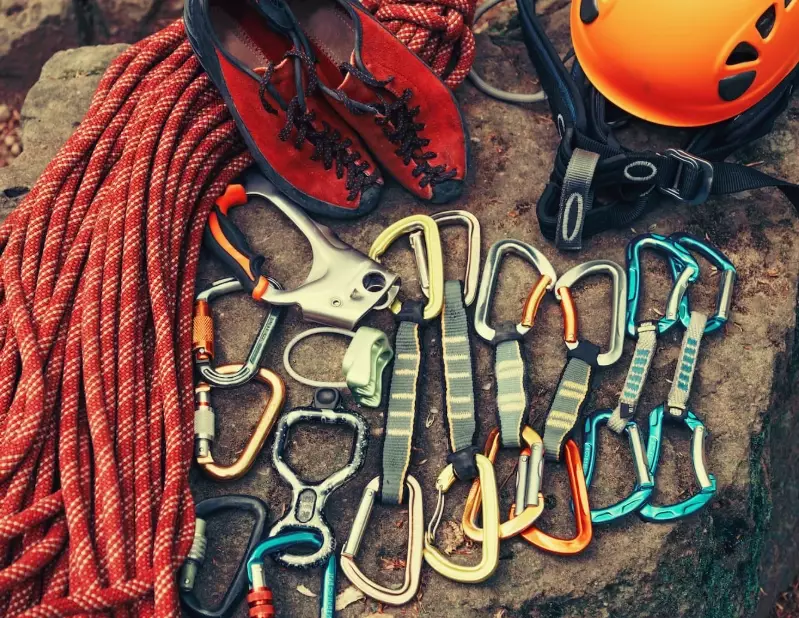
Ropes, Slings, and the Connectors
The circulatory system of your climb.
Climbing Rope
You need a dynamic climbing rope. "Dynamic" means it stretches to absorb the energy of a fall. Static ropes (used for rescue) will hurt you. Ropes are defined by their diameter (thickness) and length (usually 60m or 70m). A 9.0mm to 9.8mm single rope is the standard for most climbing. Thinner ropes are lighter but wear out faster.
Slings and Cordelettes
A sling (or runner) is a loop of strong nylon or Dyneema webbing. You use it to extend protection, reducing rope drag, or to build anchors. They come in pre-sewn lengths (60cm, 120cm). A cordelette is a longer, thicker loop of cord (usually 5-7mm) specifically designed for building multi-point anchors. It's a core piece for trad climbing.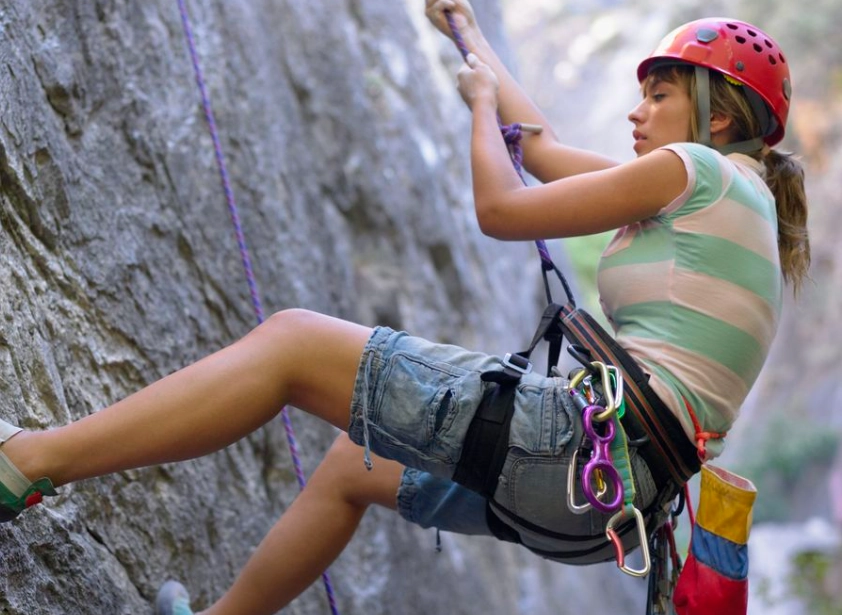
Carabiners (More Than Just One Kind)
The generic term is carabiner (often shortened to 'biner). But the shape matters:
- D-Shaped: Strong and efficient. Great for most uses.
- Oval: Older style, good for gear racks as they hang evenly.
- Asymmetric D / Pear-shaped: Often used for belay devices or at the master point of an anchor.
The gate type is critical too: Non-locking (for quickdraws, gear racks), Locking (for belay, anchors, critical connections), and Wire-gate (lighter, less prone to freezing).
What You Wear: Clothing and Footwear
This isn't just about fashion; it's about performance and safety.
Climbing Shoes
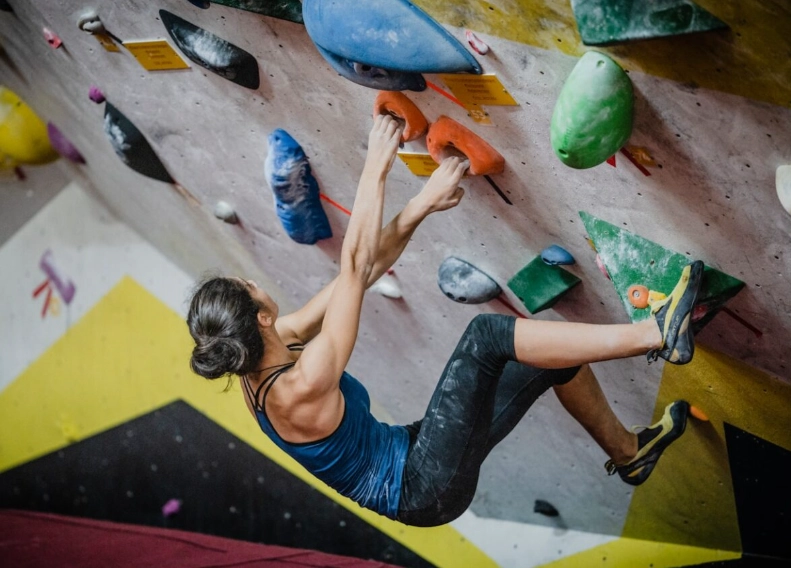
The most personal piece of gear. They should be tight—uncomfortably snug when new—but not crippling. A size or two down from your street shoe is normal. Types range from flat, comfortable shoes for beginners to aggressively downturned models for steep rock. The rubber on the sole is called climbing rubber (like Vibram XS Edge or Five Ten's Stealth).
Chalk and Chalk Bag
You use climbing chalk (magnesium carbonate) to dry sweat on your hands. It's carried in a chalk bag, which clips to the back of your harness. Some use a chalk ball inside the bag to reduce dust.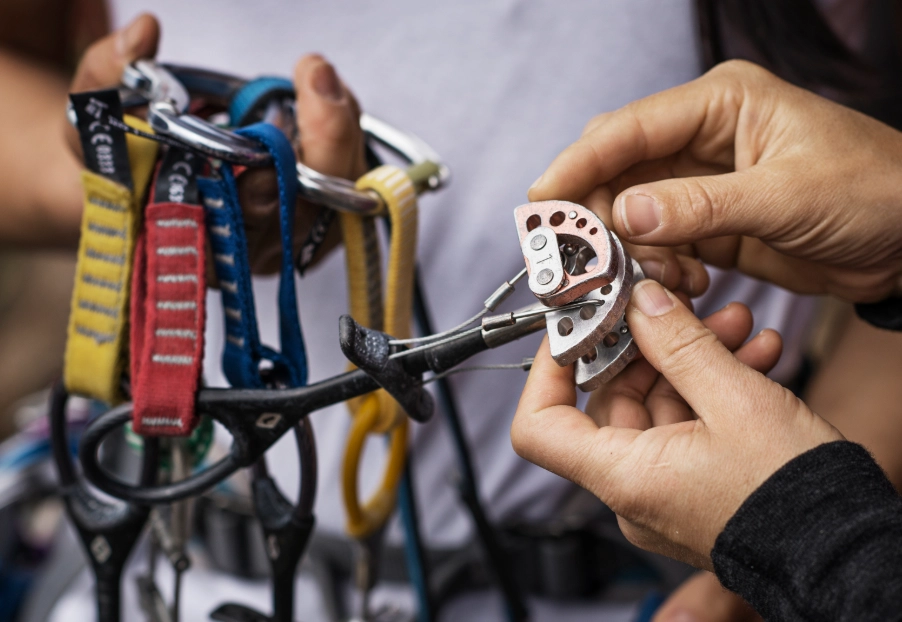
How to Choose Your First Set of Gear
Don't walk into a shop and buy one of everything. Start with what your discipline requires.
For Gym Climbing: You often only need shoes, a chalk bag, and maybe a harness. The gym provides ropes, belay devices, and carabiners. Buy a comfortable, adjustable harness and a pair of entry-to-moderate shoes.
For Sport Climbing Outdoors: This is the next step. You need your personal safety gear (harness, helmet, belay device, locking carabiner) PLUS a set of quickdraws (usually 10-12) and a rope. You're clipping into pre-placed bolts, so you don't need cams or nuts.
For Trad (Traditional) Climbing: This is the full investment. You need everything from the sport list, plus a full rack of protection (cams, nuts, hexes) and anchor-building material (cordelette, more slings, extra locking carabiners). Don't start here. Take a course.
My first big purchase was a rope. I chose a bright blue 9.8mm. It was a tank—durable but heavy. For long multi-pitch climbs, I now crave something lighter, like a 9.2mm. Think about how you'll use it most.
Common Gear Buying Mistakes (I Made #3)
We all mess up. Here's how to avoid it.
1. Prioritizing Price Over Safety Certification. Every critical piece of climbing gear (harnesses, carabiners, ropes, helmets) must have a UIAA (International Climbing and Mountaineering Federation) or CE certification stamp. No stamp, no climb. It's that simple. Reputable retailers like REI or Backcountry only sell certified gear.
2. Buying a Full Rack Before Knowing How to Use It. I've seen it. Someone buys a $700 set of cams, then realizes they hate trad climbing or don't have a partner. Rent gear first, take a course, and buy slowly as you learn what sizes you use most on your local crags.
3. Ignoring the Fit of the Harness Leg Loops. This was my mistake. I bought a harness with fixed, padded leg loops because it was on sale. It was great in summer shorts. Come autumn, I couldn't fit my pants underneath. I had to buy a second harness with adjustable loops within a year. Look for dual-adjustable leg loops if you climb in varied climates.
4. Assuming All Carabiners Are Created Equal. That cheap carabiner from a hardware store is for keys, not your life. Climbing carabiners are made from aluminum alloys, tested to withstand forces of 20 kN (roughly 4,500 lbs) or more along the major axis. The strength rating is stamped on the side.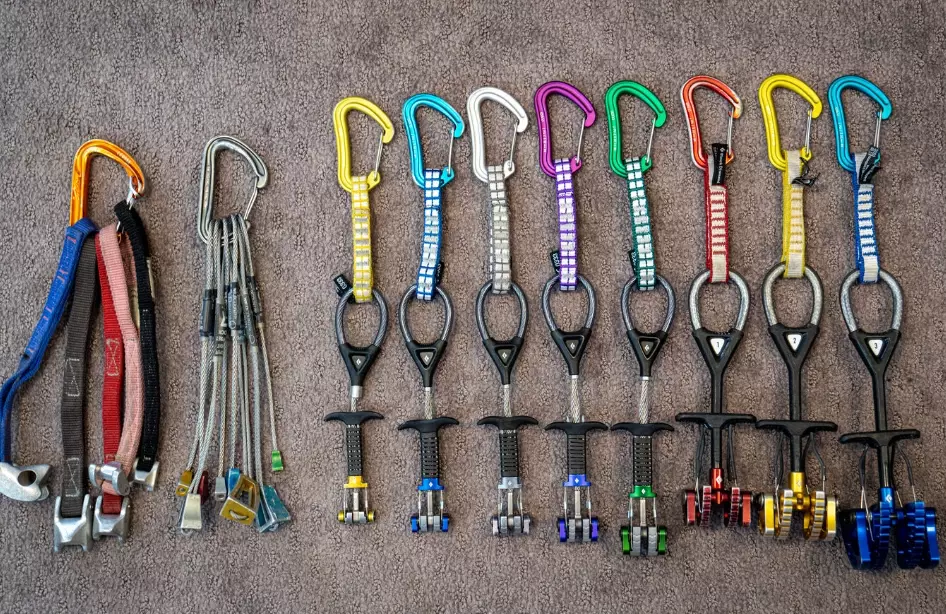
Your Climbing Gear Questions Answered
Why are my new climbing shoes so painful? Did I buy the wrong size?
They're supposed to be tight, but there's a line between performance fit and damage. Your toes should be curled slightly, but not crammed into a ball. The pain should be across the top of the foot and toes, not in a single, sharp point (which indicates a poor last shape for your foot). Leather shoes will stretch about a half to a full size. Synthetic shoes stretch very little. The best advice? Try on many brands and models at the end of the day when your feet are slightly swollen. Every brand's sizing and foot shape is different.
What's the difference between a "quickdraw" and just two carabiners on a sling?
Functionally, in a pinch, you can make a quickdraw. But a manufactured quickdraw is optimized. The sling is bartacked (stitched) in a specific way for strength and to prevent twisting. The carabiners are often specific: a stiff, straight-gate on the bolt end for easy clipping into hangers, and a smooth, bent-gate on the rope end for easier rope clipping. The gate actions are also tuned to work together to prevent the carabiners from cross-loading each other, a major weakness.
How often do I need to retire my climbing rope?
There's no simple calendar answer. It depends on use. A rope used weekly outdoors on rough rock might last a year. A lightly used gym rope could last several. The UIAA suggests retiring a rope after a severe fall (a factor 1.5 or higher), if the sheath is significantly worn (core fibers visible), or if it feels stiff and flat in sections. Inspect your rope regularly—run it through your hands feeling for soft spots (core damage) and look for cuts or glazed, melted sections. When in doubt, retire it. A $200 rope is cheaper than hospital bills.
Is lightweight gear always better?
This is a huge trend, but it's a trade-off. Ultra-light carabiners and cams are fantastic for long alpine routes where every gram counts. However, they often sacrifice durability. The thinner aluminum alloys can be more prone to nicks and wear from repeated falls and placements. For cragging, where you're walking a short approach, the durability of slightly heavier, standard-weight gear is usually worth it. Lightweight gear also tends to be more expensive. Start with standard gear; go light as a luxury upgrade for specific objectives.
Can I use my sport climbing quickdraws for setting up a top-rope anchor?
You can, but you shouldn't. Quickdraws are designed for lead climbing, where the load is primarily along the rope's direction. A top-rope anchor sees sustained, multi-directional load. For a top-rope anchor, you should use the SRENE (Solid, Redundant, Equalized, No Extension) principle with slings and locking carabiners directly on the anchor points. Using two non-locking quickdraws in series (a "ghetto anchor") is a known, dangerous shortcut that can fail if one component fails. Learn to build a proper anchor with cordelettes or slings.
Knowing what the climbing equipment is called is the first step to using it safely and effectively. It turns confusion into confidence. Start with the essentials, learn from certified instructors, and let your gear collection grow with your experience. Now get out there and clip some bolts.