Belaying is the single most important skill you'll learn in climbing. Forget fancy footwork or powerful pulls for a second. If you don't understand belaying, you shouldn't be off the ground. It's that simple. At its core, belaying is the technique and system used to manage the climbing rope, protecting your partner (or yourself) from a fall. You are the human brake, the attentive anchor, the critical link between a climber and the ground. A good belayer doesn't just hold the rope; they actively manage slack, anticipate movement, and are prepared to safely catch a fall at any moment. It's a role of immense trust and responsibility.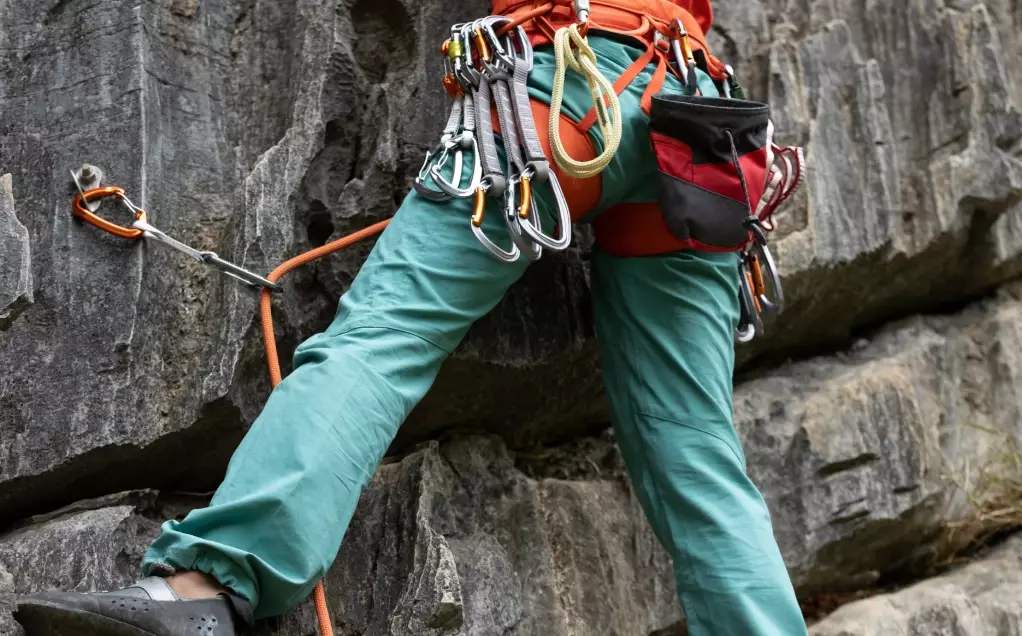
Your Quick Route to Mastering Belay
The Core Principle: Friction is Your Friend
All belaying boils down to one physics concept: friction. Your belay device creates friction on the rope. Your hand on the brake strand (the end of the rope coming out of the device) amplifies that friction. When a climber falls, the force travels down the rope, into the device, and is ultimately stopped by the friction your brake hand creates. If you let go of the brake strand, friction drops to near zero, and the rope runs freely—resulting in a ground fall.
This isn't just about holding a fall. A skilled belayer uses friction dynamically. Paying out slack smoothly as the climber ascends requires a delicate touch. Taking in slack quickly as they move up requires coordination. It's an active, engaged process, not a passive one.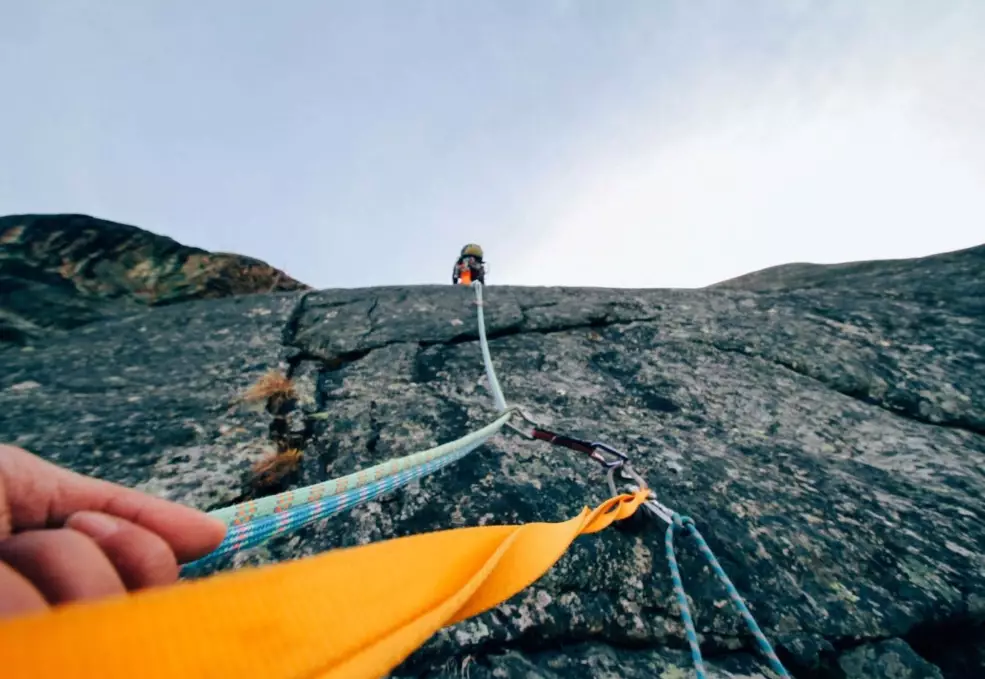
Essential Belay Gear Breakdown
You can't belay with just your hands. You need a few key pieces of equipment, and understanding each one's role is non-negotiable.
The Non-Negotiables
Climbing Rope: Dynamic ropes are designed to stretch, absorbing the energy of a fall. Static ropes (used for rappelling or hauling) have no place in lead belaying.
Harness: Both climber and belayer need a properly fitted climbing harness. The belay device attaches to your harness's belay loop—the strongest point.
Belay Device: This is the friction-creating tool. We'll dive deep into the two main types below.
Locking Carabiner: A screw-gate or auto-locking carabiner is used to connect the belay device to your belay loop. Never use a non-locking carabiner for this.
I've seen people try to use a regular carabiner "just for top-roping." It's a terrifying sight. The gate can flick open against the rock, and the device can slide out. The locking mechanism is there for a brutal, simple reason: it prevents that exact failure.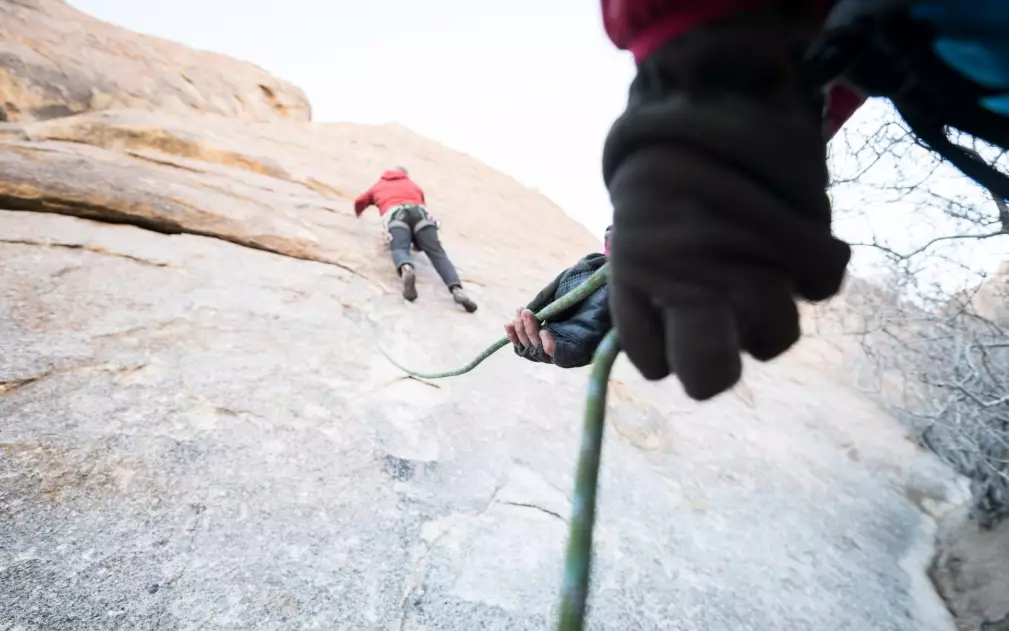
The Step-by-Step Belay Technique (PBUS Method)
Most indoor gyms and courses teach the PBUS method for tube-style devices. It's a reliable, repeatable sequence.
- Pull: With your guide hand above the device, pull a length of rope down from the climber's side.
- Brake: Move your brake hand (which is always below the device) back into the brake position. This is typically across your hip or thigh.
- Under: Slide your guide hand down to meet your brake hand, right next to the device.
- Slide: Return your guide hand to its starting position above the device, ready to pull again. Your brake hand remains in place, gripping the rope.
This cycle happens continuously as you take in slack. The key is that at every point in this sequence, one hand is always on the brake strand. If the climber fell during "Under" or "Slide," your brake hand is already in position to lock off.
Common Belaying Mistakes (And How to Fix Them)
Watching belayers at a busy crag or gym reveals patterns. Here are the subtle and not-so-subtle errors I see constantly.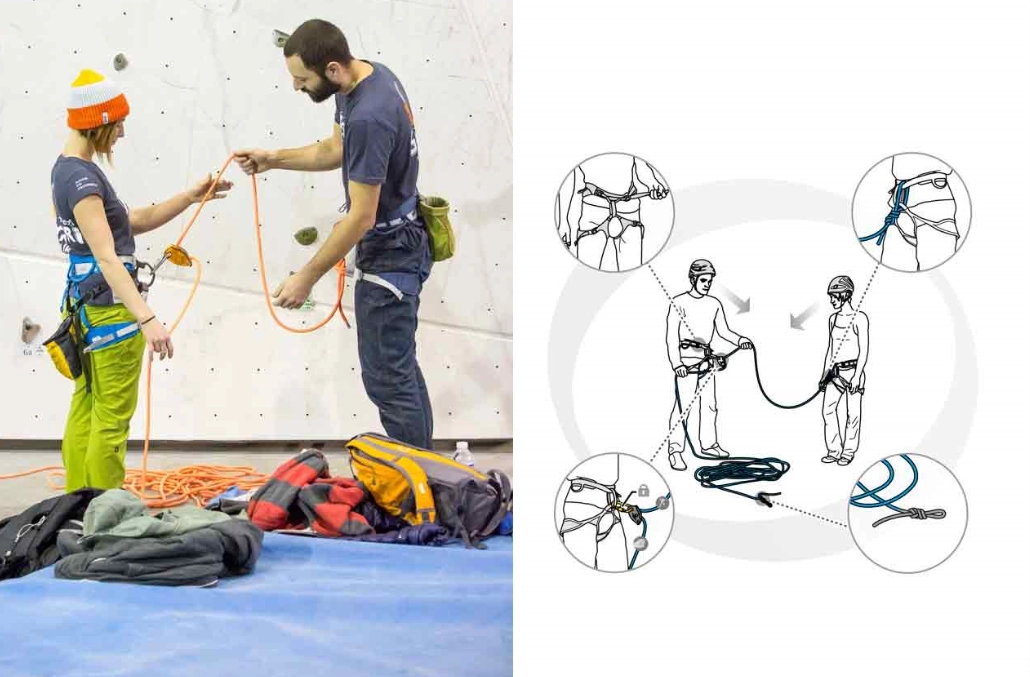
"Zombie Belaying": The belayer is physically there but mentally checked out. They're looking at their phone, chatting with someone else, or staring into space. Your eyes should be on your climber 90% of the time. Anticipate their moves. Are they about to make a hard clip? Get ready to give a quick, smooth pull of slack. Do they look pumped? Be extra vigilant for a fall.
Poor Stance and Body Position: You're not just holding a string; you're managing force. Plant your feet shoulder-width apart, knees slightly bent. If you're standing straight-legged and off-balance, a sudden fall can knock you over. I tell students to imagine they're a goalkeeper ready for a penalty kick.
Letting the Brake Strand Angle Up: The brake strand (the rope leading from the device to your brake hand) should point down and away from the device. If it angles upward, the rope can run more easily through the device in a fall. Keep it pointed at the ground.
Belay Device Face-Off: ATC vs. GriGri
Choosing your first belay device feels like a major decision. Let's strip away the marketing and look at the real-world pros and cons.
| Device Type | How It Works | Best For | Key Considerations |
|---|---|---|---|
| Tube Device (ATC, Reverso) | Manual friction. Rope runs through two metal slots. Braking force is 100% controlled by the belayer's hand. | Beginners learning fundamentals. Top-roping. Rappelling. Climbers who want one device for everything. | Forces you to learn proper technique. Lighter and cheaper. No mechanical parts to fail. Requires constant attention. |
| Assisted-Braking (GriGri, Mega Jul) | Uses a camming mechanism that engages during a sudden pull (a fall), helping to lock the rope. | Lead belaying, especially with heavier climbers. Belaying for long periods (less hand fatigue). Situations where a sudden fall is likely. | NOT auto-locking. You must still keep your brake hand on the rope. Can create a false sense of security. Heavier, more expensive. Specific feeding techniques required. |
My take? Learn on a tube device. It builds ironclad habits. The muscle memory of the brake hand position becomes second nature. After a season or two, if you're doing a lot of lead climbing, consider adding a GriGri to your kit. But never forget: a GriGri is an assistant, not a replacement for a vigilant belayer. I've seen more "GriGri drops" from people who trusted the device over their own hands than I care to remember.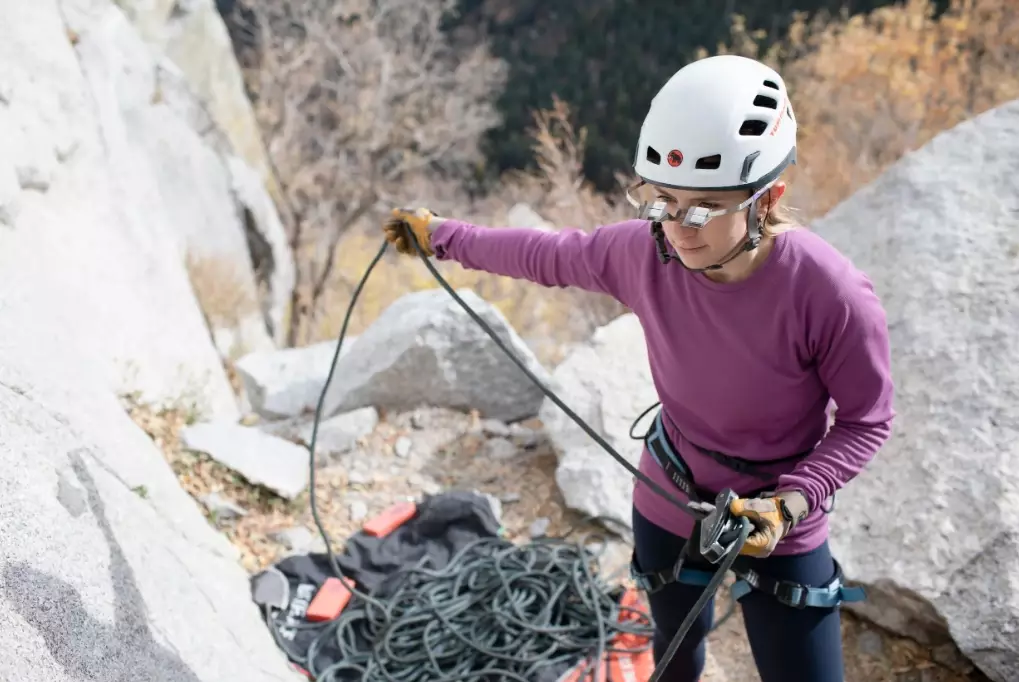
Where and How to Practice Safely
You can't learn this from a blog post or video. You need hands-on practice under supervision.
Step 1: Take a Course. Find an AMGA (American Mountain Guides Association) certified instructor or a reputable climbing gym offering "Intro to Belay" courses. This is non-negotiable for safety and proper technique.
Step 2: Ground Drills. Before you ever leave the ground, practice the PBUS motion with a partner. Have them walk away from you, simulating a climber moving up, while you take in slack. Have them jump lightly (while you're both anchored to a ground point) to simulate catching weight.
Step 3: Top-Rope Focus. Your first 20+ belays should be on a top-rope setup. The forces are lower and more predictable. Practice communication: "Climbing!" "Climb on!" "Slack!" "Take!" "Lowering!" "Lower!"
Step 4: Seek Mentorship. Climb with experienced people. Ask them to watch your belay and give feedback. A fresh pair of eyes can spot a bad habit you've developed.
Expert Belay FAQ: Beyond the Basics
 I get nervous belaying on lead. My hands freeze up and I feed slack poorly. How do I get over this?