You've seen those massive lists with 50 climbing knots. Let's be honest, you won't remember most of them when you're 50 feet up a granite face with cold fingers. After a decade of guiding and personal climbing, I've boiled it down to a core seven. Mastering this shortlist covers 99% of your needs, from sport climbing in Kalymnos to big wall aid climbing in Yosemite. Forget memorizing everything; focus on understanding when and why to use these.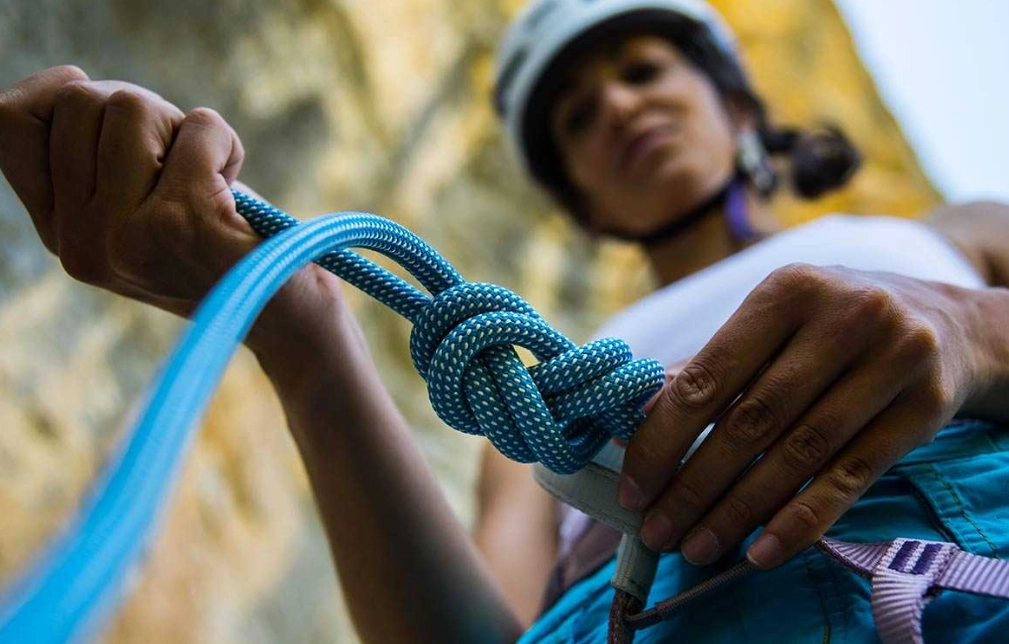
What You'll Learn Inside
The Non-Negotiable Seven: A Functional Breakdown
This isn't a random list. It's a system. Each knot has a specific job. Think of them as tools: you wouldn't use a hammer to turn a screw.
| Knot Name | Primary Use | Key Trait | When to Use It |
|---|---|---|---|
| Figure-Eight Follow-Through | Tying into the harness | Secure, easy to inspect | Every time you lead climb or top-rope. Your lifeline knot. |
| Figure-Eight on a Bight | Creating a secure loop mid-rope | Strong, multi-directional | Building an anchor, isolating a rope section, clipping into a master point. |
| Double Fisherman's | Joining two ropes or cord ends | Secure, doesn't slip | Making cordelettes, joining ropes for rappel, creating Prusik loops. |
| Clove Hitch | Adjustable attachment to a carabiner | Quick, infinitely adjustable | Building anchors on the fly, securing yourself to an anchor, racking gear. |
| Munter Hitch | Belaying or rappelling without a device | Friction knot, emergency use | Your belay device is dropped, improvised rescue, teaching friction principles. |
| Prusik Hitch | Ascending a rope, self-rescue | Grips under load, slides when loose | Getting back up a rope after rappelling too far, progressing a rope in a haul system. |
| Girth Hitch (aka Lark's Foot) | Attaching slings to objects or harness | Simple, quick, weakens the sling | Attaching a sling to a tree for an anchor, securing a PAS to your harness. |
Notice I didn't include the Bowline. It's a great knot, but for beginners, the Figure-Eight is more foolproof to inspect. The Alpine Butterfly is fantastic but often falls into the "nice-to-know" category for single-pitch climbers. This list is about maximum utility with minimum complexity.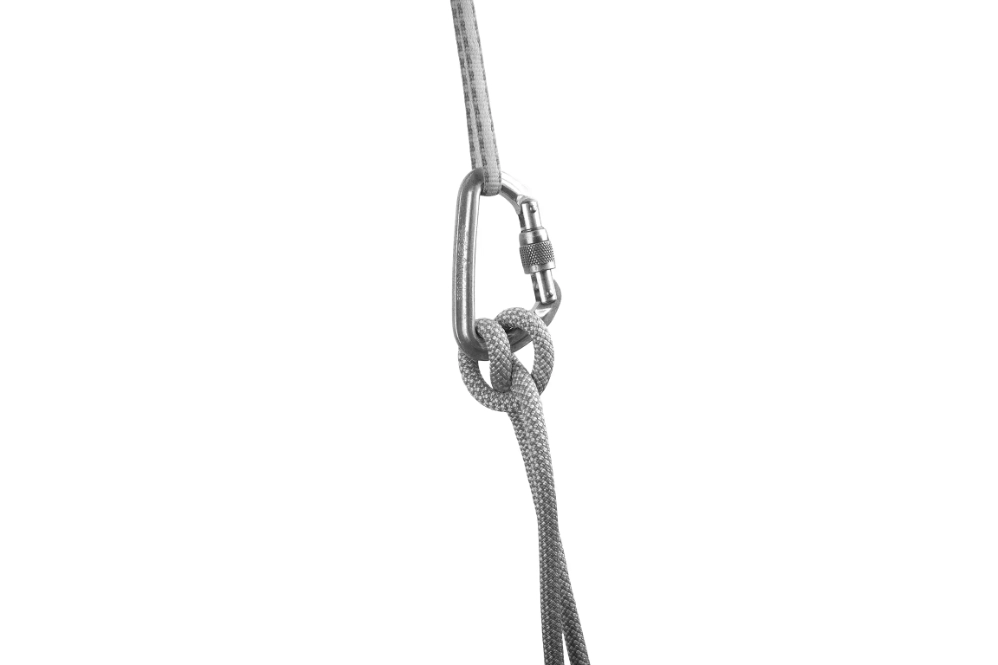
A quick reality check: I've watched experienced climbers fumble a simple knot because they learned it in a comfortable gym but never practiced with gloves on or while distracted. The goal isn't just to tie them right on the ground. It's to tie them right, every time, under pressure.
How to Tie the Essential Climbing Knots
Let's move beyond the names. Here's the how, with the subtle details most tutorials skip.
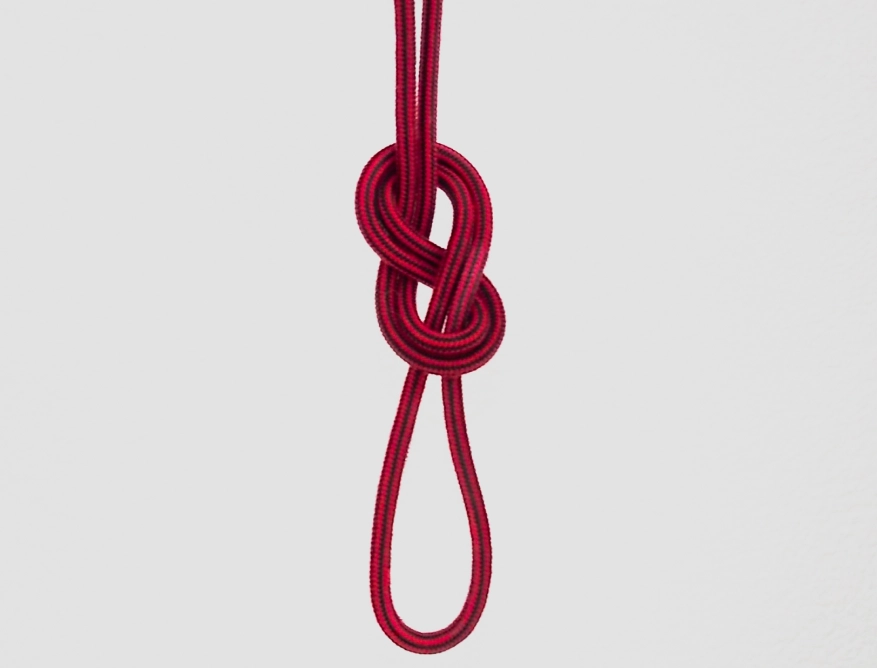
The Figure-Eight Follow-Through: Your Lifeline Knot
Step-by-Step & The Critical Detail
- Make a loop about an arm's length from the rope end.
- Wrap the tail around the standing part, then thread it back up through the loop. You now have a basic "figure-eight" shape.
- This is where it matters: Thread the tail through your harness tie-in points following the exact path of the original knot's other strand. Don't just shove it through any old way.
- Trace the original knot backwards with the tail, keeping the strands parallel and neat. No crossings.
- Leave a tail of 6-8 inches (15-20 cm).
The silent killer: A loose "dress." After tying, you must pull on all strands individually to tighten the entire knot into a neat, compact bundle. A sloppy, loose figure-eight can roll and potentially fail under shock load. Pull hard on the two main loops and each tail.
The Double Fisherman's: The Secure Marriage
This knot is for joining two ends permanently. It's what you use to make a cordelette or a Prusik loop. The trick is symmetry.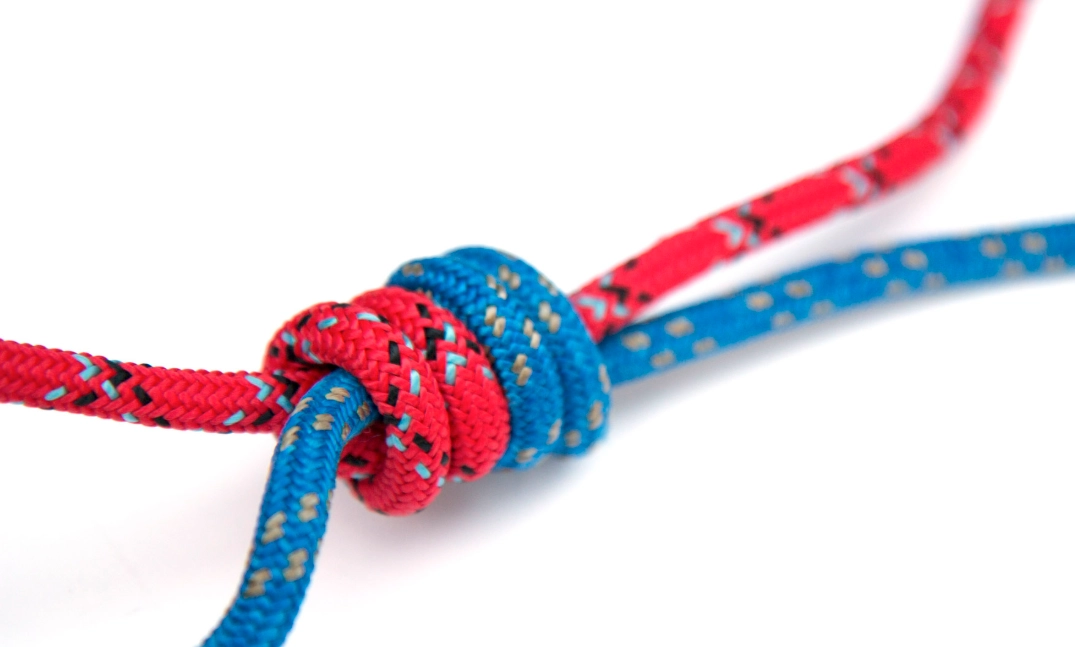
How to Get It Right
- Overlap the two rope ends by about two feet.
- With one end, make two wraps around the other rope.
- Thread that end back through the two wraps you just made. Pull it tight. You have one "fisherman's" knot.
- Repeat the mirror image: Use the other rope end to make two wraps around the first rope, and thread it back through. This is the "double" part.
- Pull the two main ropes in opposite directions to slide the two knots together until they snug up against each other.
If the two knots don't look identical and oppose each other, you did it wrong. Start over. A poorly tied Double Fisherman's can slowly creep undone.
The Clove Hitch: The Adjustable Workhorse
This is your best friend for anchor building. It's adjustable while under load, which is its magic and its danger.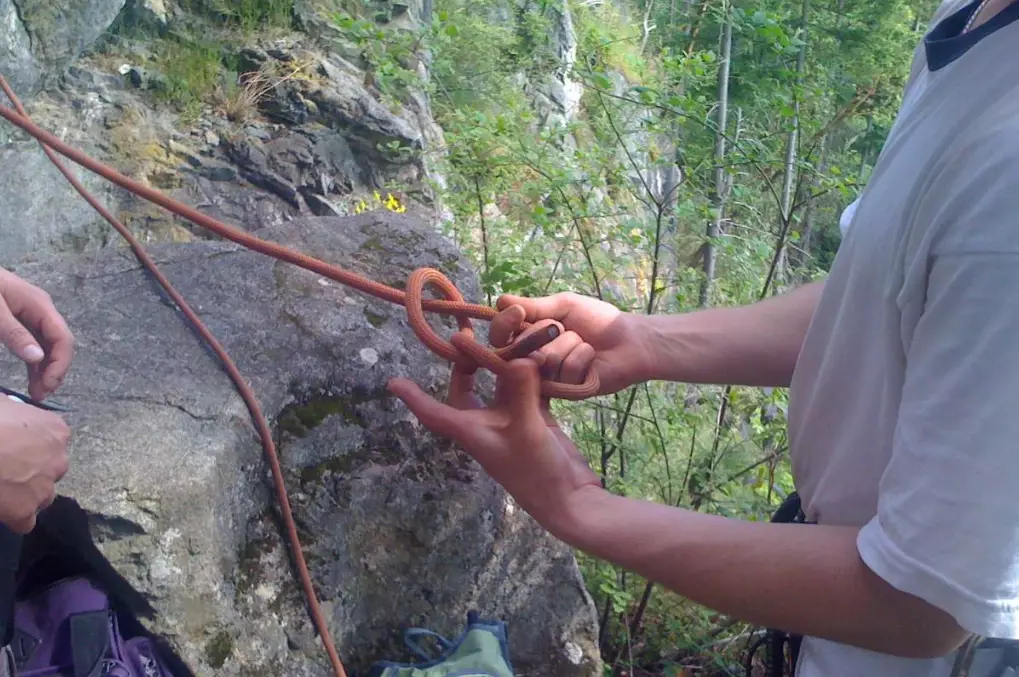
Imagine you're at a two-bolt anchor. You clip a carabiner to the left bolt, tie a clove hitch on it, and pull a few feet of rope through. Now you clip the carabiner to the right bolt and tie another clove hitch. You can now easily adjust each strand to equalize the anchor without untying anything. But here's the catch: a clove hitch can loosen if the rope isn't under constant tension. Once you're tied in and the system is loaded, it's solid. But during setup, be mindful.
Common Knot Mistakes (And How to Fix Them)
This is the stuff you learn from close calls, not from books.
Mistake 1: The "Backwards" Figure-Eight. It's rare, but I've seen it. The tail goes the wrong way around the standing part in the initial loop. The finished knot looks almost right but is fundamentally weaker. Fix: Learn to recognize the "rabbit goes out of the hole, around the tree, and back into the hole" story. If your story doesn't match, untie.
Mistake 2: The Incomplete Double Fisherman's. Tying only one of the two knots. This is a single fisherman's, and it will slip under load. It's useless for climbing. Fix: Always ensure you have two symmetrical knots jammed together.
Mistake 3: Girth Hitching a Sling to a Carabiner. This drastically reduces the sling's strength (by up to 50%). It's fine for non-load-bearing purposes like racking gear, but never use a girth-hitched sling as a primary load-bearing element in an anchor. Fix: Use a basket hitch (sling doubled over through the carabiner) for full strength.
Mistake 4: The "Death" Munter. Tying a Munter hitch with the rope loaded on the wrong side of the carabiner spine. It can twist and lock up catastrophically. Fix: Always ensure the loaded rope comes out of the hitch on the same side as the carabiner gate's opening. Practice this with a weighted backpack on flat ground first.
I once watched a partner's Prusik cord melt because they used a cheap, non-sheathed accessory cord for a haul system. The knot held, but the cord didn't. Material matters as much as the knot itself.
Your Knot Questions, Answered
 Is it safe to use a Girth Hitch to attach my personal anchor system (PAS) to my harness?
 There you have it. A list of climbing knots that cuts through the clutter. Don't just tie them. Understand their role, practice them until they're automatic, and always, always check your partner's knots and have them check yours. That single habit is more valuable than knowing a hundred fancy knots.