Your rope is just a long, expensive piece of cord until you tie a knot in it. That knot is the single point where your knowledge, your gear, and your partner's life literally come together. I've been climbing for over a decade, from gym plastic to alpine granite, and I can tell you that the difference between a confident climber and a nervous one often boils down to their knot craft. It's not about knowing twenty knots. It's about mastering a handful so completely that your hands can tie them in the dark, with cold fingers, while your mind is focused on the exposure. Let's cut through the noise and focus on the six rock climbing knots that form the unshakable foundation of safe climbing.
What You'll Learn in This Guide
Why Knots Are the Non-Negotiable Foundation of Climbing
Think of knots as the grammar of climbing language. A misplaced comma can change a sentence's meaning; a poorly tied knot can change your life. The International Mountaineering and Climbing Federation (UIAA) and professional guides consistently identify knot failure as a primary factor in preventable climbing accidents. It's rarely the rope that breaks. It's the interface—the knot—that fails due to user error.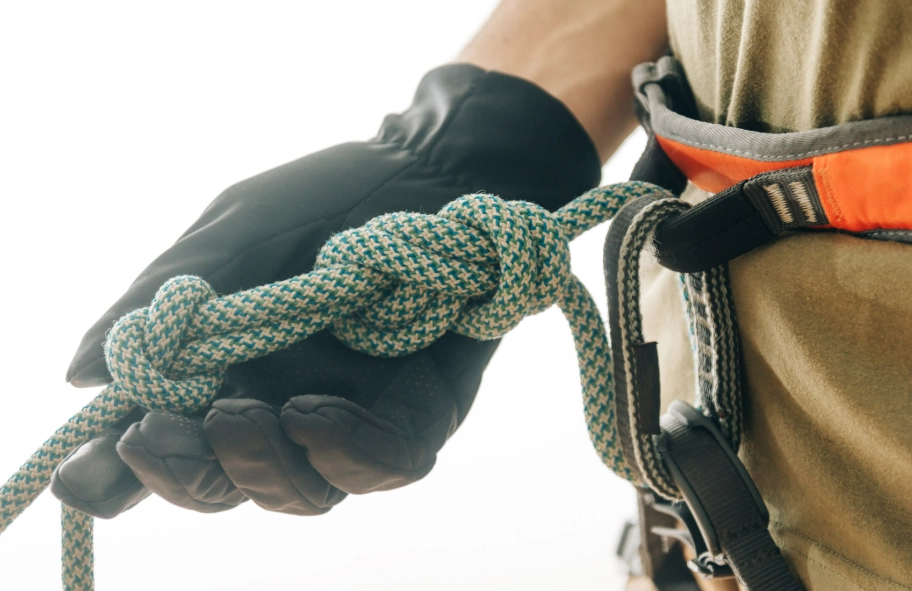
I remember belaying a new leader at Smith Rock. He clipped in, gave a nervous smile, and started up. I did a final safety check. His figure-eight follow-through was perfect... except for the tail. It was maybe an inch long. Technically "through," but a stiff breeze could have undone it. We stopped right there. That inch represented a gap in understanding, not just in rope. Good knots have structure, symmetry, and—critically—adequate tail. They look "dressed" and neat because the forces run smoothly through them. A messy knot is a weak knot, and a short tail is a gamble.
The 6 Essential Knots Every Climber Must Know
Forget the encyclopedic approach. Master these six, and you can handle 99% of recreational rock climbing situations, from sport climbing to multi-pitch trad. Here’s your core toolkit.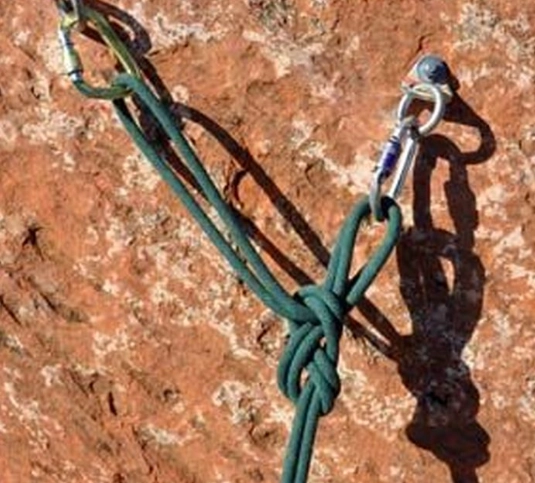
| Knot Name | Primary Use | Key Strength | Critical Detail Most Beginners Miss |
|---|---|---|---|
| Figure-Eight Follow-Through | Tying into the harness | Very secure, easy to visually inspect | "Follow-through" must be neat and parallel; tail must be ≥ 6 inches (15cm). |
| Clove Hitch | Adjustable attachment to a carabiner (anchors) | Infinitely adjustable, one-handed operation | Can loosen if unloaded and jostled; always finish with a safety twist or backup. |
| Munter Hitch | Belaying or rappelling without a belay device | Ultimate backup, requires only a carabiner | Severely twists the rope. Only use on a large, round-stock, locking carabiner. |
| Double Fisherman’s | Joining two ropes of similar diameter (for rappels) | The most secure bend for joining ropes | Each knot must be tightened down snugly against the other with long tails. |
| Prusik Hitch | Progress capture, self-rescue, ascending a rope | Grips when weighted, slides when loose | Cord diameter must be 60-70% of the main rope's diameter for reliable function. |
| Girth Hitch / Basket Hitch | Attaching slings to harnesses, trees, or features | Quick, secure for slings and webbing | Doubles the load on the sling material at the hitch. Weakens the sling significantly. |
Now, let's get into the specifics that most tutorials gloss over.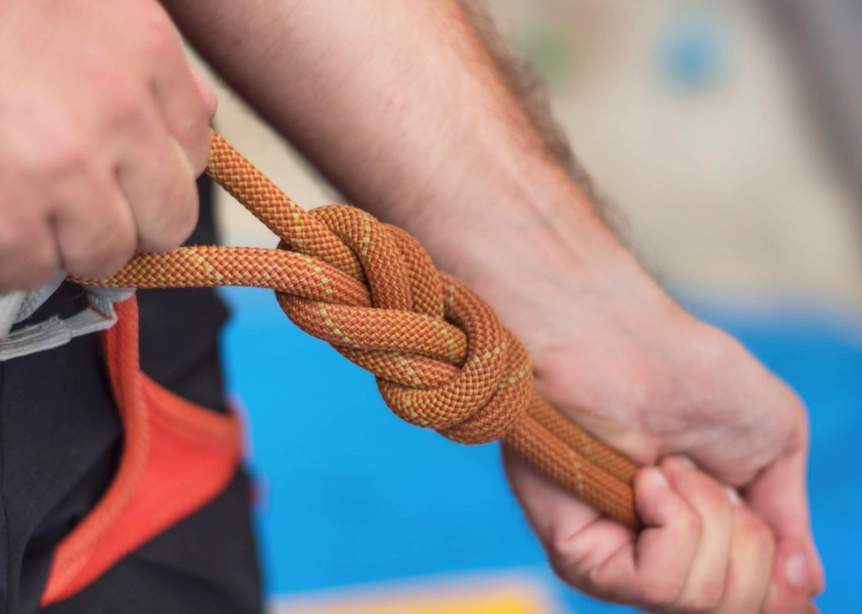
The Figure-Eight Follow-Through: Your Lifeline Knot
Everyone learns this first. But here's the subtle mistake I see constantly: people don't "dress" the knot properly. Dressing means making sure all the strands run parallel and aren't crossed over each other before you tighten it. A crossed strand creates a weak point where the rope can saw against itself under load. After you finish the follow-through, pull on the working end and the standing part simultaneously to set the knot, then tighten each individual strand from the loop back to the tail. The final knot should look like a perfect, symmetrical figure-eight with a tail you can confidently fist-bump.
The Clove Hitch: The Anchor Workhorse
This knot is magic for building anchors because you can adjust your position without untying anything. The trick is the finishing move. After you clip the second loop into the carabiner, give the working end a half-twist before pulling it tight. This locks it in place and prevents it from mysteriously loosening when you're moving around at the belay station. Practice tying it behind your back, with one hand, while someone asks you distracting questions. That's the realism you need.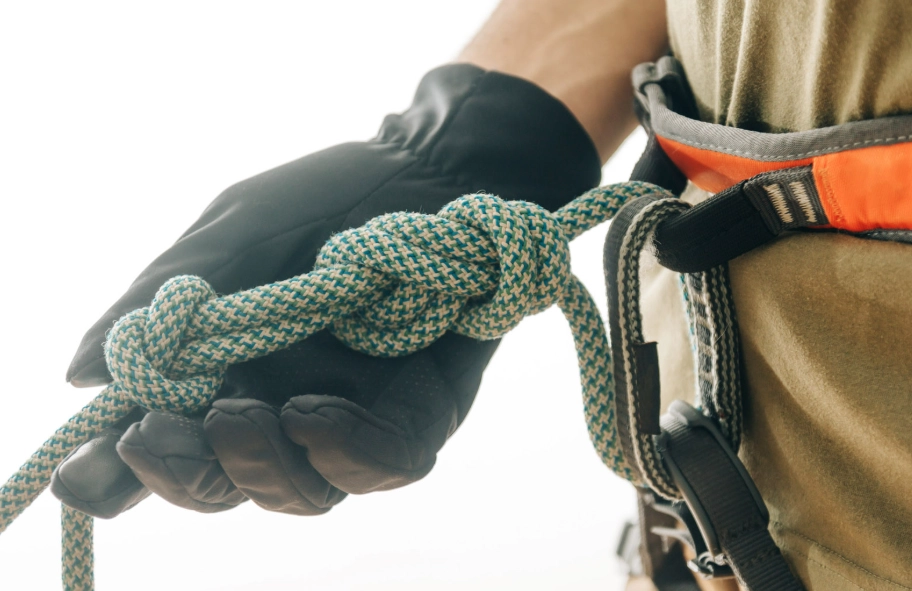
The Munter Hitch: Your Forgotten Savior
You drop your belay device off the ledge. Now what? The Munter. It's a friction hitch that creates enough drag to catch a fall. The non-consensus opinion? It's a terrible primary belay method for long pitches. It twists the rope into a horrible, kinked mess that will snag on everything and make the next lead a nightmare. But as an emergency tool? Invaluable. Practice using it to lower a partner in a controlled environment before you need it for real.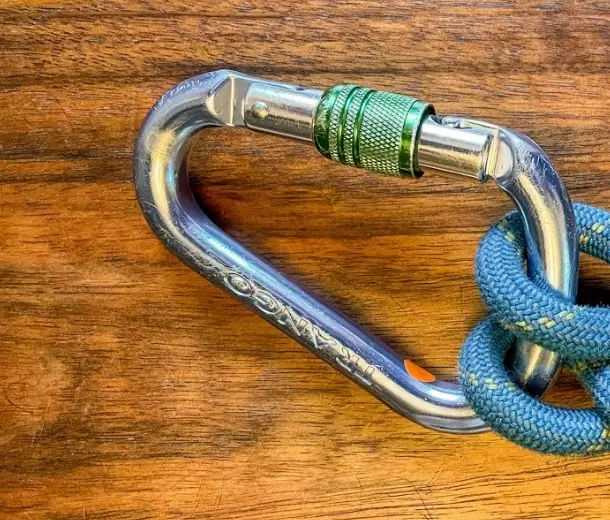
How to Practice and Master These Knots (Beyond the Gym Mat)
Reading about knots is useless. You have to build muscle memory.
Blindfolded Repetition: Seriously. Sit in front of the TV and tie your figure-eight until you can do it without looking. Then try it with gloves on. The stress of a windy, cold belay ledge is not the time to fumble.
The "Partner Check" Game: With a climbing partner, take turns tying in. The checker must physically touch and trace every inch of the knot, checking for dressing, tail length, and that the rope is through both the harness tie-in points. Verbalize it: "Dressed, parallel, tail is eight inches, through hard points." Make this ritual sacred.
Scenario Drills: Set up a scenario. "The anchor is 15 feet left. You have one sling and two lockers. Secure yourself adjustably." This forces you to use the clove hitch in context. Or, "You need to extend your rappel device to avoid getting your hair caught. Use a girth-hitched sling." Context cements learning.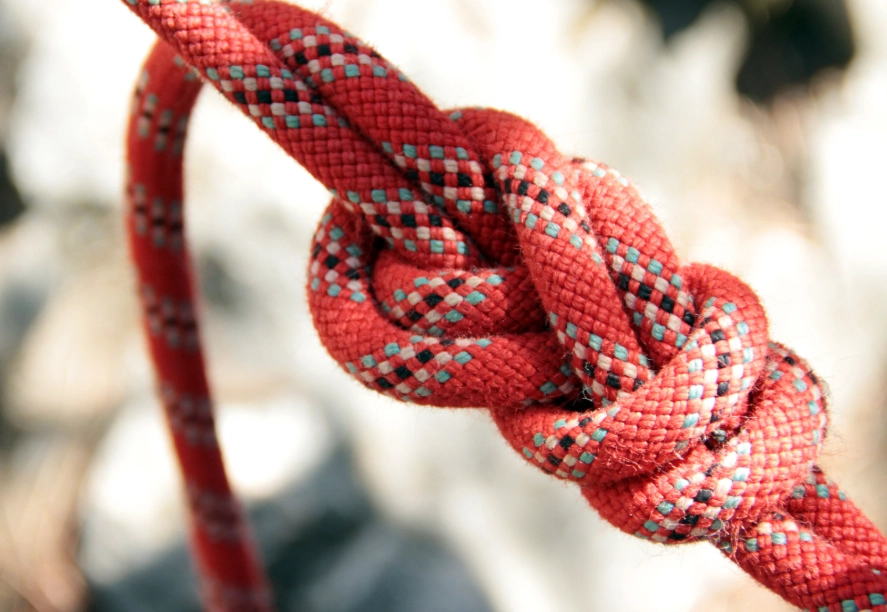
Common Questions & Expert Answers (FAQ)
Knots aren't just a step in the process; they are the process. They transform gear into a system. Your goal shouldn't be speed, but unwavering, methodical correctness. Practice until it's boring. Then practice more. That muscle memory is what leaves your mind free to enjoy the exposure, solve the crux, and trust the system completely. Now go find a piece of rope and get your reps in.