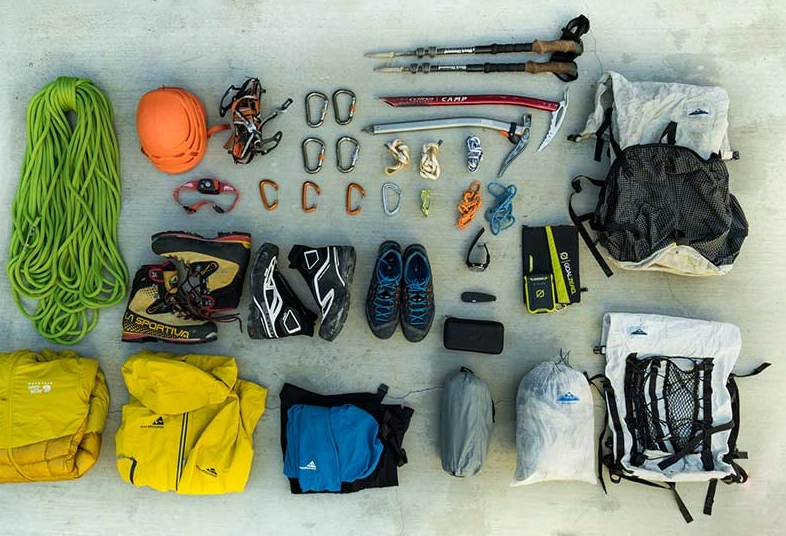
I remember staring at the wall of climbing hardware in the shop, completely overwhelmed. Carabiners, cams, harnesses—it was a sea of metal, nylon, and confusing names. I bought a cheap harness because it was on sale, not knowing the difference between a waistbelt and a belay loop. That first outdoor trip was a lesson in discomfort and mild panic. Knowing the names of your climbing equipment isn't about jargon; it's about safety, communication, and making smart purchases that won't let you down. Let's cut through the noise and talk about what each piece actually does.
What's in This Guide?
Personal Protection Gear: Your Lifeline
This is the non-negotiable stuff. If any of these fail, you're in serious trouble. Don't ever compromise here.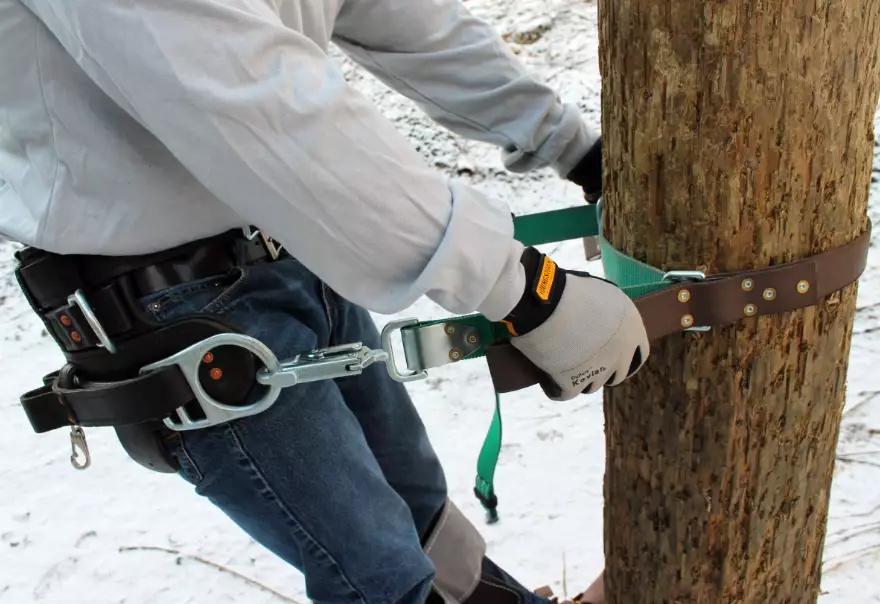
Harness
Your connection point to the rope. It's not just a seat. A modern climbing harness has a waistbelt and two leg loops, connected by tie-in points (usually two reinforced fabric loops) and a belay loop (the strong, sewn loop you clip your belay device into). The material is typically nylon webbing.
Most beginners overlook the gear loops. Those stiff nylon loops on the waistbelt? That's where you hang carabiners and gear. More loops (4 is standard) mean better organization on multi-pitch climbs. A common mistake is getting a harness with all the padding in the world but gear loops that are too short or floppy to hold a full rack.
My first harness had tiny gear loops. Leading a route with 12 quickdraws was a nightmare of tangled gear.
Helmet
It protects your head from falling rocks and the inevitable bump against the wall. Modern climbing helmets are light, ventilated, and often have a hybrid construction (hard shell with EPS foam liner). Look for certifications from organizations like the UIAA (International Climbing and Mountaineering Federation) or CE.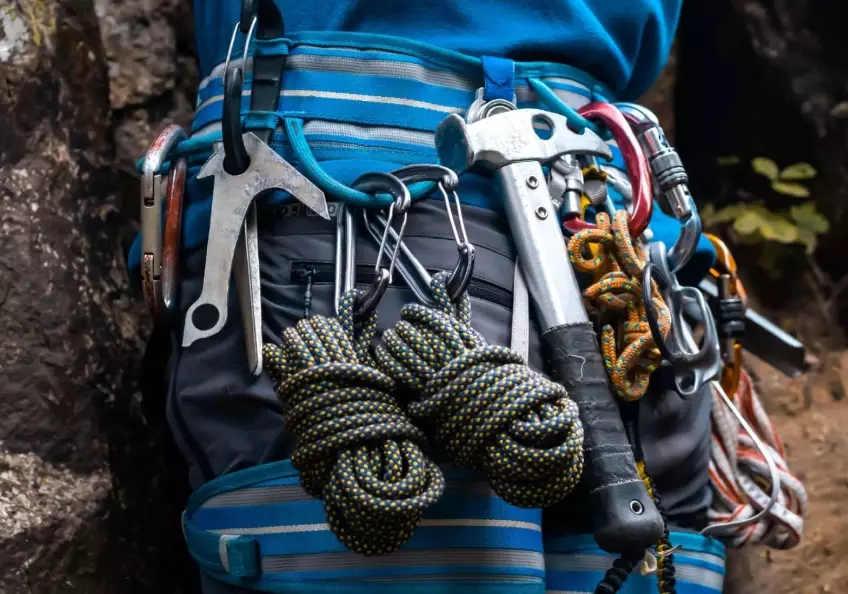
Here's a non-consensus point: many climbers ditch the helmet on steep, clean sport climbs. I get it—it's more comfortable. But I've seen a dropped belay device from 30 feet up. It's not just about falling rocks.
Climbing Rope
The dynamic cord that catches falls. Diameter (9.2mm - 10.5mm), length (60m, 70m, 80m), and type are key.
| Rope Type | Best For | Key Feature |
|---|---|---|
| Single Rope | Most sport and trad climbing | Used alone, 9.2mm - 10.5mm thick. |
| Half Rope (Double Rope) | Wandering trad routes, ice climbing | Two thinner ropes (8.0mm - 9.0mm) used together to reduce drag. |
| Twin Rope | Alpine and mountaineering | Two thin ropes clipped together as one, for redundancy. |
The middle mark is your best friend on long rappels. Know where it is.
Technical Hardware: The Moving Parts
This is the fun, clinky stuff. Metal tools that connect, protect, and assist.
Carabiners
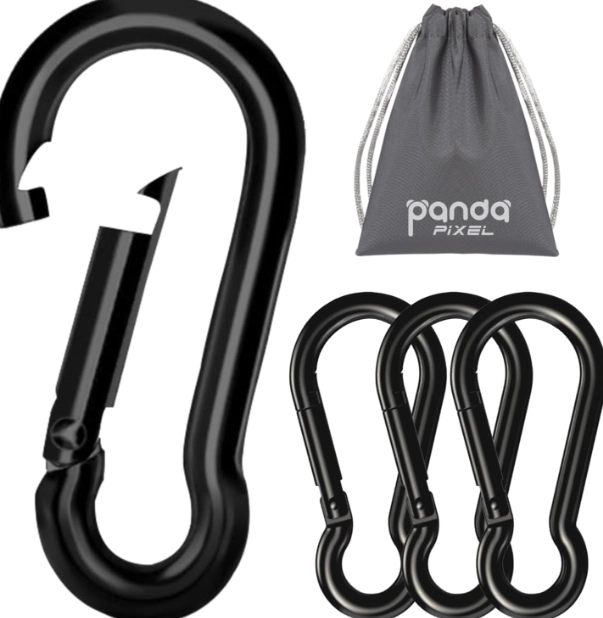
Metal links with a spring-loaded gate. Not all are created equal.
- Non-Locking Carabiner: The standard, lightweight clip for quickdraws. Oval, D-shaped, or asymmetric-D.
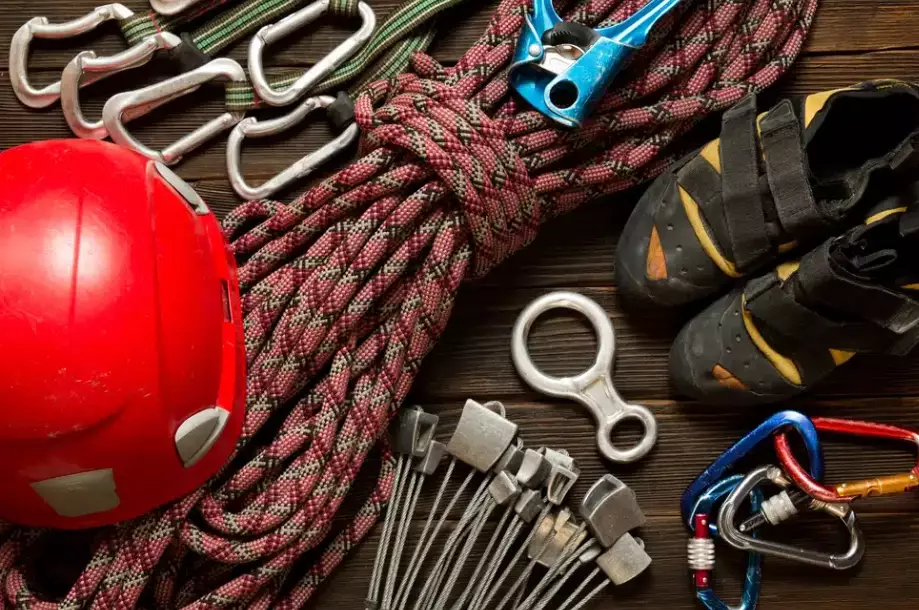
- Locking Carabiner (Locking 'Biner): Has a locking sleeve (screw-gate or auto-locking like a Magnetron or TwistLock) to prevent accidental opening. Always use one for belaying, rappelling, or any critical connection.
- HMS Carabiner (Pearabiner): A large, pear-shaped locking carabiner designed for use with a Munter hitch or as a master point.
Gate direction matters. A straight-gate is fine for most things. A bent-gate carabiner makes clipping the rope slightly easier on quickdraws. It's a subtle difference that matters when you're pumped.
Belay Device
Creates friction to control the rope. The main types:
- Tubular Devices (ATC): The classic. Simple, reliable, good for rappelling. Requires more hand braking force.
- Assisted-Braking Devices (Pilot, GriGri, Click Up): These mechanically help catch a fall. A GriGri is not auto-locking—you must still keep your brake hand on the rope. They're fantastic for sport climbing but heavier and more expensive.
Quickdraw
A pre-assembled set of two carabiners connected by a nylon or Dyneema sling. One end (the bolt-end 'biner) clips to the bolt hanger on the wall. The rope clips into the other end. Length matters: short draws for straight lines, longer draws (extendable draws) to reduce rope drag around features.
Protection for Trad Climbing (“Pro”)
Gear you place into cracks and features to protect a lead fall.
- Camming Device (Cam): Spring-loaded lobes that expand in a crack. Brands like Black Diamond (C4), Wild Country (Friends). Sizes range from tiny finger cracks to wide off-widths.
- Stopper (Nut): A tapered metal wedge on a wire. You slot it into constrictions in the crack. Passive, simple, and light.
- Hexentric (Hex): A hexagonal, hollow piece of metal on a cord. A sort of hybrid between a nut and a cam.
Building a trad rack is a deep, expensive rabbit hole. Start by borrowing or taking a course.
Footwear & Apparel: Grip and Comfort
Climbing Shoes
Your primary connection to the rock. Sticky rubber (like Vibram XS Edge or XS Grip) is the key.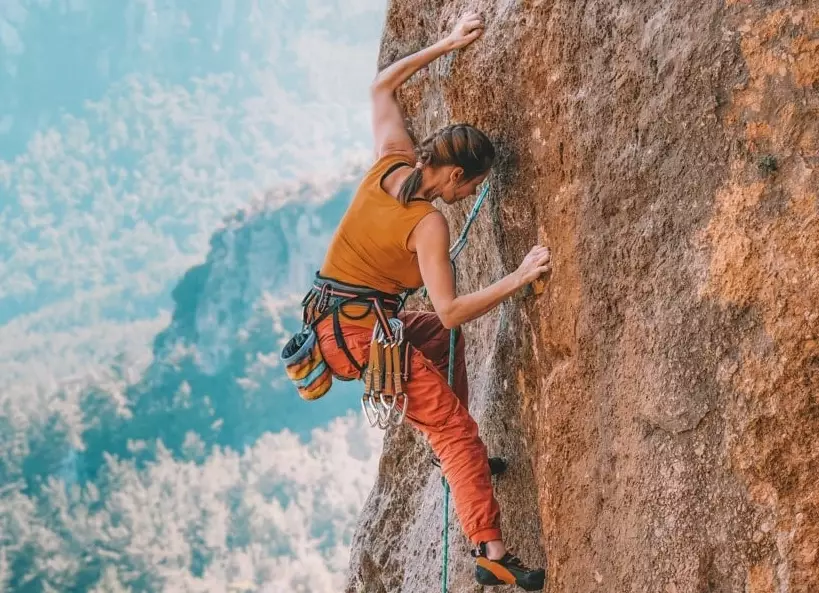
Beginners should avoid the super-aggressive, downturned shoes. They look cool but are for steep, overhanging terrain. A flat or moderately downturned profile with a neutral heel is perfect for learning footwork. Tight is good, excruciatingly painful is counterproductive.
I made the mistake of downsizing two full sizes for my first pair. I could only wear them for 10 minutes. Don't be me.
Chalk and Chalk Bag
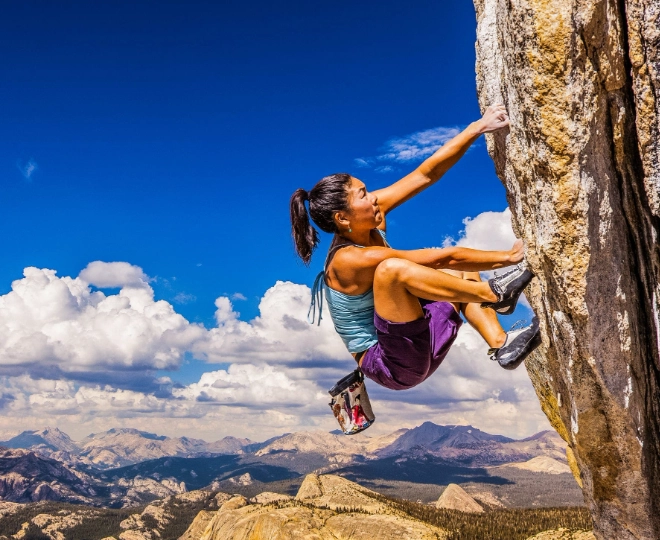
Chalk (magnesium carbonate) absorbs sweat for better grip. The chalk bag clips to the back of your harness, usually with a brush loop for a chalk brush (to clean holds).
Clothing
Flexible, durable, and non-bulky. Avoid loose sleeves or pants that can get caught. A light, breathable layer is often better than a heavy cotton t-shirt.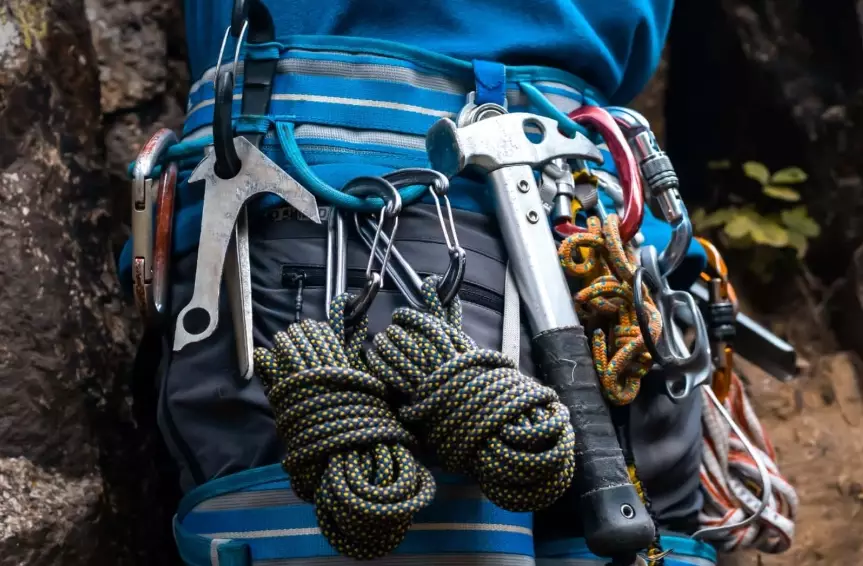
Ancillary Essentials (The Easy-to-Forget Stuff)
You have the big items. These are the small ones that prevent big problems.
- Slings and Cordelettes: Loops of nylon or Dyneema for building anchors, extending gear, or carrying extra water bottles. A 120cm sling is incredibly versatile.
- Prusik Cord: A short loop of thin cord used for friction hitches, essential for self-rescue and ascending a rope.
- Rappel Device (Figure 8 or ATC in Rappel Mode): For descending. Many tubular belay devices work fine.
- Personal Anchor System (PAS) or Daisy Chain: A dedicated, adjustable tether for attaching yourself directly to an anchor. More secure than just using a sling and two carabiners.
- First Aid Kit: Tailored for climbing: tape for fingers, antiseptic, bandages, pain relievers.
- Headlamp: Even on a day trip. Routes take longer than planned.