Explore the Guide
- First Steps: Picking Your Perfect National Park Trail
- Gear Talk: What You Actually Need on National Park Hiking Trails
- The Art of the Plan: Permits, Weather, and Not Getting Lost
- Safety Out There: It's Not About Fear, It's About Respect
- Leave No Trace: It's a Promise, Not a Suggestion
- Your Questions, Answered (The Stuff You Were Afraid to Ask)
- Wrapping It Up: The Trail is Calling
Let's be honest. The idea of hitting a trail in a place like Yosemite or the Grand Canyon is thrilling, but the planning part? It can feel like a part-time job. I've been there, staring at a dozen browser tabs, trying to figure out which national parks hiking trails are worth the effort, what to pack, and how not to be that person who needs a rescue because they wore flip-flops. It doesn't have to be that complicated.
This guide isn't about selling you a dream. It's about giving you the straight talk you need to actually make it happen. We're going to cut through the noise and focus on what matters: finding the right path for you, gearing up without going bankrupt, staying safe, and leaving the place as beautiful as you found it. Think of this as a chat with a friend who's made a lot of mistakes so you don't have to.
First Steps: Picking Your Perfect National Park Trail
You can't just show up and wander into the backcountry (well, you can, but you really shouldn't). Choosing the right trail is the most important decision you'll make. It sets the tone for your whole trip. Are you looking for a heart-pounding climb to a ridiculous view, or a peaceful walk through an ancient forest? There's a trail for every mood and muscle.
I used to just pick the most famous trail in the park. Big mistake. Once, in Zion, I naively joined the queue for Angels Landing without honestly assessing my fear of heights. Let's just say it was a very... humbling experience. I learned my lesson. Now, I ask myself a few key questions first.
- Who's going? Just you? With kids? With a friend who claims to be "outdoorsy" but owns only city shoes?
- What's your fitness level? Be brutally honest. A "moderate" rating can mean very different things in different parks.
- What do you want to see? Waterfalls? Wildlife? Epic mountain peaks? Solitude?
- How much time do you have? Don't try to cram a 6-hour hike into a 4-hour window. It never ends well.
Once you've got your personal criteria, you need to understand the trail's personality. Park websites are your best friend here, but you have to read between the lines. The National Park Service (NPS) website for each park is the gold standard for official info. For example, checking the Grand Canyon's hiking page is non-negotiable for understanding the severe nature of trails there.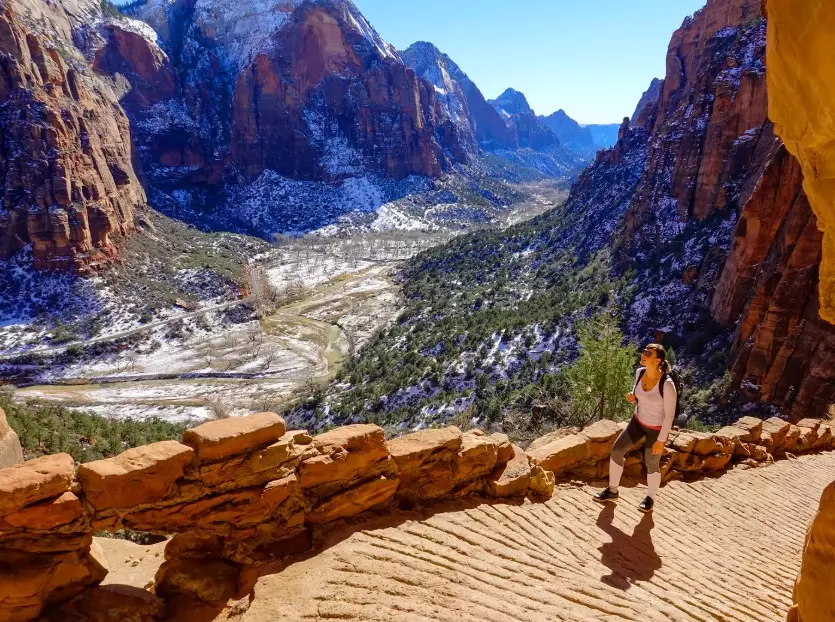
Decoding Trail Difficulty Ratings
This is where people get tripped up. A trail labeled "strenuous" in the Smoky Mountains is a different beast than a "strenuous" trail in Arches. Here's a rough translation guide I wish I'd had earlier.
| Rating (NPS Typical) | What It Really Means | Good For... |
|---|---|---|
| Easy | Flat or gentle slope, well-maintained path. Usually short distance. Little to no elevation gain. | Families with young kids, beginners, casual walks, accessibility-focused outings. |
| Moderate | Some hills, uneven terrain. You'll feel it in your legs and lungs. May have stairs, roots, or rocks. | Most regular walkers/hikers with decent fitness. Offers more reward for the effort. |
| Strenuous/Difficult | Significant elevation gain, long distance, potentially exposed or technical sections. Requires good physical condition. | Experienced hikers seeking a challenge. Often leads to the most iconic views. |
My personal rule? I always look at the two key numbers: distance (round-trip) and elevation gain. A 4-mile hike with 1500 feet of gain is going to be a lot tougher than a 6-mile hike with 300 feet of gain. That elevation number is the silent killer.
A Few Can't-Miss National Parks Hiking Trails (And Some Underrated Gems)
Everyone talks about the classics, and for good reason. But let's also look beyond the postcard.
The Heavy Hitters (Worth the Hype):
- Angel's Landing, Zion: The chain section is no joke. It's as scary and amazing as they say. Permits are now required, which has actually improved the experience. Check the Zion NPS permit page for the lottery system.
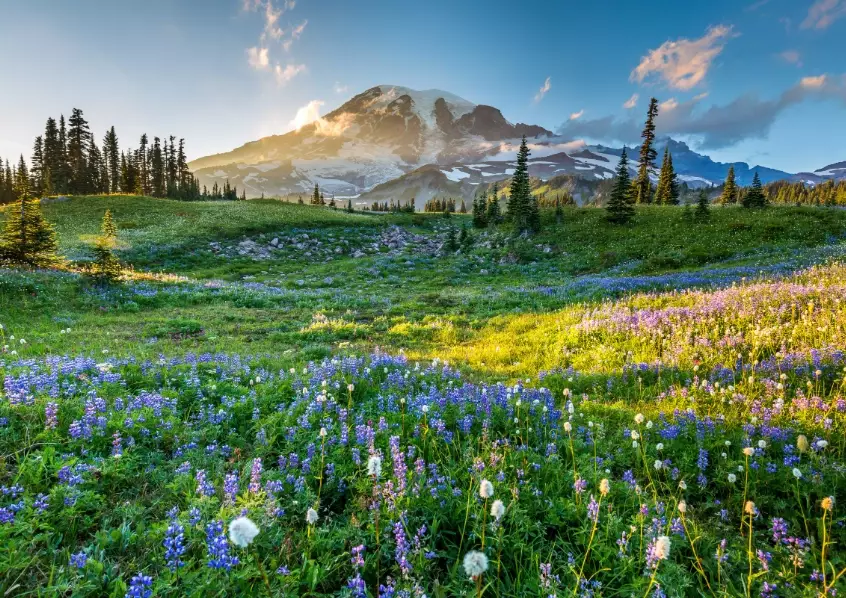
- Skyline Trail, Mt. Rainier: If you want to feel like you're walking on the shoulder of a giant, this is it. Wildflowers in summer are insane.
- Grinnell Glacier, Glacier NP: A longer hike that ends at a shrinking glacier. It's a powerful, beautiful, and slightly sad reminder of climate change.
Underrated Gems (My Personal Favorites):
- Instead of just doing the popular Navajo Loop in Bryce Canyon, connect it with the Peekaboo Loop. You get more hoodoos, more colors, and slightly fewer people.
- In Yellowstone, everyone mobs the geyser basins (which are great). But hike the Mount Washburn Trail for panoramic views of the entire park. You might see bighorn sheep.
- At Acadia, skip the packed Ocean Path for a bit and try the Great Head Trail. It's shorter, has incredible ocean cliffs, and feels more adventurous.
Gear Talk: What You Actually Need on National Park Hiking Trails
Gearheads will tell you you need a $500 jacket. You don't. But showing up with just a bottle of water and hopes is a recipe for misery or worse. Your gear is your safety net. Let's break it down into non-negotiables and nice-to-haves.
The biggest mistake I see? Cotton. Cotton kills, as the saying goes. It gets wet from sweat or rain, stays wet, and sucks heat from your body. Just don't do it. Go for synthetic fabrics or wool (like merino).
The Ten Essentials (Updated for the Modern Hiker)
This list has been around forever, and it's still the bible. But let's interpret it practically.
- Navigation: A physical map and compass and knowing how to use them. Your phone/GPS is a backup, not the primary. I use the US Forest Service map site as a starting point, but always buy the specific park topographic map at the visitor center.
- Headlamp/Flashlight: Plus extra batteries. Getting caught in the dark is disorienting and dangerous.
- Sun Protection: Sunglasses, sunscreen, hat, sun-protective clothing. The sun is intense at altitude.
- First Aid Kit: Don't buy a giant one. A small kit with blister treatment (moleskin is a lifesaver!), bandages, antiseptic wipes, pain reliever, and any personal meds.
- Knife/Multi-tool: A simple pocket knife is fine for gear repair or cutting tape.
- Fire: Waterproof matches/lighter and firestarter (cotton balls soaked in petroleum jelly in a tiny baggie).
- Emergency Shelter: A lightweight emergency bivvy or space blanket. If you have to stop, this can keep you alive.
- Extra Food: High-calorie, no-cook stuff like nuts, bars, jerky. More than you think you'll need.
- Extra Water: And a way to purify more. I carry two liters and a filter or purification tablets.
- Extra Clothes: An insulating layer (fleece/puffy) and a rain shell, even if the forecast is clear. Weather changes fast.
That's the core. It all fits in a daypack. Now, for footwear—the most debated topic.
Boots vs. Shoes: The Eternal Debate
Heavy leather boots are overkill for most maintained national parks hiking trails. Unless you're carrying a heavy pack or have weak ankles, a good pair of trail runners is often better. They're lighter, dry faster, and cause less fatigue. I switched years ago and never looked back. But if you love the ankle support of a boot, get a mid-weight hiking boot. Break them in for weeks before your trip, not the day before.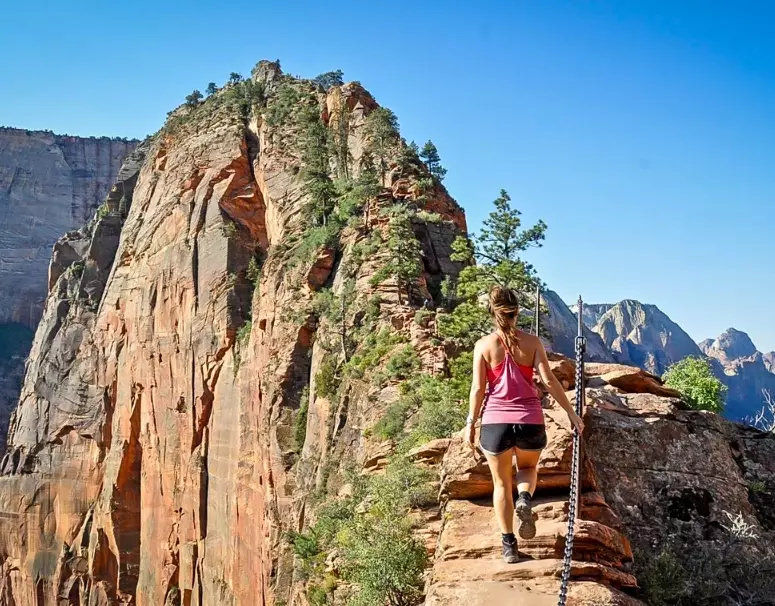
The Art of the Plan: Permits, Weather, and Not Getting Lost
Planning a hike is more than just driving to a trailhead. The best adventures are the ones where you've thought about the details, so you can forget about them on the trail.
The Permit Puzzle
More and more popular national parks hiking trails require permits, especially for overnight trips or iconic day hikes (like Half Dome or Angels Landing). This isn't the park being difficult; it's about protecting the trail from being loved to death.
Check the specific park's website months in advance.
Some permits are lottery-based (apply online months ahead). Some are first-come, first-served at the visitor center (which means getting there painfully early). Some, like for the Wave in Coyote Buttes, are so competitive it feels like winning the lottery. The Recreation.gov site is the central hub for many of these. Bookmark it.
Weather: The Great Unpredictable
Mountain weather is its own beast. A sunny morning can turn into a thunderous afternoon in an hour. Always check the specific forecast for the trailhead elevation, not just the park entrance. The park's website often has links to good weather sources. In the desert (think Arches, Canyonlands), summer temperatures can be lethally hot. Hike at dawn. Seriously.
My worst weather scare was on a ridge in Rocky Mountain National Park. Blue skies turned to lightning in what felt like minutes. We scrambled down off the exposed ridge, hearts pounding. It was a stark lesson in respecting afternoon thunderstorms, which are a daily summer occurrence in many mountain parks.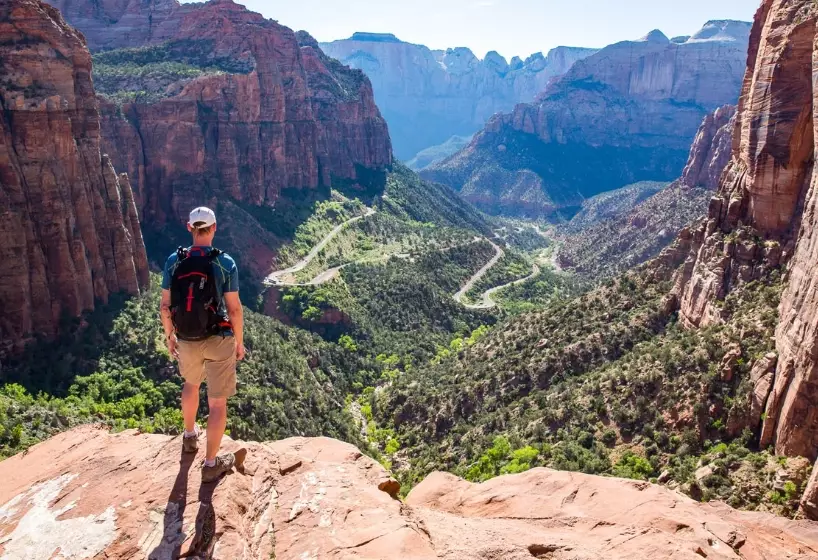
Navigation: Beyond the Blue Dot
Your phone's GPS is a fantastic tool. Apps like Gaia GPS or AllTrails are great for tracking your progress. But. Phones die. Batteries drain fast in the cold. Service is nonexistent. You must have a backup.
Before you go, study the paper map. Identify key landmarks: that obvious peak, the river bend, the trail junction. As you hike, constantly match what you see on the ground to the map. "Okay, we just passed the creek, so this next junction should be to the lake..." This habit, called "staying found," means you're never truly lost.
Safety Out There: It's Not About Fear, It's About Respect
Hiking is safe if you're smart. The dangers are real but manageable with knowledge.
Wildlife Encounters (They're More Scared of You)
Seeing a bear or a moose is a thrill. Seeing one too close is terrifying. For bears, especially in parks like Glacier or Yellowstone, carry bear spray and know how to use it (it's not bug spray—you deploy it as a cloud between you and the bear). Make noise on blind corners. Hike in groups.
For all animals, give them space. Use a zoom lens, not your feet. A bison may look docile, but it can outrun you and is unpredictably strong. Every year, people get gored because they wanted a selfie.
Altitude Sickness
If you're coming from sea level to hike in Rocky Mountain, Yellowstone, or Glacier, listen to your body. Headache, nausea, dizziness, fatigue—these are signs. The only real cure is to descend. The best prevention is to spend a day acclimatizing at a higher elevation before tackling a big hike. Drink lots of water, avoid alcohol, and take it easy the first day.
If Something Goes Wrong
Tell someone your plan. Where you're parking, what trail you're taking, when you expect to be back. If you're injured and alone, stay put. If you're lost, stop. S.T.O.P.: Sit, Think, Observe, Plan. Don't just wander. Blow your whistle (you have one on your pack, right?) in groups of three—the universal distress signal.
Leave No Trace: It's a Promise, Not a Suggestion
This is the most important part of hiking in national parks. These places are fragile. The principles of Leave No Trace are the rules of the road.
- Plan Ahead & Prepare: We've covered this.
- Travel & Camp on Durable Surfaces: Stay on the trail. That cute social trail cutting the switchback causes erosion that takes years to heal.
- Dispose of Waste Properly: Pack out ALL trash, including food scraps and toilet paper. For solid human waste, dig a cathole 6-8 inches deep at least 200 feet from water, trails, and camp. Pack out toilet paper in a baggie. Seriously.
- Leave What You Find: That pretty rock, that cool bone, that ancient pottery shard. Leave it. Take only pictures.
- Minimize Campfire Impacts: Use a camp stove. If you must have a fire, use an established ring, keep it small, and burn it to ash.
- Respect Wildlife: Already covered.
- Be Considerate of Other Visitors: Keep noise down. Yield the trail (uphill hikers generally have the right of way). Step aside for pack animals.
It's simple: act like you want everyone who comes after you to have the same amazing experience you did.
Your Questions, Answered (The Stuff You Were Afraid to Ask)
Wrapping It Up: The Trail is Calling
Look, at the end of the day, hiking in a national park is about connection. Connection to a place that's wilder than your daily life, connection to the people you're with, and connection to a version of yourself that can solve problems and find wonder in a simple view.
Don't let the planning paralysis stop you. Use this guide as a checklist. Pick a trail that excites you but doesn't terrify you. Get the right socks. Check the weather. Tell a friend. And then go.
The sound of the wind in the pines, the smell of damp earth after a rain, the ache in your legs as you crest a pass and see a valley spread out below—that's the real stuff. Those national parks hiking trails are waiting. They're not just paths through the woods; they're pathways to some of the best experiences this country has to offer.
Now, go lace up your boots.