Your rope is soft, your shoes are sticky, but the real workhorses of safety and progress on the rock are made of metal. Carabiners, quickdraws, cams, nuts—this hardware forms the critical link between you and the mountain. Choosing the right metal climbing equipment isn't about buying the most expensive or the lightest; it's about understanding how each piece functions in a system to keep you safe. I've seen too many climbers, even experienced ones, make subtle mistakes with their gear that add up to unnecessary risk. Let's cut through the marketing and talk about what actually matters.
What's Inside This Guide
Carabiners: The Core Connector
Think of a carabiner as a high-strength, specialized link. They come in three main shapes, and picking the wrong one for the job is a classic error.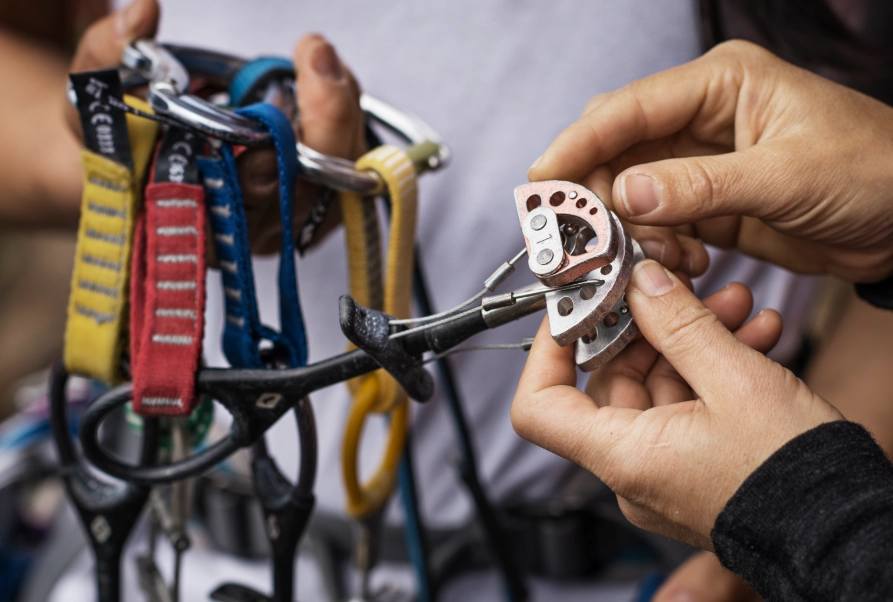
Shape Dictates Function
Oval Carabiners: Symmetrical. Great for gear racks (clipping multiple pieces of protection) or certain belay devices because they don't twist. But they have the lowest gate opening and strength-to-weight ratio. I rarely use them on my harness anymore.
D-Shaped Carabiners: The non-symmetrical shape puts most of the load on the stronger, straight spine. This makes them inherently stronger for their weight than ovals. These are my default for critical points like belay anchors or attaching my belay device.
Pear/HMS Carabiners: The large, rounded end allows a Munter hitch to tie and untie easily. Essential for belaying a leader with a single rope in a pinch, or for use with certain belay devices like the ATC Guide in guide mode. Don't use a regular D for a Munter—it'll jam.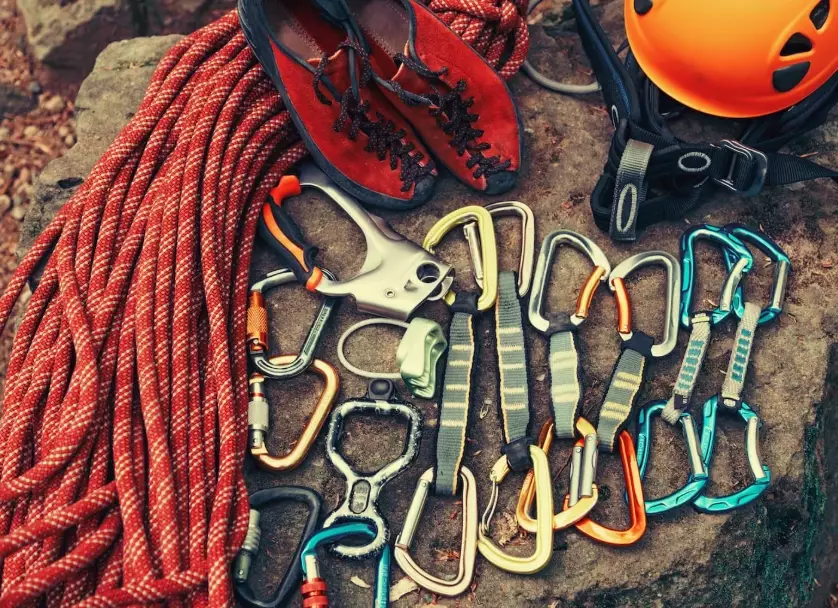
Quickdraws: Your Sport Climbing Essentials
A quickdraw is simply two carabiners connected by a durable fabric sling. One end (the rope-end) has a bent-gate or wiregate carabiner for easy rope clipping. The other (the bolt-end) has a straight-gate carabiner, often with a keylock nose to prevent snagging on bolt hangers.
Here’s where specifics matter. Let’s compare a few popular models to show you what to look for:
| Model (Example) | Weight (per draw) | Key Feature | Best For | Approx. Price per Draw |
|---|---|---|---|---|
| Petzl Spirit Express | 98g | Wiregate both ends, super smooth action | All-around sport climbing, reducing weight | $18 - $22 |
| Black Diamond Hotforge | 105g | Keylock nose, solid gate bolt-end | Durability, frequent cragging | $16 - $20 |
| DMM Alpha Sport | 110g | Captive eye rope-end, reduces twist | Overhanging routes where draws twist | $20 - $24 |
| Edelrid Bulletproof | 115g | Stiff, abrasion-resistant sling | Gritstone or abrasive rock | $19 - $23 |
My personal quiver? For long, steep sport routes in Spain, I pack the lightest wiregates I have. For my local sharp granite crag, I use draws with thicker slings and keylock noses to prevent premature wear.
Active & Passive Protection: The Trad Climber's Toolkit
This is where metal climbing equipment gets clever. You're placing your own anchors into cracks in the rock.
Passive Protection (Nuts/Stoppers): Simple wedges of metal on a wire. You slot them into constrictions. They're lightweight, cheap, and have no moving parts. A well-placed nut is incredibly secure. The skill is in seeing the right constriction. Brands like DMM and Black Diamond have extensive, color-coded ranges.
Active Protection (Cams): Spring-loaded devices with opposing lobes that expand to fit a crack. You pull the trigger to retract them, place them, and release. The camming action provides holding power. They're more versatile than nuts but also heavier, bulkier, and more expensive.
I remember a climb where a partner blindly reached for a #1 cam every time. The crack kept flaring, and his placements were terrible. He wasn't reading the rock; he was just grabbing a familiar size. You need a double set of nuts and a single set of cams from sizes 0.3 to 3 as a starting rack.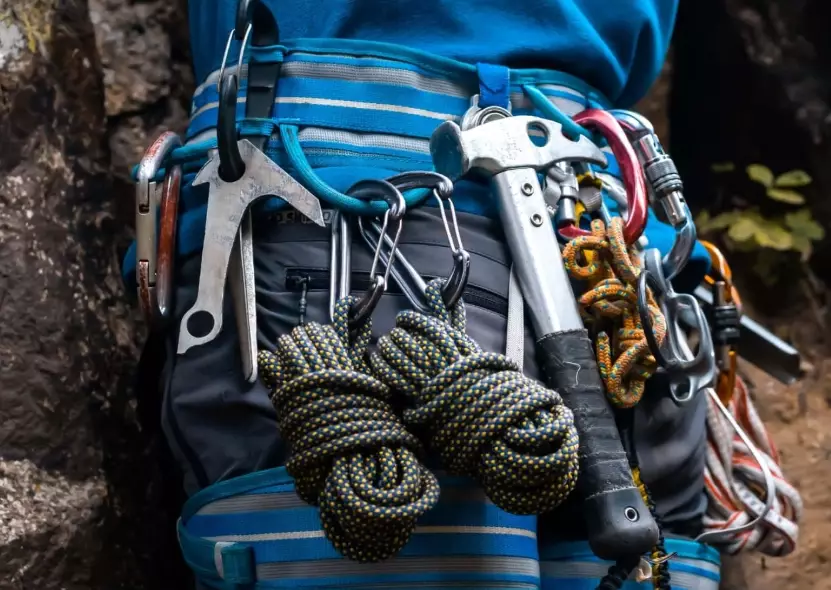
How to Choose the Right Metal Climbing Equipment for Your Style
Don't just buy a pre-packaged set. Think about where and how you climb.
Sport Climbing Only? Invest in 12-15 quality quickdraws. Prioritize smooth gate action and a keylock nose on the bolt-end carabiner. Add 4-5 locking carabiners (a mix of D and Pear shapes) for anchors, belay device, and bail purposes.
Getting into Trad? Your first metal purchases should be a set of nuts (like DMM Wallnuts) and a few mid-range cams (sizes 0.5 to 2). Rent or borrow first to see what sizes you use most at your local crag. It's a huge investment.
Alpine & Multi-pitch? Weight is king, but so is versatility. Wiregate carabiners across the board save weight. Consider hybrid quickdraws with a skinny dyneema sling. Every gram adds up over 20 pitches.
What Are the Most Common Metal Climbing Gear Mistakes?
These aren't the "don't cross-load" basics. These are the subtle ones I see weekly.
1. The "Zipper Clip" with Quickdraws: Not organizing your draws on your gear loop. You grab the first one, clip it, then the next, and soon all the dogbones are twisted together. It slows you down. Alternate which way you rack them.
2. Ignoring Carabiner Wear on Bolt-Ends: That straight-gate carabiner takes a beating from the steel bolt hanger. Check for sharp grooves or burrs. A burred carabiner can cut your sling. I retire bolt-end biners long before rope-end ones.
3. Over-camming: New trad leaders often crank the trigger on a cam so hard it's almost fully retracted, then shove it in. This creates a "walking" placement that can creep into a wider part of the crack. A cam should be placed with the lobes at a 50-75% retracted range for optimal stability.
Gear Maintenance: It's Not Optional
Metal doesn't mean invincible. Grit gets into spring mechanisms. Salt from sweat corrodes aluminum. Give your gear a visual and tactile inspection before and after each trip. Look for cracks, deep grooves, or rough spots. Rinse cams and carabiners with fresh water if they've been near saltwater or dirt. Dry them completely. A drop of lubricant (like Trident Cam Lube) on cam trigger springs once a year keeps them smooth. Store them somewhere cool and dry, not in a hot car trunk.
The UIAA (International Climbing and Mountaineering Federation) sets safety standards for climbing equipment. Any gear you buy from a reputable brand (Petzl, Black Diamond, DMM, Edelrid, etc.) will be UIAA certified. That's your baseline assurance.
Your Metal Gear Questions Answered
Why do my quickdraws keep twisting on overhanging sport routes?
It's usually the carabiner gate orientation. On an overhang, the force wants to align the draw with the direction of the rope. If the rope-end carabiner gate faces the rock, it can cause the whole draw to rotate. Try racking your draws with the gates facing alternately left and right. Some models, like those with a "captive eye" or a swiveling rope-end carabiner, are specifically designed to mitigate this.
Is it worth buying "hot forged" carabiners over standard ones?
Hot forging is a manufacturing process that aligns the metal's grain structure, often resulting in a stronger and more durable carabiner for a given weight. For critical applications—like your belay loop carabiner or anchor carabiners—the extra durability is a wise investment. For a quickdraw that might get retired due to bolt-end wear in a few seasons, the benefit might be less pronounced. It's a premium feature, not a necessity.
How often should I actually retire a carabiner?
Forget fixed timeframes. I have carabiners from 10 years ago that are fine because they were used lightly on rope-ends. Retirement is based on damage. Deep gouges (you can catch a fingernail in them), sharp burrs, or any gate malfunction (stickiness, not closing fully) means it's done. A drop from significant height onto a hard surface can cause internal microfractures you can't see—when in doubt, retire it. The cost of a new carabiner is nothing compared to the consequence of failure.
What's the one piece of metal gear most beginners overlook but shouldn't?
A dedicated locker for their personal anchor/PAS. People use their belay carabiner, which is a hassle, or a non-locker, which is unsafe. Get a large, pear-shaped HMS locker. It's versatile, easy to handle with gloves, and its sole job is to securely connect you to an anchor, keeping your belay device carabiner free for its actual purpose.