Quick Navigation
- What Exactly Is a Fear of Heights? Normal Fear vs. Acrophobia
- The Symptoms: What Does a Fear of Heights Actually Feel Like?
- Why Me? The Root Causes of Acrophobia
- Fear of Heights vs. Vertigo: What's the Actual Difference?
- How to Overcome the Fear of Heights: Self-Help Strategies That Actually Work
- Professional Treatment Options: When and How to Get Help
- Common Questions About Fear of Heights (Your FAQ)
Let's talk about that feeling. You're on a balcony, maybe a few floors up, and you peek over the edge. Your stomach does a little flip. Your palms might get a bit clammy. That's pretty normal, right? Most of us feel a twinge of caution when we're up high. It's our brain's way of saying, "Hey, be careful down there." But for some people, it's not just a twinge. It's a full-blown, heart-pounding, knee-weakening wave of panic that can feel completely overwhelming. That's the fear of heights in its more intense form, and if it's disrupting your life, you might be dealing with something called acrophobia.
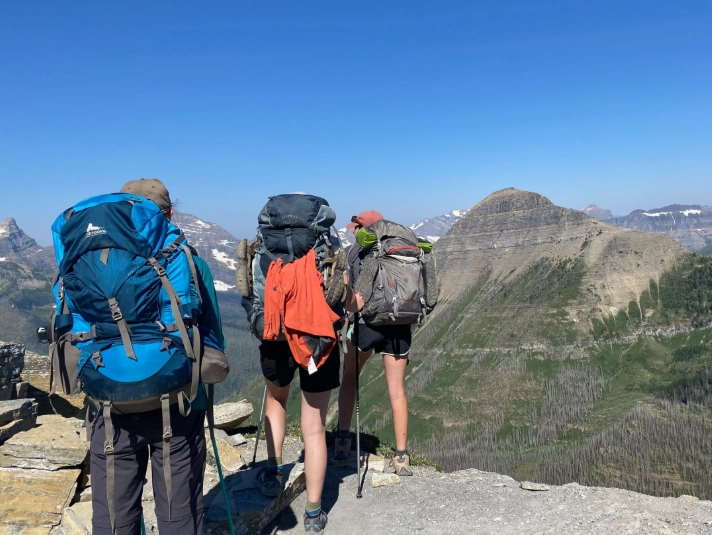
I remember trying to hike a trail with a friend once. There was this beautiful lookout point, but to get to it, you had to cross a narrow path with a pretty steep drop on one side. Nothing crazy, probably safe as houses, but my friend just froze. Completely. Couldn't move forward or backward. His breathing got shallow, and he just kept saying, "I can't, I can't." We had to turn back. That was my first real, up-close look at how debilitating this fear can be. It's not about being "weak" or "scaredy-cat"—it's a genuine, physiological reaction that the logical part of the brain struggles to override.
So, what's really going on? Is it just in your head? (Spoiler: it is, but not in the way people mean when they say that.) Can you actually get over it? This guide is here to walk you through everything—from the basic biology of why we get dizzy up high to the step-by-step methods therapists use to help people conquer their fear of heights for good. We'll skip the fluff and get into what you actually want to know.
What Exactly Is a Fear of Heights? Normal Fear vs. Acrophobia
It's crucial to draw a line here, because lumping everything together can make people with a real phobia feel misunderstood. Everyone has a built-in survival mechanism that makes them wary of edges. It keeps us alive. That's normal fear. It's functional. It makes you hold the handrail on the escalator or step back from a cliff edge.
Acrophobia is different. The American Psychological Association (APA) defines a specific phobia as a marked, persistent, and excessive or unreasonable fear cued by the presence or anticipation of a specific object or situation. For acrophobia, that object is height. The key words are excessive and unreasonable. The fear is way out of proportion to the actual danger. Think about it: being on a secure glass elevator in a skyscraper is statistically very safe. But for someone with acrophobia, the perceived danger is 100% real and imminent.
The other huge component is avoidance. A normal person might feel nervous on a ferris wheel but ride it anyway for the view. Someone with acrophobia will likely refuse to go on it altogether, or if they are forced into the situation (say, for a work event in a penthouse), they endure it with intense distress. This avoidance is what turns a fear into a phobia that rules your life. You start turning down job opportunities, family trips, or social outings because they might involve heights. That's when you know it's more than just a healthy respect for gravity.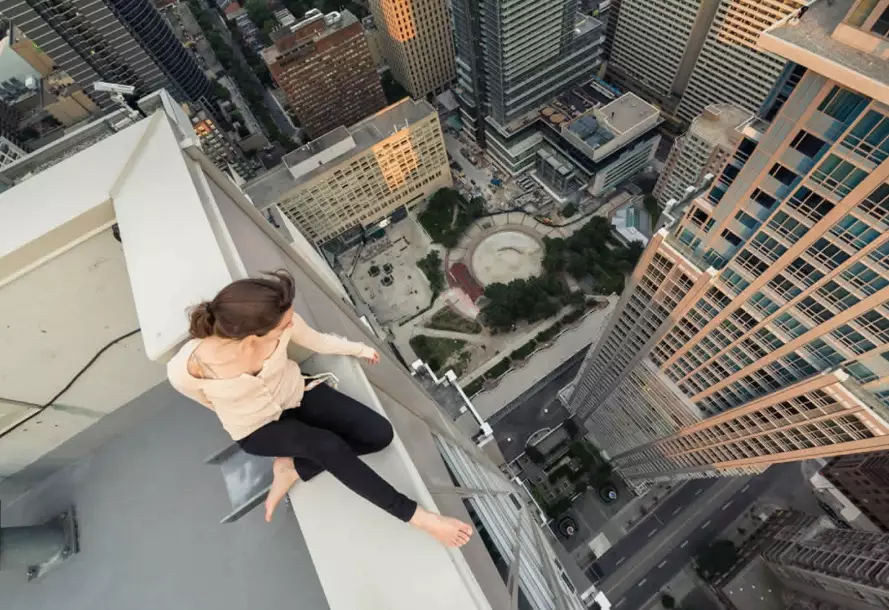
The Symptoms: What Does a Fear of Heights Actually Feel Like?
Talking about "fear" is vague. Let's get specific about what happens in your body and mind. It's not just one feeling; it's a cascade. The body kicks into its ancient "fight-or-flight" mode, flooding you with adrenaline. Here’s a breakdown of what that can look like.
| Symptom Type | What You Might Experience | Why It Happens (The简略 Science) |
|---|---|---|
| Physical Symptoms | Dizziness or vertigo, lightheadedness. Rapid heartbeat (palpitations). Shortness of breath or feeling like you're choking. Sweating, especially on the palms. Trembling or shaking. Nausea or stomach upset. Dry mouth. Feeling like your legs are jelly or about to buckle. | Adrenaline surge. Blood is diverted to major muscles (preparing to run), which can leave you lightheaded. Hyperventilation changes blood chemistry, increasing dizziness. It's a vicious cycle. |
| Psychological & Emotional Symptoms | Overwhelming panic or terror. A intense urge to get to safety immediately. Feeling detached from yourself or the situation (derealization). Fear of losing control, fainting, or even dying. Catastrophic thoughts ("The rail will break," "I'll jump," "The floor will collapse"). | The amygdala (fear center) hijacks the prefrontal cortex (logical thinking). Rational assessment goes offline, leaving pure emotion and worst-case scenario forecasting. |
| Behavioral Symptoms | Clutching onto something or someone for dear life. Crouching down or getting on your hands and knees. Freezing in place, unable to move. Crying or yelling. Actively avoiding any situation with height, often planning routes/life around this avoidance. | Instinctive, self-protective behaviors. Avoidance is reinforced because leaving the situation provides immense relief, teaching the brain that avoidance = safety. |
That feeling of dizziness is a big one, and it's often confused with vertigo. They're different, but in the moment, who's analyzing? Your brain is getting conflicting signals. Your eyes see a vast, open distance, but your inner ear (which handles balance) and your proprioception (your sense of your body in space) might be telling you you're on stable ground. This sensory mismatch can literally make you feel off-balance. It's not "all in your head" in the imaginary sense—it's a real neurological glitch triggered by the perception of height.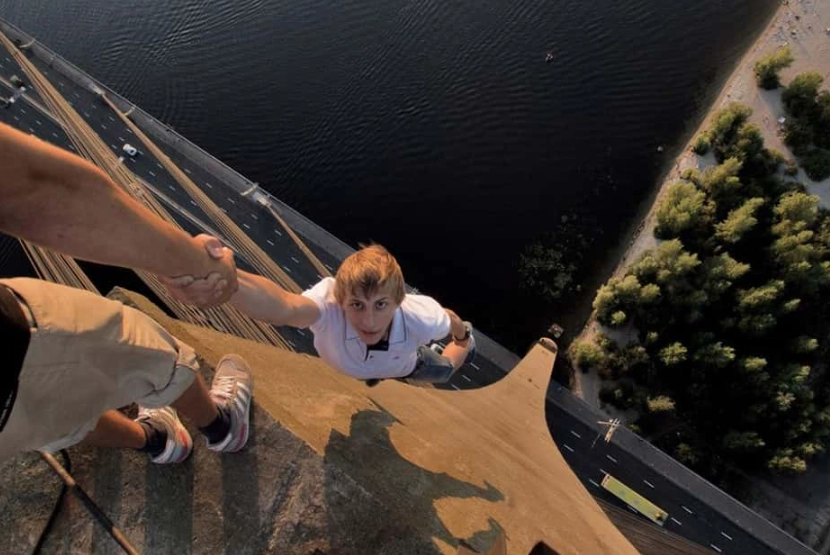
Ever felt that? The world seems to tilt just a little?
Why Me? The Root Causes of Acrophobia
People always want a simple reason. "Did you fall out of a tree as a kid?" Sometimes there is a direct cause, but often, it's a mix of factors. Let's break down the main theories.
The Evolutionary Perspective (It's in Our DNA)
This one makes a lot of intuitive sense. Our ancestors who were careless around cliffs, tall trees, or rocky outcrops probably didn't live long enough to pass on their genes. A healthy wariness of falls is a built-in survival advantage. Some researchers think acrophobia might be a hyper-active version of this ancient wiring. The National Institute of Mental Health (NIMH) notes that phobias often relate to objects/situations that posed real threats in our evolutionary past. So, in a way, your brain is just trying way too hard to protect you.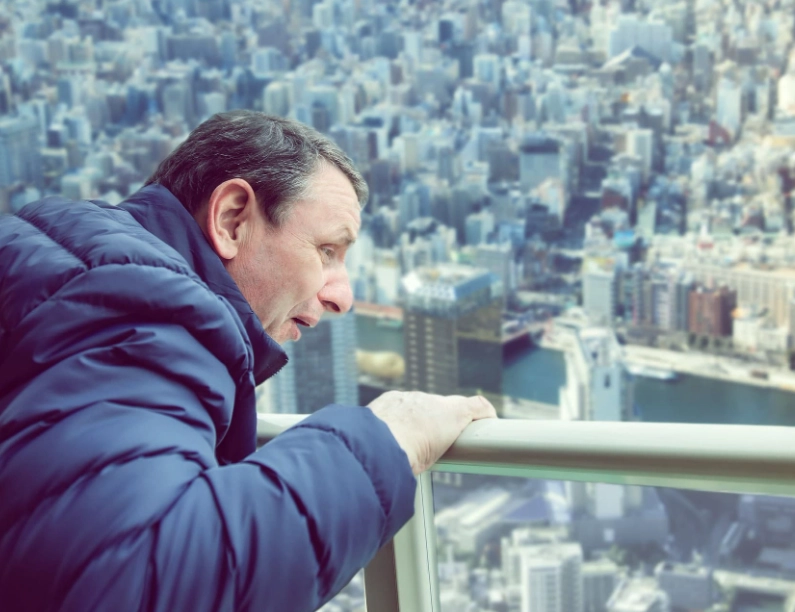
The Psychological Perspective (Learning and Experience)
This is where personal history comes in.
- A Traumatic Fall or Scare: This is the most obvious one. A bad fall, even from a relatively low height, can condition your brain to associate "high place" with "pain and danger."
- Vicarious Learning (Seeing Someone Else Get Hurt): You might not have fallen, but seeing a sibling take a nasty tumble or watching a dramatic movie scene involving a fall can plant a powerful seed of fear.
- Being Taught the Fear: If a primary caregiver was extremely anxious around heights and constantly warned you with panic in their voice ("Get away from there! You'll fall and die!"), you could learn that association through observation.
The Physiological Perspective (Your Body's Wiring)
Some people just seem to have a more sensitive nervous system. They might be more prone to anxiety in general. There might also be differences in how their visual-vestibular system (the eyes-inner ear team that manages balance and spatial orientation) processes information from high places, leading to more intense dizziness. It's not a flaw; it's just a variation in how the hardware is set up.
The Lack of Experience
This is a big one that doesn't get talked about enough. If you grew up in a flat area, never climbed trees, never went on high playground equipment, or were always kept away from edges, you never developed a "comfort" or familiarity with heights. The unknown becomes scarier. Your brain has no positive or neutral reference points for being up high—only warnings and potential danger. So when you finally encounter a height as an adult, your brain has nothing to draw on except its primal "DANGER!" signal.
Fear of Heights vs. Vertigo: What's the Actual Difference?
This confusion trips up a lot of people. They feel dizzy looking down, assume it's vertigo, and maybe even seek the wrong kind of help. Let's clear it up, because understanding which one you're dealing with is the first step to addressing it.
| Aspect | Fear of Heights (Acrophobia) | Vertigo |
|---|---|---|
| Core Definition | A psychological anxiety disorder, a specific phobia. | A neurological or inner ear disorder causing a specific sensation of movement (spinning, tilting, swaying). |
| Core Experience | Fear, panic, anxiety. The dizziness is a symptom of the anxiety attack. | A false sensation of spinning or motion. The anxiety is a reaction to the disturbing dizzy spell. |
| Primary Trigger | The visual perception of being high up or near a drop. | Often triggered by head movements (e.g., looking up, rolling over in bed), not necessarily by height alone. |
| Occurs When? | Specifically in situations involving height. You feel fine on solid ground. | Can occur in any position—lying down, sitting, standing—regardless of height. |
| Body's Reaction | Adrenaline-based: racing heart, sweating, trembling from fear. | Balance-system-based: nausea, vomiting, nystagmus (involuntary eye movements), loss of balance. |
| Key Question | Are you more afraid of falling or of the panic attack itself? | Are you more disturbed by the sensation of the world moving? |
Here's the kicker: they can coexist and feed each other. Someone with mild vertigo might develop a fear of heights because they associate heights with triggering a dizzy spell. Conversely, the extreme anxiety from acrophobia can cause hyperventilation, which can absolutely lead to lightheadedness and dizziness, mimicking vertigo. It's a messy chicken-and-egg situation sometimes. If you're unsure, a great first step is to see your doctor to rule out inner ear issues. Resources like the Mayo Clinic's page on vertigo can give you a clearer idea of what to ask your doctor about.
Knowing what you're fighting is half the battle.
How to Overcome the Fear of Heights: Self-Help Strategies That Actually Work
Before we jump to therapy (which is highly effective), there are things you can do on your own to build your tolerance. Think of this as training a muscle. You start small.
1. Master Your Breathing (This is Non-Negotiable)
When panic starts, breathing is the first thing to go. You take short, shallow chest breaths or even hold your breath. This starves your brain of oxygen and fuels the dizziness and panic. You need to hack this system.
- Diaphragmatic Breathing (Belly Breathing): Practice this daily when you're calm. Lie down, put a hand on your belly. Breathe in slowly through your nose for 4 counts, feeling your belly rise. Hold for 2 counts. Exhale slowly through pursed lips for 6 counts, feeling your belly fall. The long exhale is key—it triggers the body's relaxation response.
- Use It In the Moment: The second you feel anxiety about height, shift your focus to your breath. Don't try to stop the fear; just breathe into it. It gives your logical brain something concrete to do and directly counteracts the physical symptoms.
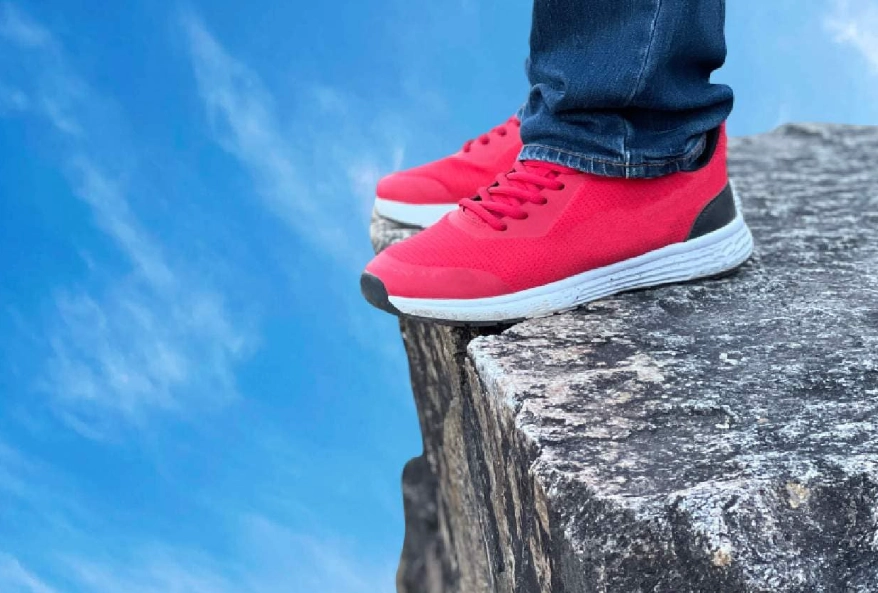
2. Challenge the Catastrophic Thoughts
Your brain is screaming, "You'll fall! You'll die! The structure will collapse!" Ask it for evidence. Seriously, have a logical conversation with yourself.
- "Has this observation deck ever collapsed?" (No.)
- "Am I actually standing on a stable surface?" (Yes, solid concrete.)
- "Is there a sturdy barrier between me and the edge?" (Yes, a chest-high railing.)
- "What's the statistical likelihood of me spontaneously falling over a secure barrier?" (Vanishingly small.)
Write down these catastrophic thoughts when you're safe at home, and then write rational responses next to them. This is a core part of Cognitive Behavioral Therapy (CBT) that you can start yourself.
3. Gradual, Self-Paced Exposure (The Gold Standard)
You cannot think your way out of a phobia. You have to experience your way out. Avoidance reinforces the fear. Facing it—in a controlled, gradual way—teaches your brain that the situation is safe. This is called exposure therapy. Don't start by booking a skydiving trip. That's flooding, and it can backfire badly.
Create a "Fear Ladder." List situations related to heights, from least scary to most scary. Here's an example:
- Look at pictures of high places from a first-person view (like a GoPro video of someone on a roof).
- Stand on a small step stool in your kitchen.
- Look out your second-story window.
- Go up to the third floor of a parking garage and look out from near the wall (not the edge).
- Take a glass elevator one floor while focusing on your breathing.
- Stand on a secure balcony on the 5th floor with a trusted friend.
- Walk across a low, stable bridge.
- Ride a ferris wheel.
Start at the very bottom. Stay in that situation until your anxiety peaks and then subsides. Don't run away at the peak of fear; that teaches your brain that escape is the only relief. Wait until you feel a noticeable decrease in anxiety (even just 20% less). Do it multiple times until it feels boring. Then, and only then, move to the next rung. This process rewires the fear response.
Professional Treatment Options: When and How to Get Help
If self-help feels too daunting or you've tried and hit a wall, professional help is a game-changer. Therapists have tools and structures to guide you through this much more efficiently. Here’s what’s out there.
Cognitive Behavioral Therapy (CBT)
This is the most evidence-based, go-to treatment for specific phobias like the fear of heights. It combines the two things we just discussed: cognitive restructuring (changing thoughts) and exposure therapy (changing behaviors). A therapist will help you identify and dismantle the irrational beliefs about height and then systematically guide you through an exposure hierarchy. It's structured, goal-oriented, and typically shows results in a relatively short number of sessions (sometimes as few as 5-10).
Virtual Reality Exposure Therapy (VRET)
This is a fantastic modern tool. You wear a VR headset and are immersed in a simulated high environment—a virtual bridge, skyscraper ledge, or elevator. The beauty? It feels incredibly real to your brain, but a part of you knows you're safely in a therapist's office. This allows for controlled, repeatable, and safe exposure to scenarios that might be logistically difficult or expensive to recreate in real life (like standing on the roof of a tall building). Research has shown it to be highly effective for acrophobia.
Medication
Medication is rarely a first-line, long-term solution for a specific phobia. However, a doctor might prescribe a short-acting anti-anxiety medication (like a benzodiazepine) to be used very sparingly for a specific, unavoidable situation (e.g., a necessary flight). Important: Medication alone doesn't teach you coping skills or process the fear. It just temporarily dampens the symptoms. The goal of therapy is to learn to manage it without a crutch. Beta-blockers are sometimes used to control the physical symptoms like rapid heartbeat without the sedative effects.
Other Therapeutic Approaches
Some people find techniques like mindfulness and Acceptance and Commitment Therapy (ACT) helpful. Instead of fighting the fear, you learn to observe it without judgment—"I'm noticing my heart is racing and I'm having thoughts about falling"—and then commit to acting according to your values (e.g., "I value experiencing this view with my family, so I will stay here and breathe despite the fear"). It changes your relationship with the anxiety.
| Treatment Type | Best For... | Pros | Cons / Considerations |
|---|---|---|---|
| Cognitive Behavioral Therapy (CBT) | Most people. Structured, evidence-based, addresses thoughts & behaviors. | Highly effective, time-limited, teaches lifelong skills. | Requires active participation and "homework." Can be challenging. |
| Virtual Reality Exposure (VRET) | Those with limited access to real-world heights or who need a very controlled start. | Extremely safe, controlled, can simulate any environment. | Accessibility (need a therapist with VR equipment). Cost. Some prefer real-world exposure. |
| Mindfulness/ACT | People who have struggled with traditional "fight-the-fear" approaches. | Reduces struggle and suffering around the fear. Empowering. | May feel abstract initially. Often works best combined with some exposure. |
| Medication (Short-term) | Managing acute symptoms for a specific, one-off unavoidable situation. | Can provide temporary relief to get through an event. | Does not treat the root cause. Risk of dependence. Always consult a doctor. |
Finding a qualified therapist is key. You can search directories on the APA's Psychologist Locator or the ADAA (Anxiety & Depression Association of America) website. Look for someone who specializes in anxiety disorders or specific phobias and uses evidence-based practices like CBT or exposure therapy.
Common Questions About Fear of Heights (Your FAQ)
The bottom line? You're not stuck with this.
Look, dealing with a intense fear of heights is exhausting. It limits you in quiet ways you might not even notice until you start to break free from it. The constant scanning for elevators instead of escalators, the excuses you make, the adventures you pass up. It feels like a prison built by your own mind.
But here's the truly hopeful part: of all the psychological challenges out there, specific phobias like acrophobia are among the most responsive to treatment. The protocol is clear, well-tested, and works for the vast majority of people who stick with it. It's not about becoming reckless or loving skydiving (unless you want to!). It's about reclaiming choice. It's about being able to visit that friend's awesome rooftop apartment, take the scenic cable car ride on vacation, or simply look out your office window without a surge of panic.
You start with a breath. Then a thought. Then a single step onto a safe, low platform. Progress isn't linear—some days will feel like a step back. That's normal. But each time you face the sensation, breathe through it, and stay, you are literally rewiring your brain. You're teaching your ancient survival system that in this modern world, with its secure railings and sturdy buildings, you are safe. And that freedom is worth every bit of the effort.