Quick Guide
- Fear: The Primal Brake (and How to Manage It)
- Focus and Flow: Where the Magic Happens
- Building Confidence That Doesn't Crumble
- The Mental Toolkit: Strategies for Specific Situations
- Goal Setting That Actually Works (Not the Kind You Forget)
- The Social Mind: Climbing with Others
- When the Mind Gets Tired: Overtraining and Burnout
- Wrapping Your Head Around It All
Let's be honest for a second. You've spent hours perfecting your footwork. You've built finger strength until your forearms scream. You can recite beta for your project in your sleep. But then you get there, on the wall, at the crux, and everything falls apart. Not your body. Your mind. Your thoughts turn to static, your breath gets shallow, and your perfectly rehearsed moves vanish. Sound familiar? If it does, you've just met the most formidable opponent in your climbing career: your own psychology.
That's what this is all about. Climbing psychology isn't some fluffy, self-help side note. It's the core software that runs the hardware of your muscles and technique. I've seen incredibly strong climbers plateau for years because they refused to address the mental game. And I've watched less physically gifted climbers send hard routes purely because their head was in the right place. The difference is staggering.
Think about it. What's the first thing that goes when you're pumped and scared? Your technique. What makes you hesitate on a dynamic move? Not a lack of power, but a surplus of doubt. Understanding climbing psychology is the key to unlocking consistency, breaking through plateaus, and actually enjoying the process instead of just white-knuckling through terror.
Fear: The Primal Brake (and How to Manage It)
Okay, let's start with the big one. Fear. It's not your enemy. Let me repeat that, because most people get it wrong: Fear is not your enemy. It's a brilliantly evolved, millennia-old alarm system designed to keep you alive. The problem in climbing isn't the fear itself; it's how we react to it. We treat it like a stop sign when it should be a yield sign.
The fear of falling is the king here. It's so primal it bypasses logic. You can know, intellectually, that your belayer is world-class and the gear is bombproof. But your amygdala—the lizard brain—doesn't care. It sees air below your feet and hits the panic button. This triggers the classic fight-or-flight response: adrenaline spikes, vision tunnels, fine motor control vanishes, and you start breath-holding. It's biology, not weakness.
So how do you work with it? You don't fight a river; you learn to navigate its currents. The goal is to move from a reactive state (panic) to a responsive state (managed action).
Practical Fear-Hacking Techniques
- Controlled Falling Practice: This is non-negotiable. You have to rewire the brain's association between "falling" and "danger." Start on top-rope, taking bigger and bigger falls where you land in a good position. Then move to lead, starting with falls above a bolt, then at the bolt, then below. The goal isn't to like falling. The goal is to make it a neutral event, not a traumatic one. The British Mountaineering Council's mental training resources emphasize this as a foundational skill.
- The 4-7-8 Breath: When fear locks you up, your breathing is the first thing you can control. Inhale for 4 counts, hold for 7, exhale slowly for 8. This physically calms the nervous system and gives your thinking brain a job to do, pulling focus away from panic.
- Spot the Cheese: A silly but effective trick from a coach. When gripped, look for a specific, mundane detail on the wall—a weird crystal shape that looks like Swiss cheese, a particular color streak. It forces your brain out of the global "I'M GONNA DIE" narrative and into specific, sensory observation.
I remember the first time I took a big, intentional whipper on lead. My heart was in my throat. But after the third one, something shifted. The fear was still there, but it was quieter, a background hum instead of a deafening siren. That's the space you want to create.
Focus and Flow: Where the Magic Happens
If fear is the wall, focus is the door through it. We talk about "being in the zone" or entering a flow state. In climbing psychology, this is the holy grail. It's that state where time distorts, movements feel effortless, and you're completely absorbed in the present moment. You're not thinking about the last move or the next one; you're just *doing*.
The biggest flow-killer? Chattering brain monkeys. "Is my foot going to slip?" "Did I clip that last bolt right?" "What will my friends think if I peel off here?" This is internal dialogue, and it's exhausting. The technique here is about directing your attention, not trying to empty your mind (which is impossible).
Process vs. Outcome Focus: This is a huge one. Outcome focus is "I must send this route." It's future-based and creates massive pressure. Process focus is "I will focus on driving power smoothly through my big toe on this smear." It's immediate, controllable, and much less stressful. When you catch yourself thinking about the send, gently guide your attention back to a single, technical detail: hip position, breath rhythm, the texture of the hold.
Attention Control Drills
Try these on your next warm-up or easy climb:
- The Breath Anchor: Climb an easy route where the only thing you focus on is the rhythm of your breathing. Inhale on a reach, exhale on a placement.
- Sensory Scan: As you climb, consciously note three things you see, two things you feel (the cool rock, the rough crystal), and one thing you hear. This grounds you firmly in the present.
- Silent Climbing: Climb without any internal verbal commentary. No "okay now move the right foot here." Just pure, non-verbal observation and movement. It's harder than it sounds but trains a different neural pathway.
Building Confidence That Doesn't Crumble
Confidence in climbing is a tricky beast. It's not a permanent state you achieve. It's a daily practice, a collection of evidence you gather and curate. Fake confidence (the "just believe in yourself!" kind) shatters at the first sign of trouble. Real confidence is resilient because it's based on data.
So where does this data come from? From your climbing history, but you have to look at it the right way. We have a nasty tendency to remember every failure vividly and forget our successes. You need to actively build a success portfolio.
This isn't just about sending your hardest grade. It's about collecting small wins. Did you stick a move today that felt impossible last week? That's data. Did you manage your fear better on that slab? That's data. Did you recover from a foot slip without panicking? Major data point. Write this stuff down. Seriously. Keep a climbing journal, not just of grades, but of mental victories. Over time, this becomes unshakeable proof that you are capable, which is the bedrock of climbing psychology.
A word of caution on confidence: Avoid the "all-or-nothing" trap. Sending a 5.12a doesn't mean you're now a 5.12 climber who will never struggle on an 11 again. That mindset sets you up for a crash. See grades as a continuum, not a binary identity. You climb 5.12, sometimes. You also climb 5.10, sometimes. Neither defines you.
The Mental Toolkit: Strategies for Specific Situations
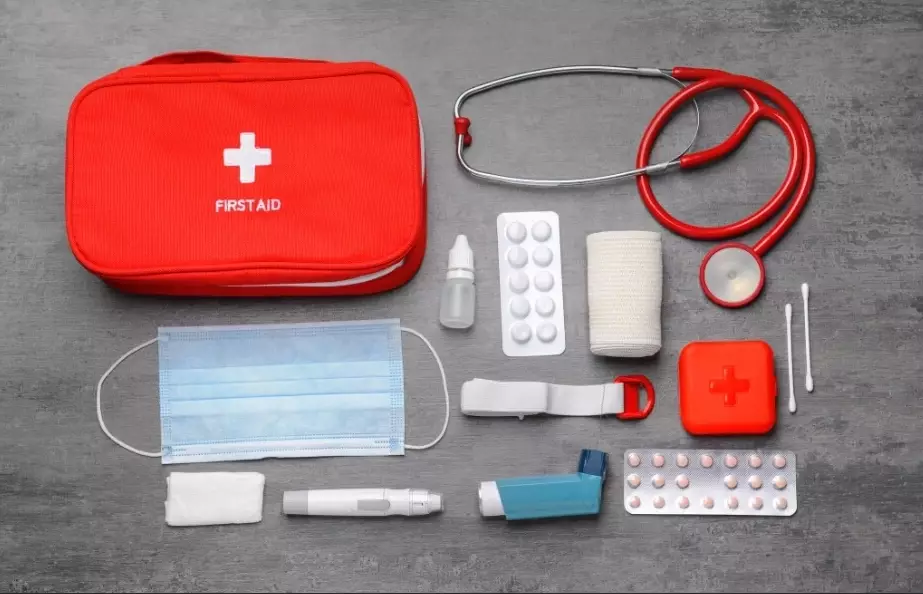
Alright, let's get practical. Here’s a breakdown of common mental challenges and what to actually *do* about them. Think of this as your first-aid kit for the mind.
| Situation | Mental Challenge | Immediate Action Plan | Long-Term Fix |
|---|---|---|---|
| On-Sight Anxiety (Facing a new, unknown route) |
Fear of the unknown, pressure to perform on first try. | Spend first minute just LOOKING. Find rest spots, potential cruxes. Set a micro-goal: "Just climb to that first good hold." Use a pre-climb ritual (3 deep breaths, chalk up). | Practice on-sighting on routes 2-3 grades below your limit. Focus on the process of reading, not the outcome. Build a library of movement patterns. |
| Redpoint Pressure (Falling at the same crux repeatedly) |
Frustration, self-doubt, "stuck" narrative, fear of wasted effort. | After a fall, analyze ONE technical thing (e.g., "my hip was too far left"). Verbally release the attempt (say "clear" to your belayer). Take a full rest, don't rush back on. | Break the route into overlapping links. Send the top half from the crux. Build "super sends"—climb the route in your mind in vivid detail, feeling each move. |
| Pump Panic (Forearms burning, mind racing) |
Catastrophic thinking ("I'm going to fall!"), breath-holding, rushing. | Find ANY rest position (even a mediocre one). Shake out systematically (arm straight, gentle wiggle). Hum a tune or count shakes to distract from the pump sensation. | Train recovery on the wall. On circuits, practice getting pumped, finding a rest, recovering, and continuing. Teach your brain that pump is manageable. |
| Competition Nerves (Climbing in front of others, timed setting) |
Social evaluation, performance anxiety, distraction from others. | Create a "bubble" with headphones and focused visual gaze. Have a simple, repeatable pre-climb sequence. Focus on a personal performance goal, not placement. | Simulate comp settings in training: time limits, unfamiliar problems, having friends watch and "judge." Desensitize yourself to the environment. The International Federation of Sport Climbing (IFSC) discusses the unique pressures of the competition environment. |
See the pattern? The immediate action is always about interrupting the negative spiral with a simple, concrete task. The long-term fix is about exposure and training the specific mental muscle for that situation.
Goal Setting That Actually Works (Not the Kind You Forget)
We all set goals. "I want to send 5.12 by summer." And then December rolls around and we're still projecting that 5.11+. Why? Because the goal was an empty wish, not a structured plan. Good goal-setting in climbing psychology is a ladder, not a leap.
Use this framework:
- Dream Goal: The big, inspiring one (Send a classic 5.12 outdoors).
- Performance Goal: The measurable skill needed (Improve my endurance to climb 30 moves on vertical terrain without pumping out).
- Process Goals: The daily/weekly actions (Hangboard twice a week, do two 4x4s per session, practice resting on easy routes every gym visit).
The Social Mind: Climbing with Others
Climbing is rarely a solo sport, and the people around us massively influence our psychology. A supportive partner can make you climb harder. A toxic or overly intense one can cripple your mental game.
Comparisonitis: This is the disease of the social media age. Watching someone flash your project can be either motivating or utterly demoralizing. Remember: you are on your own timeline. Their journey, genetics, and background are different. Use others as inspiration for what's possible, not as a stick to beat yourself with. I've had to literally stop checking Instagram on days I'm projecting because the comparison thief would steal all my joy.
Belayer Mindset: Your belayer isn't just a rope manager. They are your psychological anchor. A good belayer is calm, attentive, and offers the right kind of feedback (or silence) when you need it. Communicate what you need: "Just keep me off the deck, I'm going to try hard," or "I need some beta-free encouragement here." Resources from organizations like the American Alpine Club often highlight the critical trust relationship between climber and belayer, which is the foundation of mental security.
When the Mind Gets Tired: Overtraining and Burnout
We talk about physical overtraining, but mental fatigue is just as real. Pushing too hard, too long, on a single project or in training can lead to mental burnout. The signs are subtle at first: loss of motivation, dread going to the crag or gym, irritability, feeling flat even when you do send.
This is where the principles of climbing psychology need to include rest and perspective. The brain needs consolidation time just like muscles do. Sometimes the most productive thing you can do for your climbing is to take a week off, or go boulder easy problems with no agenda, or even try a different sport altogether. You'll come back with a refreshed mind and often find that the "stuck" move goes first try.
Your Climbing Psychology Q&A
Wrapping Your Head Around It All
Look, integrating this stuff takes time. You wouldn't expect one hangboard session to give you iron fingers. Don't expect to read this and suddenly have a bulletproof mind. Pick one thing. Maybe it's practicing controlled falls this month. Maybe it's keeping that success journal. Maybe it's just focusing on your breath on every warm-up climb.
The field of climbing psychology is deep. We've scratched the surface on fear, focus, confidence, goals, and the social aspect. There's more—dealing with failure, cultivating patience, the psychology of different styles (bouldering vs. big wall). But this is your starter pack.
The rock is the ultimate mirror. It doesn't care about your excuses, your stories, or your fears. It just is. Your mind is the lens through which you see it and interact with it. Clean the lens, adjust the focus, and suddenly, what seemed impossible becomes just another sequence of moves. The wall hasn't changed. You have.
Now get out there. Breathe. Feel the rock. And listen to what your mind is telling you—then kindly, firmly, choose how you respond.