Let's cut through the noise. When you search for mountain climbing safety tips, you get a lot of lists. Helmet, harness, check. First-aid kit, check. It's all important, but it's the easy part. The real challenge, the part that separates safe climbers from statistics, happens between your ears. It's about the decisions you make when you're tired, cold, and the summit is so close you can taste it. This guide isn't about regurgitating a gear list. It's about building a mindset—a framework for managing risk that works when the weather turns and your plan falls apart.
What You'll Learn
Beyond Gear: The Human Factors That Get You Killed
You can have the best equipment money can buy and still end up in a body bag. I've seen it almost happen. The most dangerous piece of equipment on any climb isn't your rope; it's your brain under stress.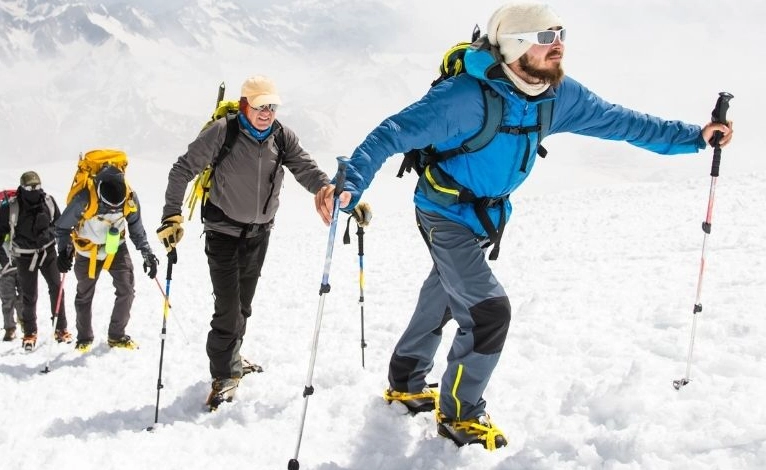
Summit Fever is the classic villain, but it's subtler than you think. It's not just blind obsession. It's the slow erosion of your turn-back criteria. You said you'd turn around at 2 PM. It's 2:15, but you're *so close*. The weather window is still *probably* okay. That's summit fever, and it's a silent killer.
Then there's Normalization of Deviance. This is an insidious one. You forget your helmet on a short, easy approach. Nothing happens. Next time, you leave your ice axe at camp for a "quick look." Again, fine. You build a pattern of small, safe-feeling shortcuts until your baseline for "safe" is fundamentally broken. When the real challenge hits, your margin for error is gone.
Fatigue doesn't just make you slow; it degrades your decision-making to that of a drunk person. Studies in other high-stress fields, like firefighting and surgery, show this clearly. Your ability to assess risk plummets.
How to Counteract Human Error
You can't eliminate it, but you can build systems to catch it.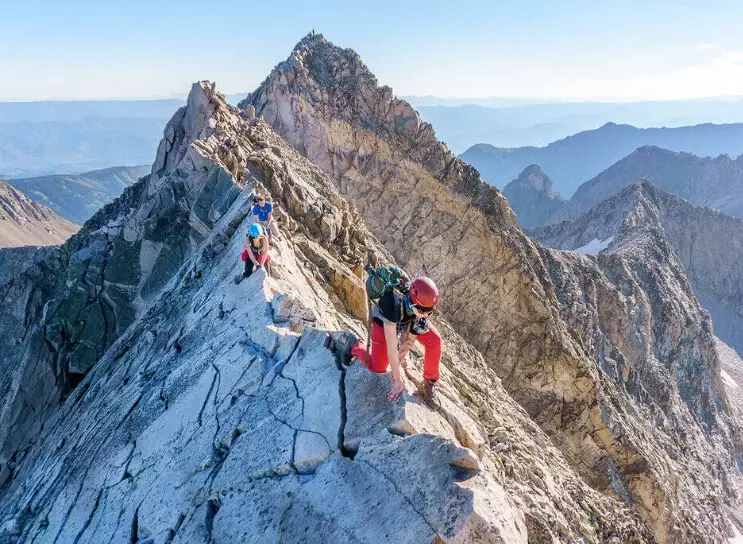
- Pre-commit to turn-back rules. Write them down. "If we are not at the summit ridge by 11 AM, we turn around." This turns a emotional decision into a procedural one.
- Use a "challenge and response" culture. In your team, anyone should be able to say, "Hold on, this feels rushed" without explanation. The default response is to stop and reassess, not justify.
- Build in mandatory rest breaks. Not just to eat, but to consciously ask: "Are we sticking to the plan? Are we still within our margins?"
How to Build Your Personal Risk Assessment Matrix
Risk in mountaineering isn't a single thing. It's a web of interconnected hazards. Thinking of it this way helps you prioritize. Let's break it down into a simple matrix you can visualize for any climb.
| Hazard Category | What It Includes | Mitigation Strategy (Beyond the Obvious) |
|---|---|---|
| Environmental | Weather, avalanche danger, rockfall, altitude, temperature. | Subscribe to regional avalanche forecasts (e.g., Avalanche Canada, NWAC) and learn to read mountain weather maps, not just apps. Understand how your specific route creates its own microclimate (lee slopes, sun cups). |
| Technical | Route difficulty, gear requirements, climbing/glacier travel skills. | Match the route to your current skill level, not your aspirational one. Practice rope systems and crevasse rescue on flat ground until they're muscle memory. A rusty skill is a useless skill. |
| Human | Team fitness, experience, decision-making, communication, mental state. | Have brutally honest pre-climb conversations. "How's your knee feeling?" "Did you get any sleep?" Use a fitness benchmark (e.g., "Can everyone carry a 40lb pack up 3,000ft in 3 hours?") to gauge readiness objectively. |
| Objective | Unchangeable route features: exposure, commitment, remoteness. | This is about acceptance. If you're 10 miles from the trailhead with no bail-out options, your pre-trip planning and margin for error must be larger. There's no "quick retreat." |
The magic happens in the interactions. For example: Moderate Environmental risk (stable weather) + High Human risk (team fatigue) = Elevated Overall Risk. You might proceed on a technically easy route, but any slip becomes more dangerous because reaction times are slow.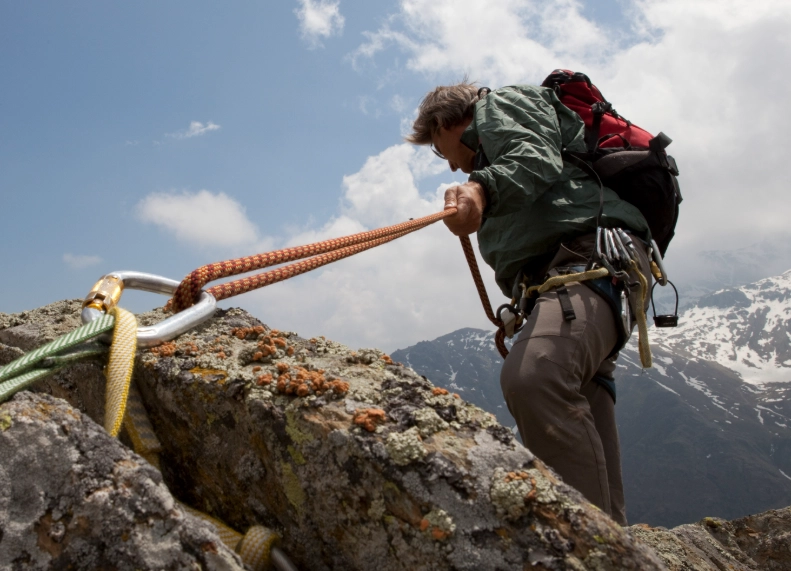
The Non-Negotiable Team Communication Plan
Miscommunication isn't just annoying; it's lethal. "I thought you had the map" are famous last words.
Your communication plan starts before the car leaves the driveway.
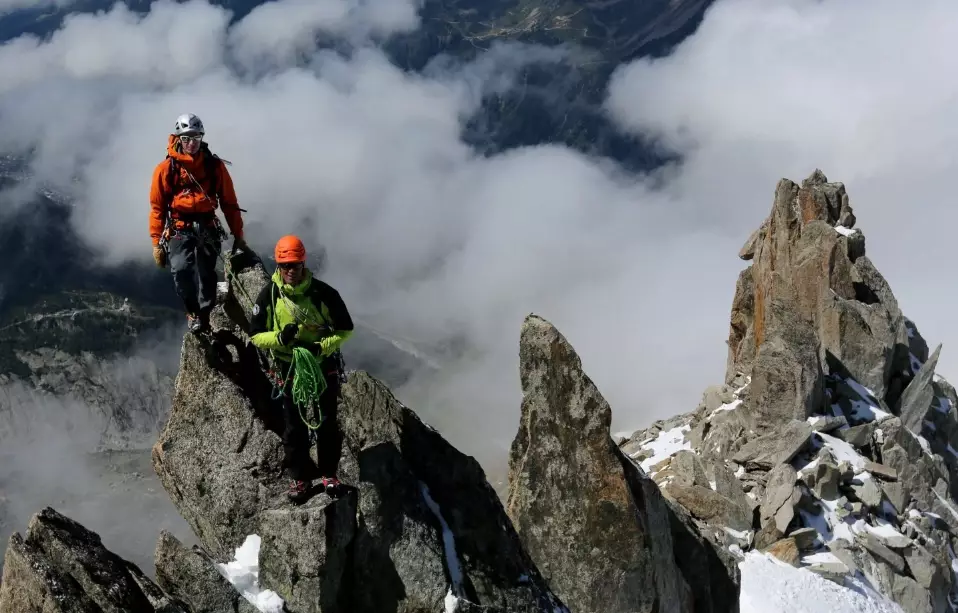
On the move, use clear, closed-loop communication.
Bad: "Watch me here!" (Vague, no confirmation).
Good: "Climbing!" ... "Climb on!" (Standard, clear).
Better: "I'm placing gear here, you might get some minor rockfall in 10 seconds." (Proactive, specific).
When navigating, one person reads the map/GPS. They call out bearings and features. The second person verifies with the terrain. "The map says we should see a red gully to our left in 200 meters." "I see it. It matches." This is redundancy.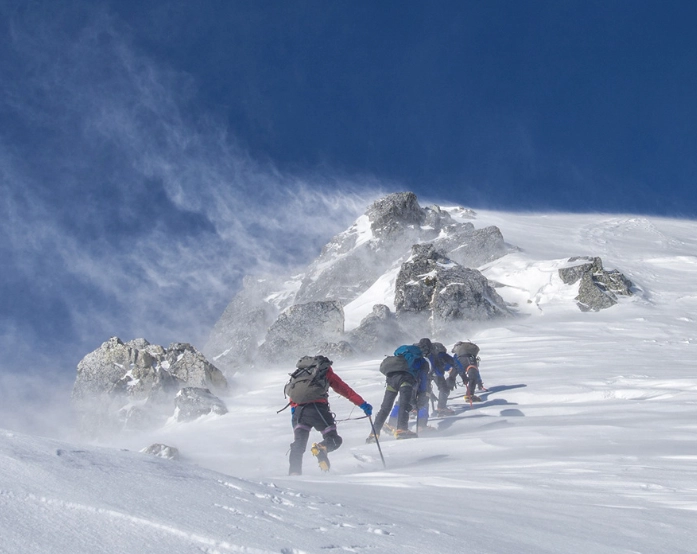
Modern Safety Tools: What's Worth Your Money
Technology has given us incredible tools, but they're aids, not saviors.
Two-Way Satellite Communicators (Garmin inReach, Zoleo): This is the single biggest safety advancement in the last decade. It's not just for SOS. Sending nightly "all ok" messages stops unnecessary panic back home. Receiving a updated weather forecast on day 3 of a trip can be a game-changer. The ability to text-rescue coordination about a non-life-threatening injury (e.g., "sprained ankle, need evacuation tomorrow") prevents a full-blown, dangerous night-time SAR mission.
Avalanche Transceivers/Beacons: If you're traveling in avalanche terrain, this is as essential as a rope on a rock face. But the beacon is only part of a three-part system: beacon, probe, shovel. And the most important part is the knowledge to use them. Take a course. Practice. Every. Single. Season.
GPS & Mapping Apps (Gaia GPS, CalTopo): These are fantastic, but they fail. Phones die. Screens freeze. Your primary navigation tool must be a paper map and a compass, and the skill to use them. The tech is your backup. I print my CalTopo maps on waterproof paper and keep them in my jacket pocket.
Identifying and Respecting Critical Decision Points
A climb is a series of gates. Your job is to consciously acknowledge each one and decide to pass through.
Decision Point 1: The Trailhead. Is everyone feeling 100%? Is the weather forecast holding? Is all the gear present and functional? This is the easiest and cheapest place to call it off.
Decision Point 2: The Base of the Technical Section. You've approached. How does the actual route look compared to the guidebook photo? Is there more ice than expected? Is rockfall active? This is where you activate your Plan B route without ego.
Decision Point 3: The Pre-Summit Push. Usually the coldest, darkest, most tired moment. Re-evaluate your turn-back criteria now. Is the team strong? Are we on time? This is the last sensible point to abandon the summit with dignity.
The Descent Decision: The summit is only halfway. Most accidents happen on the way down. You must conserve enough energy, daylight, and mental focus for the descent. Summiting with no reserves is a failure in planning.
Safety isn't about avoiding risk. That's impossible. It's about managing risk with clear eyes, honest communication, and the humility to walk away. The mountain will always be there. Make sure you are too.