Guide Highlights
- Before You Tie Anything: Speak the Language
- The Holy Trinity: The 3 Climbing Knots You Can't Live Without
- Beyond the Basics: A Quick-Reference Guide
- The Silent Killer: Knot Safety and Maintenance
- Your Climbing Knots Questions, Answered
- Putting It All Together: A Simple Decision Flow
- The Final Wrap-Up
Let's be honest for a second. When you're a hundred feet up, the only thing between you and a very bad day is a few meters of nylon and the twists and turns you put in it. That's it. We call them climbing knots, and they're not just some fancy sailor stuff—they're functional, critical, and non-negotiable. I've seen people fuss over the latest quickdraws or the most expensive shoes, then tie into their harness with something that looks like a nervous bird's nest. It's baffling.
My goal here isn't to show you every knot under the sun. That's how you get overwhelmed and forget the important ones. Instead, I want to drill down on the handful of climbing knots that you will use 99% of the time. The ones that, if you master them, will keep you safe in almost any situation you encounter at the crag or in the mountains. We'll talk about why they work, how to tie them so they're bombproof, and the stupid little mistakes everyone makes (yes, I've made them too).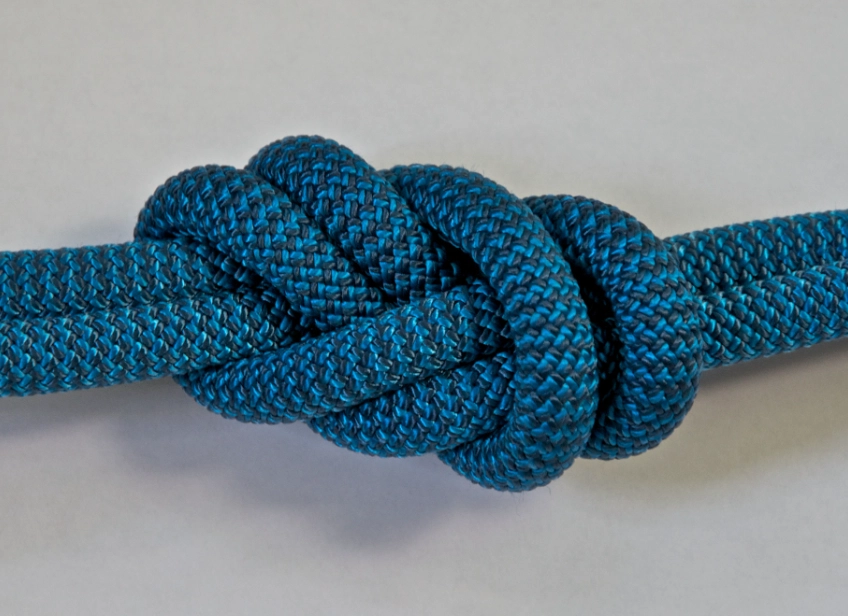
Before You Tie Anything: Speak the Language
This is where most tutorials lose people. They start throwing around terms like "standing end" and "bight" and expect you to just know. Let's clear that up first, or you'll be tying loops in the wrong part of the rope.
- The Standing End: This is the long, inactive part of the rope. The part that goes back to your belayer or is anchored to the wall. It's just... there, standing.
- The Working End (or Tail): This is the short, active bit you're actually using to tie the knot. This is the part you're moving around.
- A Bight: A simple U-shaped bend in the rope, where the rope doesn't cross itself. Fold a rope in half—that's a bight.
- A Loop: This is where the rope does cross itself, making a closed circle. Crucial difference.
Got it? Good. Now the instructions will actually make sense.
The Holy Trinity: The 3 Climbing Knots You Can't Live Without
Ask ten climbers for their top three, and you'll get variations, but the core is always the same. These are the workhorses. Master these three, and you're equipped for 90% of climbing scenarios.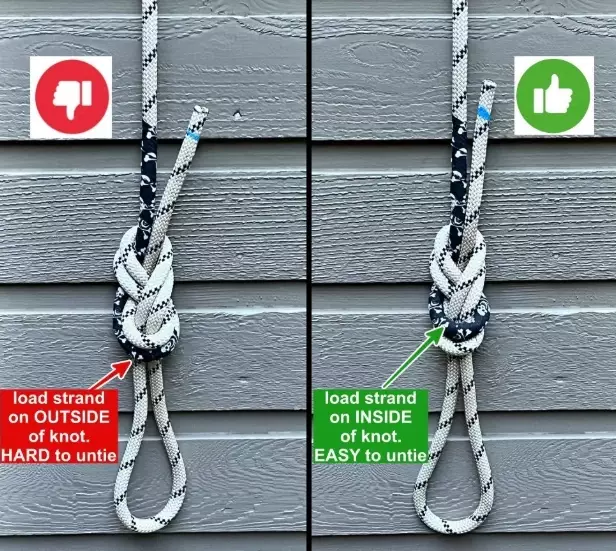
1. The Figure-Eight Follow-Through: Your Connection to Safety
This is the king. The standard for tying directly into your harness. Why? It's strong, it's easy to visually inspect (a huge plus), and it's relatively easy to untie even after being weighted. The International Climbing and Mountaineering Federation (UIAA) and pretty much every guiding organization in the world recommends it as the primary tie-in knot.
How to tie it (the right way):
- Make a loop about an arm's length from the end of your rope.
- Wrap the working end around the standing end, then poke it back up through the loop you started with. You should now have a basic "figure-eight" shape.
- Pass the working end through both the waist and leg loops of your harness (check your harness manual!).
- Now, simply "follow through" the original figure-eight with the working end. Trace the path of the first knot backwards, keeping the two strands parallel.
- Leave a tail of at least 6 inches (15 cm). This is non-negotiable.
- Dress the knot. This means pull on all the strands to tighten it up, removing any slack or crossed sections. A neat knot is a strong knot.
The beauty of this climbing knot is in the inspection. Once tied and dressed, it looks like two interlocking figure-eights running parallel. You can see the whole structure. Can't see a clear path? Something's wrong.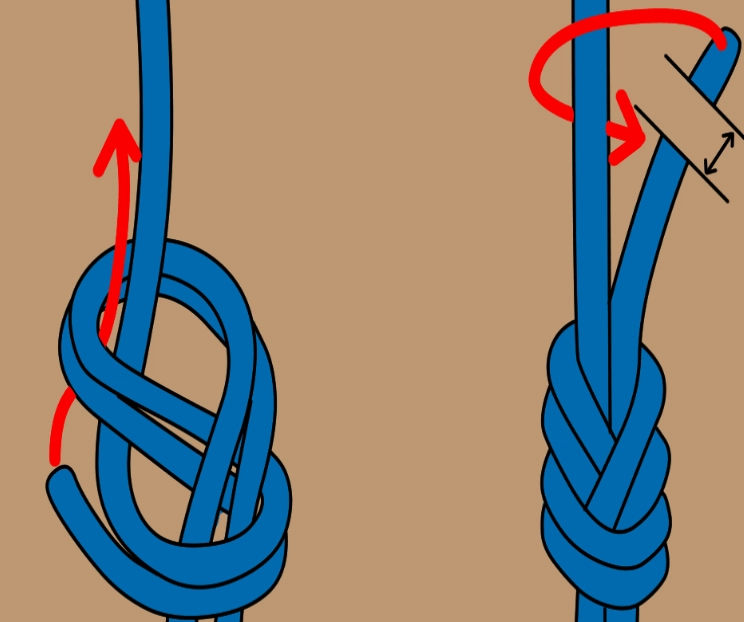
2. The Clove Hitch: The Adjustable Mid-Point Hero
This knot is pure magic for building anchors or securing yourself to protection on a multi-pitch climb. Its superpower? It's infinitely adjustable under load and can be tied with one hand. I remember fumbling with other knots while hanging on a small ledge, only to have a guide show me the clove hitch. Game changer.
How to tie it:
Make two identical loops in the rope (like two sideways "O"s). Place the right loop over the left loop. Now you have what looks like a pair of glasses. Clip this double-loop into a carabiner and pull the two strands apart. It locks instantly. To adjust, simply push on the knot while holding the carabiner.
It feels like a party trick, but it's deadly serious.
The clove hitch is perfect for equalizing anchor points because you can easily adjust the length of each strand to distribute force. It's also how you'd secure yourself directly to an anchor bolt on a belay ledge.
3. The Double Fisherman's (or Grapevine Bend): Joining Ropes for Good
Need to rappel? Your rope is too short? You'll need to join two ropes together. The double fisherman's is the knot for this job. It's secure, symmetrical, and passes through rappel devices smoothly. It's essentially two strangle knots (a simple overhand knot tied around another strand) that bite into each other.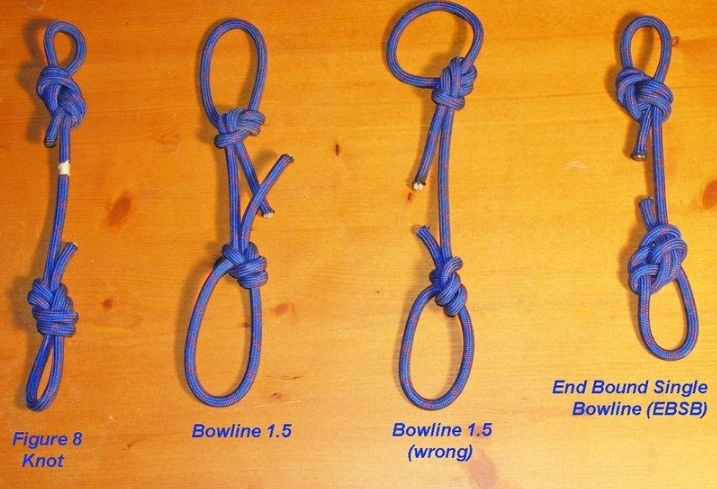
How to tie it:
Take the end of one rope and wrap it twice around the other rope. Poke the end back through the two wraps you just made and tighten. That's one fisherman's knot. Now, do the exact same thing with the other rope's end around the first rope. Pull the two main standing ends to slide the two knots together until they snug up against each other. Leave tails.
It's a bulky knot, but that's okay. It's not meant for clipping; it's meant for being bombproof. When you're joining ropes for a long rappel, this is the climbing knot that inspires confidence.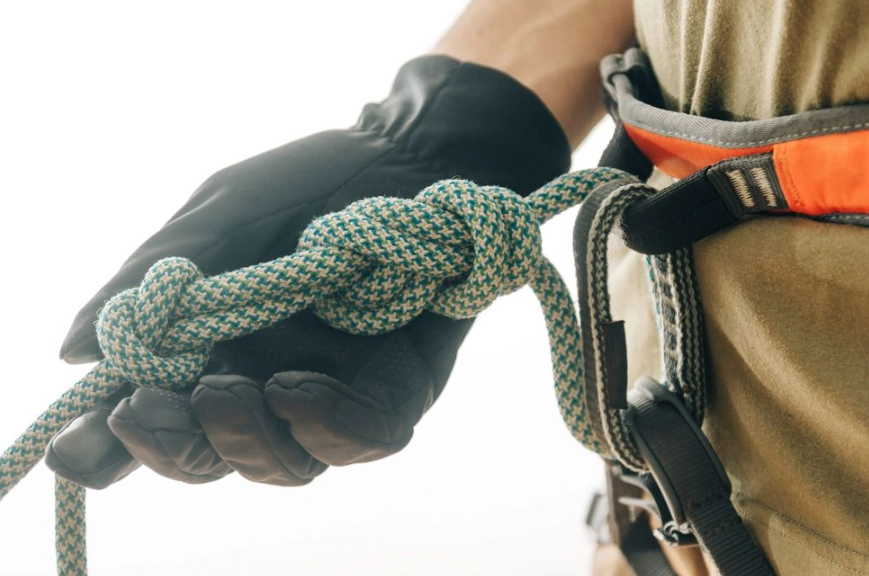
Beyond the Basics: A Quick-Reference Guide
Here’s a table to put these three core climbing knots into context, along with a couple of honorable mentions you'll encounter.
| Knot Name | Primary Use | Key Characteristic | Strength Retention* |
|---|---|---|---|
| Figure-Eight Follow-Through | Tying into harness | Easy to inspect, standard tie-in | ~75-80% |
| Clove Hitch | Anchoring, adjustable attachment | One-handed, adjustable under load | ~60-70% (but not used for primary tie-in) |
| Double Fisherman's | Joining two ropes | Secure, symmetrical, good for rappel | ~65-70% of each rope |
| Figure-Eight on a Bight | Creating a secure loop (anchor point) | Simple, strong, easy to untie | ~75-80% |
| Munter Hitch (Italian Hitch) | Belaying/rappelling without a device | Friction knot, emergency use | N/A (friction knot) |
*Strength retention refers to the knot's strength compared to the rope's full strength. A rope rated at 22kN might test at ~17kN with a figure-eight. No knot retains 100%.
The Silent Killer: Knot Safety and Maintenance
Tying the knot is only half the battle. A poorly dressed or unchecked knot is an accident waiting to happen.
The 4-Step Pre-Climb Safety Check (PAWS)
Every. Single. Time. You and your partner check each other.
- Points: All gear points on the harness are secure (buckles doubled back).
- Anchor: The rope is correctly threaded through the harness.
- Weight: The knot is the correct one (Figure-Eight Follow-Through), properly dressed, and tight.
- Slack & System: There's no dangerous slack in the system, carabiners are locked, and the belay device is correctly loaded.
Make this a ritual. It takes 15 seconds and saves lives.
When a Knot "Dies"
Knots wear out. If you fall on a figure-eight, it cinches down incredibly tight. That's good—it means it worked. But the sharp bends put immense stress on the rope fibers. After a severe fall, you should untie and retie the knot. Don't just keep climbing on it. The same goes if you notice any abrasion, discoloration, or hardening of the rope at the knot point.
I once took a whipper on a project, and my knot was so tight I had to use a nut tool to pry it loose. That knot was retired for the day. The rope was fine, but the knot itself had done its job and was stressed.
Your Climbing Knots Questions, Answered
Putting It All Together: A Simple Decision Flow
So, you're at the crag. Which climbing knot do you use?
- To attach yourself to the end of the rope? -> Figure-Eight Follow-Through. No debate.
- To quickly attach yourself to an anchor point on a ledge, needing adjustability? -> Clove Hitch on a locker.
- To join two ropes together for a long rappel? -> Double Fisherman's.
- To create a fixed loop in the middle of a rope for an anchor? -> Figure-Eight on a Bight.
- Your belay device is at the bottom of the cliff? -> Learn the Munter Hitch for emergency descent.
The path is clear. Don't complicate it.
The Final Wrap-Up
At the end of the day, these climbing knots are tools. Simple, mechanical, life-saving tools. Their power isn't in complexity, but in consistent, flawless execution. You don't need to know fifty knots. You need to know three or four, and know them in your sleep. You need to be able to tie them with cold, tired hands, in the dark, while someone is talking to you.
So practice. Sit in front of the TV and tie a figure-eight follow-through fifty times. Tie a clove hitch on a chair leg. Make the motions muscle memory. Then, before you leave the ground, do the PAWS check with your partner. Every time.
Now go get your rope and start practicing. Your future self, hanging on that project crux, will thank you.