Quick Guide
- First Things First: What Even Are the Types of Rock Climbing?
- Your First Visit to a Climbing Gym: A Survival Guide
- The Non-Negotiable: Safety and Learning to Belay
- Gear Guide: What to Buy (and What to Wait On)
- Understanding the Language: Grades and Beta
- Making the Leap: From Gym to Outdoor Rock Climbing
- Training & Progression: Getting Better Without Burning Out
- The Mental Game: Fear, Flow, and Falling
I remember the first time I walked into a climbing gym. The smell of chalk hung in the air, the walls were covered in brightly colored plastic holds, and people were dangling from ropes or silently working out problems on the shorter walls. It looked equal parts terrifying and exhilarating. I had no idea what I was doing. My hands were sweaty, my rental shoes were painfully tight (as they should be, I later learned), and I felt completely out of my depth.
If that sounds familiar, you're in the right place. Rock climbing can seem like a club with a secret handshake. But here's the truth: it's one of the most welcoming, supportive, and rewarding communities out there. This isn't just a sport; it's a puzzle for your body and mind, a way to build insane strength (both physical and mental), and a passport to some of the most breathtaking places on earth.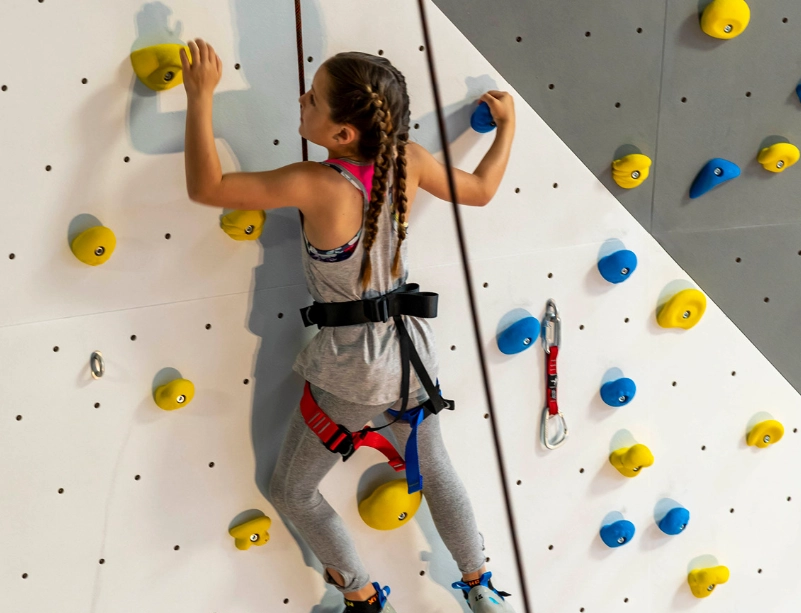
This guide is the one I wish I'd had. We're going to strip away the jargon and the intimidation. We'll talk about the different flavors of rock climbing, the gear you actually need (and what you can skip at first), how to not die, and how to actually have fun while you're at it. Let's get off the ground.
Rock climbing, at its core, is simple: you use your hands and feet to ascend a rock face or an artificial wall. But within that simple idea, there's a universe of styles, techniques, and cultures. Whether you're looking for a killer gym workout or dreams of summits, it all starts here.
First Things First: What Even Are the Types of Rock Climbing?
This is where most beginners get lost. People throw around terms like "bouldering," "sport," and "trad" like everyone knows what they mean. Let's break it down.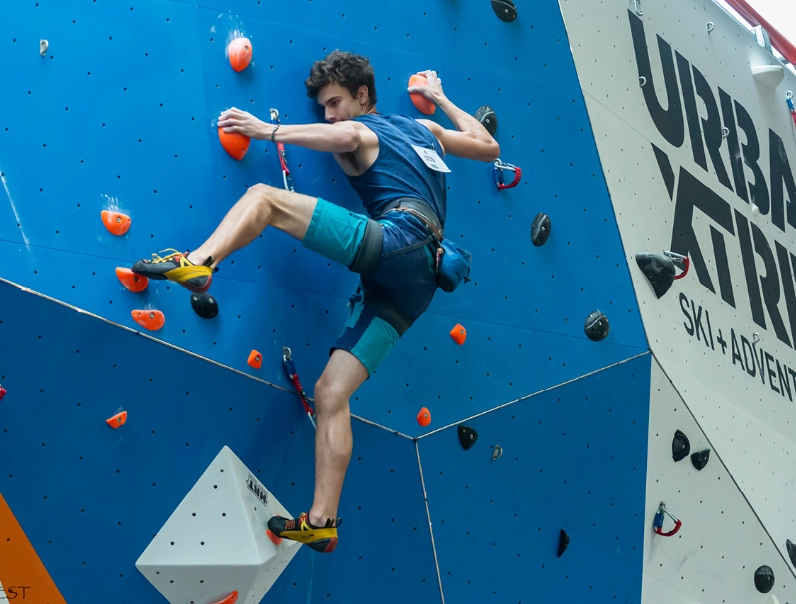
Bouldering: No Ropes, Just You and the Pad
Bouldering is rock climbing stripped down to its purest form. You climb shorter walls (usually under 15-20 feet) without a rope. Instead, you have a thick crash pad below you and a friend (a "spotter") to help guide your fall. It's all about powerful, technical moves. You'll see people staring at a wall for minutes, working out a sequence of four or five moves—it's like solving a physical chess problem.
Why start here? It's incredibly accessible. You need minimal gear (just shoes and chalk), and you can practice alone or with friends. Most urban areas have a bouldering gym. It builds foundational strength and technique faster than anything else. The downside? The falls are real, and you can only go as high as you're willing to jump down from.
Top-Rope Climbing: The Classic Intro
This is probably the image that pops into your head when you think of rock climbing. The rope is already anchored at the top of the climb. Your partner (the "belayer") manages the rope from the ground, taking in slack as you go up. If you slip, you only fall a very short distance before the rope catches you. It's the safest and most psychologically comfortable way to climb higher walls.
Gyms are built for this. It's the perfect way to learn movement, get used to being on a rope, and build endurance. You focus on climbing, not on gear. The skill barrier is a bit higher because you need a partner who knows how to belay safely, but most gyms offer classes and partner-matching systems.
Lead Climbing (Sport & Trad): The Next Level
This is where things get serious and the mental game intensifies. In lead climbing, you start from the ground with the rope tied to you. As you climb, you clip the rope into pre-placed bolts (sport climbing) or into gear you place yourself in cracks (traditional or "trad" climbing). If you fall, you fall *past* your last clip point, so the falls can be longer.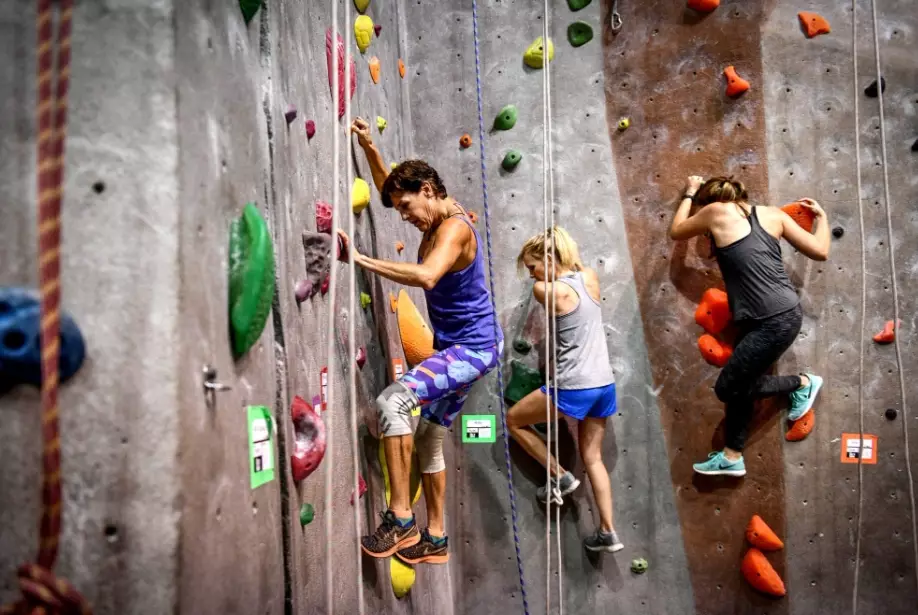
Sport climbing is the gateway to outdoor rock climbing for most people. The protection is fixed and (usually) reliable. Trad climbing is the master discipline—it requires a deep understanding of geology, gear placement, and risk assessment. It's not for day one. We'll focus on sport as the progression from top-roping.
My personal take? I love sport climbing for the flow and the exposure, but I have a lot of respect for trad climbers. The gear is heavy, the decisions are constant, and the consequences are higher. It's not better, just different.
"Climbing is not about beating the mountain. It's a dialogue. Sometimes you listen, sometimes you talk. And sometimes you take a whipper (a big fall) and have to try a different conversation."
Your First Visit to a Climbing Gym: A Survival Guide
Walking in is the hardest part. Here’s what to actually do.
Most gyms offer a "first-time" or "intro" package. Get it. It usually includes rental gear (shoes, harness, chalk bag) and a mandatory safety orientation. Do not skip the orientation. They'll show you how to check your harness, the basic commands ("Climbing!" "Climb on!"), and how to belay if you're doing roped climbing.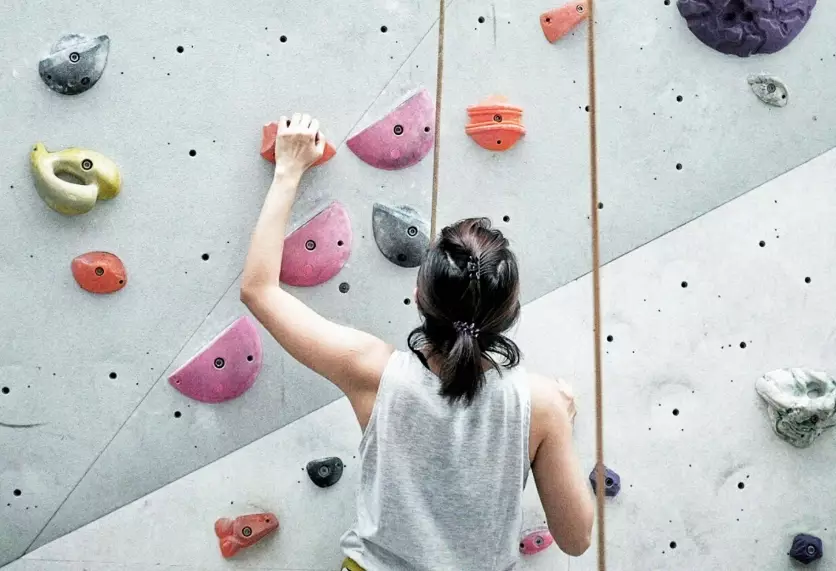
Pro Tip: Go on a weekday afternoon if you can. Weekends are chaos—loud, crowded, and intimidating for a first-timer. A Tuesday at 4 PM is a much calmer experience.
Wear comfortable, flexible clothing you can move in. Think workout gear. Avoid baggy pants that might get caught under your foot. For women, a secure sports bra is a must. That's it. You don't need special clothes.
Now, about those rental shoes. They will hurt. Climbing shoes are meant to be tight—they should curl your toes slightly and eliminate any dead space. This sensitivity is how you stand on tiny edges. But they shouldn't cause sharp, stabbing pain. If they do, ask for a different size. Your first session will be short, so a little discomfort is okay. You're not buying them.
Start on the easiest walls. In gyms, climbs are color-coded by difficulty. Find the biggest, juggiest holds (they look like easy-to-grab blobs). Your goal isn't to get to the top of the hardest thing you see. Your goal is to move smoothly. Try to place your feet quietly and precisely. Look at your feet before you move them. This is the single most important habit you can form early.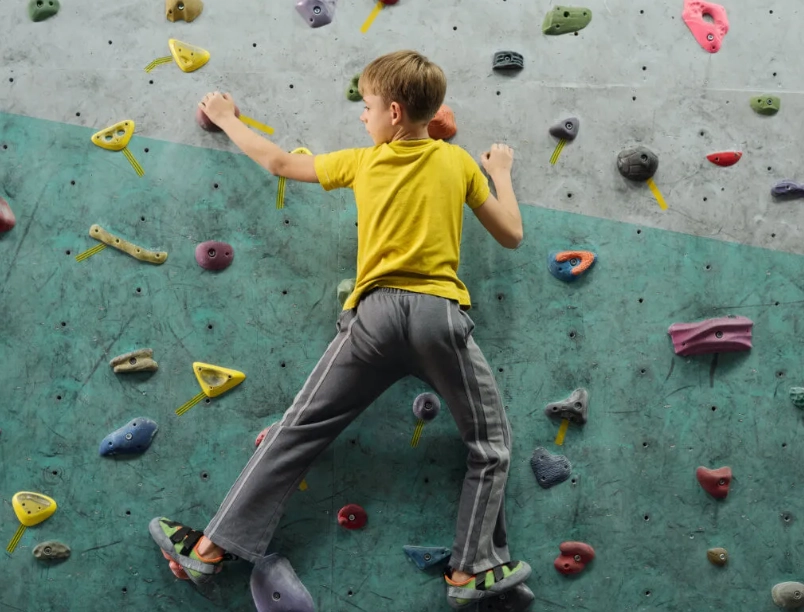
You will get pumped (forearms screaming with lactic acid). You will slip. Everyone does. The community is generally amazing. Don't be afraid to ask someone nearby, "Hey, how did you do that move?" You'll usually get helpful beta (advice on how to do a sequence).
The Non-Negotiable: Safety and Learning to Belay
This is the part we can't gloss over. If you're doing roped climbing, safety is everything. A belayer's job is life-critical.
Warning: Never, ever belay someone or let someone belay you without proper, certified training and a solid understanding of the device and commands. This is not a "figure it out as you go" skill.
Gyms require you to pass a belay test. They'll teach you using an assisted-braking device (like a GriGri) or a tubular device (like an ATC). The GriGri is more forgiving for beginners—it has a mechanism that helps catch a fall automatically. The ATC requires more active hand technique.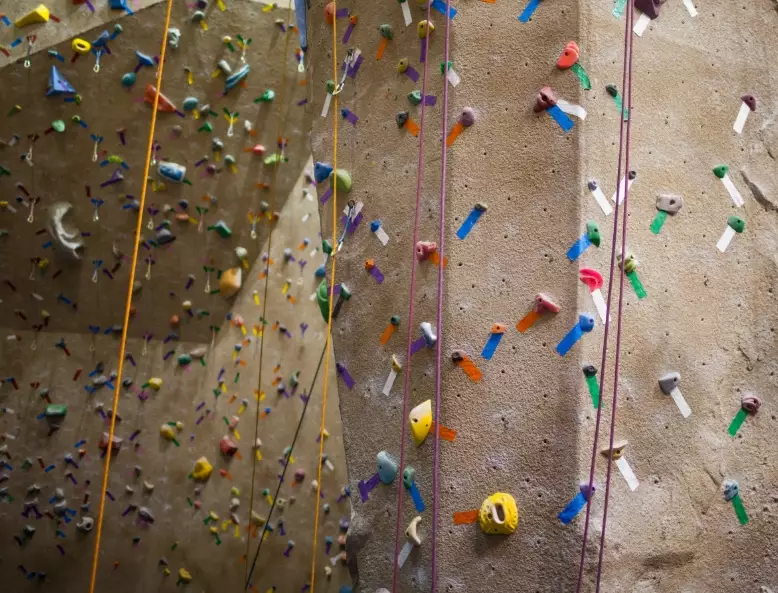
The golden rules of belaying:
- Hands never leave the brake strand. The rope coming from the climber to your device has a "brake strand"—the part you pull down to lock the device. Your guide hand can move, but your brake hand? It stays on, always.
- Communicate clearly. Use the standard commands every single time. No shortcuts.
- Climber: "On belay?" (Are you ready to secure me?)
- Belayer: "Belay on." (I am securing you.)
- Climber: "Climbing." (I am starting to climb.)
- Belayer: "Climb on." (Go ahead.)
- At the top, Climber: "Take!" (Pull the rope tight, I'm weighting it.)
- Belayer: "Got you."
- Climber: "Ready to lower."
- Belayer: "Lowering."
- Pay attention. You are not on your phone. You are watching your climber. The social contract in rock climbing is absolute trust.
For the most current and detailed safety standards and best practices, I always recommend checking resources from the International Climbing and Mountaineering Federation (UIAA). They set the global benchmarks for equipment and safety.
I failed my first belay test. My hands were shaking, I fumbled the commands, and I forgot to check my climber's knot. The instructor rightly made me do it again. It was embarrassing, but it drilled into me how serious this is. It's okay to be nervous. It means you get it.
Gear Guide: What to Buy (and What to Wait On)
You don't need to drop $500 on gear after your first session. Here’s a realistic progression.
| Item | When to Buy | What to Look For | Budget Estimate |
|---|---|---|---|
| Climbing Shoes | After 5-10 sessions, when you're hooked. | Neutral (flat) profile for beginners. Comfort is key over ultra-aggressive downturn. Try on EVERY brand—sizing is wild. | $80 - $150 |
| Chalk Bag & Chalk | Almost immediately. Rental chalk bags are gross. | A simple bag with a closure. Loose chalk is standard; chalk balls are less messy. Don't get the colored chalk—it stains holds. | $15 - $30 |
| Harness | When you start leading or climbing outdoors regularly. | Comfort in the waist and legs is #1. Ensure it has 4 gear loops if you plan on sport climbing. Get professionally fitted. | $50 - $120 |
| Belay Device & Locking Carabiner | When you have your own harness and a consistent partner. | An assisted-braking device (e.g., Petzl GriGri) is worth every penny for safety and ease. Pair with a solid HMS pear-shaped locking carabiner. | $60 - $100 |
| Helmet | Before your first outdoor trip. Non-negotiable. | Climbing-specific helmet (not a bike helmet). Look for lightweight, good ventilation, and UIAA/CE certification. | $60 - $150 |
A note on shoes: Go to a real shop if you can. The staff will help. Brands like La Sportiva, Scarpa, and Evolv all fit radically different foot shapes. I have wide feet, and I suffered in a narrow shoe for a year before I found the right one. Don't be me.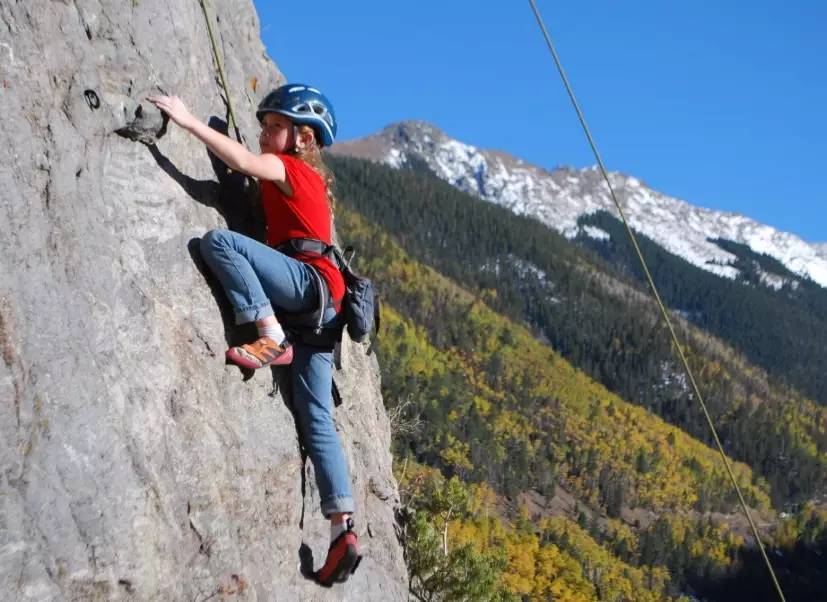
My Gear Mistake: I bought a super aggressive, downturned shoe as my second pair because I thought it would make me climb harder. It just made my toes cramp, and I couldn't wear them for more than 10 minutes. I went back to a more moderate shoe and my climbing (and enjoyment) improved instantly. Fancy gear doesn't replace good technique.
Understanding the Language: Grades and Beta
Climbing has its own grading systems to communicate difficulty. It's confusing because there are different scales for different types of climbing.
- Bouldering (V-Scale): Starts at V0 (easiest) and goes up... and up. V10 is world-class. A V2 in one gym can feel like a V4 in another. Take grades with a grain of salt, especially indoors.
- Roped Climbing (Yosemite Decimal System - YDS): This is the 5.x you see everywhere. 5.0 is a ladder. 5.6-5.8 is beginner territory. 5.9-5.10 is intermediate. 5.11-5.12 is advanced. 5.13+ is elite. The scale is open-ended.
Here's the secret: Do not get obsessed with grades. They are a rough guide, not a scorecard of your worth. A "project" is a climb that is hard for you, regardless of its number. The joy is in figuring it out, not ticking a box.
"Beta" is advice or information on how to do a climb. "Spraying beta" (giving unsolicited advice) is considered rude. Always ask, "Do you want beta?" Some people love the puzzle of figuring it out themselves.
Making the Leap: From Gym to Outdoor Rock Climbing
The gym is a playground. The outdoors is the real world. It's rougher, sharper, less predictable, and infinitely more beautiful.
You cannot do this alone as a beginner. Full stop. The skills transfer, but the context does not. You need to know how to:
- Identify safe anchors (is that tree alive and sturdy?).
- Build anchors (a whole skill set in itself).
- Manage environmental hazards (loose rock, weather, wildlife).
- Understand access and leave-no-trace principles.
How do you learn? There are three main paths:
- Find a Mentor: The best way. An experienced, patient climber who is willing to teach. Offer to buy gas, food, and carry gear. Be a good student.
- Take a Course: From a reputable guiding service or outdoor school. This is the safest and most structured option. Look for American Mountain Guides Association (AMGA) certified guides. It's an investment in your safety and future enjoyment.
- Join a Club: Many universities and outdoor clubs organize beginner-friendly outdoor trips.
Outdoor ethics are huge. We are guests. Follow established trails, use existing anchors, pack out all trash (including tape and fruit peels), and be mindful of noise. The Access Fund is a crucial organization working to preserve climbing areas—check out their resources on responsible climbing.
The rock is sharper than plastic. You will get scraped. It's part of the deal.
Training & Progression: Getting Better Without Burning Out
You don't need to live in the gym to improve. In fact, overtraining is the fastest way to get injured and quit.
For the first year, your best training is more climbing. Climb 2-3 times a week, with rest days in between. Focus on volume on easy climbs to build endurance and movement vocabulary. Watch good climbers. See how they move their hips, how they shift their weight.
When you're ready to get more structured, think about these areas:
Finger Strength
This is the limiting factor for most people. Don't rush into hangboards! Your tendons take months (years!) to strengthen compared to muscles. A good rule of thumb: wait at least a year of consistent climbing before even looking at a hangboard. You can build plenty of finger strength just by climbing on smaller holds... carefully.
Antagonist & Injury Prevention
Climbing makes you pull. You need to push to balance your shoulders and prevent injury. Simple push-ups, rows, and rotator cuff exercises are a climber's best friend. I do 10 minutes of this after every session, and it's saved me from countless tweaks.
Flexibility
Hip and hamstring flexibility will open up a world of movement. Being able to get your foot high can turn a desperate reach into a restful step. Yoga is incredibly popular among climbers for a reason.
For advanced training plans and injury prevention advice, the site TrainingBeta is a fantastic resource created by and for climbers, with programs from professional coaches.
The Mental Game: Fear, Flow, and Falling
This might be the most important section. Rock climbing is 80% mental, especially as you get higher off the ground.
Fear of falling is natural. It's your brain doing its job. The key is to build trust—in your gear, in your belayer, and in the system. You do this by taking practice falls in a safe, controlled environment (like on a top-rope or a well-bolted sport climb just above a bolt). Start small. Fall from just above the bolt. Then a little higher. Feel the catch. Your brain needs to learn that the system works.
Breathing is your anchor. When you get scared, you hold your breath. Your muscles tense, your brain panics. Force yourself to take slow, deep breaths. Look at your feet. Find the next hold. Break the climb down into one move at a time.
Then there's the opposite of fear: the flow state. When movement and thought merge, time slows down, and you're just... doing. It's why we come back. You can't force it, but you can set the stage for it by being prepared, safe, and present.
So, where do you start? You start by walking through the door of a gym. Or by finding a friend who climbs and asking to tag along. You start by admitting you don't know anything, and being okay with that.
Rock climbing gave me a community when I moved to a new city. It taught me how to problem-solve under pressure. It showed me places I would have never seen otherwise. My knees are scarred, my fingertips are permanently rough, and I've had more than my share of moments of pure terror.
I wouldn't trade it for anything.
The wall is there. The holds are waiting. Your story is just beginning.